| Title |
Frederick John Donkin Jr., Salt Lake City, Utah: an interview by Becky B. Lloyd, September 17, 2002: Saving the Legacy tape no. 579 & 580 |
| Alternative Title |
Frederick John Donkin Jr., Saving the legacy: an oral history of Utah's World War II veterans, ACCN 2070, American West Center, University of Utah |
| Creator |
Donkin, Frederick John, 1922-2011 |
| Contributor |
Lloyd, Becky B.; University of Utah. American West Center |
| Publisher |
Digitized by J. Willard Marriott Library, University of Utah |
| Date |
2002-09-17 |
| Date Digital |
2015-12-16 |
| Access Rights |
I acknowledge and agree that all information I obtain as a result of accessing any oral history provided by the University of Utah's Marriott Library shall be used only for historical or scholarly or academic research purposes, and not for commercial purposes. I understand that any other use of the materials is not authorized by the University of Utah and may exceed the scope of permission granted to the University of Utah by the interviewer or interviewee. I may request permission for other uses, in writing to Special Collections at the Marriott Library, which the University of Utah may choose grant, in its sole discretion. I agree to defend, indemnify and hold the University of Utah and its Marriott Library harmless for and against any actions or claims that relate to my improper use of materials provided by the University of Utah. |
| Spatial Coverage |
Philippines; China |
| Subject |
Donkin, Frederick John, 1922-2011--Interviews; Veterans--United States--Biography; World War, 1939-1945--Personal narratives, American; World War, 1939-1945--Naval operations, American; World War, 1939-1945--Campaigns--Pacific Area--Personal narratives, American |
| Keywords |
Radio technicians; Mechanical engineers |
| Description |
Transcript (70 pages) of an interview by Becky B. Lloyd with John Donkin Jr., on September 17, 2002. From tape numbers 579 and 580 in the "Saving the Legacy" Oral History Project |
| Collection Number and Name |
Accn2070, Saving the Legacy oral history project, 2001-2010 |
| Abstract |
Mr. Donkin (b. 1922) was born in Salt Lake City, Utah. He discusses his schooling, childhood, family and the Depression. He graduated from the University of Utah in 1943 in mechanical engineering. He hired with Vega Aircraft in Burbank, California, making B-17 bombers. He enlisted in the Navy in 1944 and took basic training at Great Lakes. He was sent to Del Monte, California and Treasure Island for more schooling. The war ended during this time. He was then assigned to Daystar LSM-218 where he was in charge of all electronic equipment while delivering supplies around the Philippine area and into China. He discusses his experiences during this time. He was separated from the Navy in July 1946 in Shoemaker, California, with an Electronic Technician 2nd Class rating. Mr. Donkin worked as an engineer and spent 25 years with Hercules before retiring in 1986. Interviewed by Becky Lloyd. 70 pages. |
| Type |
Text |
| Genre |
oral histories (literary works) |
| Format |
application/pdf |
| Extent |
70 pages |
| Language |
eng |
| Rights |
 |
| Scanning Technician |
Mazi Rakhsha |
| Conversion Specifications |
Original scanned with Kirtas 2400 and saved as 400 ppi uncompressed TIFF. PDF generated by Adobe Acrobat Pro X for CONTENTdm display |
| ARK |
ark:/87278/s6cc32s0 |
| Topic |
Personal narratives--American; Veterans; World War (1939-1945); Military operations, Naval--American |
| Setname |
uum_slohp |
| ID |
1033321 |
| Reference URL |
https://collections.lib.utah.edu/ark:/87278/s6cc32s0 |
| Title |
Page 48 |
| Format |
application/pdf |
| Setname |
uum_slohp |
| ID |
1033298 |
| OCR Text |
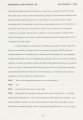
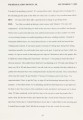
Show FREDERICK JOHN DONKIN, JR. PT MB R 17 2002 Wonder to distinguish them from service academy and ROT officer who w re train d for a least three years.] It's a wonder he lived (laughs). He wa one of these guys that was something else, an officer-nobody liked him, not even the officers. But hew nt down there and hit the thing with a C02 extinguisher and cracked the brake shoe. So we didn't have a brake on that particular engine, so it was pretty hard running the ship. BEC: Yes (laughs). FRE: Well, anyway, that's where we ended up. They had kept some officers there and this is the officer that wanted to let you know everything he'd done. He was the executive officer on board. He'd come around and was interviewed with the other officers. Of course, he had to rattle off how great he was (laughs). He got declared a military necessity and got to stay. One of the officers from our ship, who came home with us, made it a point to come and tell the whole crew what he'd done. He said, "I didn't tell him a thing!" (laughs) He got to stay (laughs). BEC: (laughs) Oh, that's funny. FRE: But he was the officer when we had this big trouble with radar. That was a time we had radar go out. We were using it to navigate and I got up on the gear and started working on it and the screen was blank. I mean, there's nothing worse than starting with a blank screen (laughs). No clues. You don't know where to start. And I got started and finally found out that I had a blown tube. I had a high voltage rectifier that was blown out. My magnetron was out. That's the one that gives you the radar pulse. It was gone. I had two of them left, just two. They kept them in the safe. I found all of these problems and fixed those. Thought I had it made, put in a magnetron, and blew another one. I said, "I've still got problems." I didn't dare put another one in. So I worked and I worked and I 48 |
| Reference URL |
https://collections.lib.utah.edu/ark:/87278/s6cc32s0/1033298 |