| Title |
Frederick John Donkin Jr., Salt Lake City, Utah: an interview by Becky B. Lloyd, September 17, 2002: Saving the Legacy tape no. 579 & 580 |
| Alternative Title |
Frederick John Donkin Jr., Saving the legacy: an oral history of Utah's World War II veterans, ACCN 2070, American West Center, University of Utah |
| Creator |
Donkin, Frederick John, 1922-2011 |
| Contributor |
Lloyd, Becky B.; University of Utah. American West Center |
| Publisher |
Digitized by J. Willard Marriott Library, University of Utah |
| Date |
2002-09-17 |
| Date Digital |
2015-12-16 |
| Access Rights |
I acknowledge and agree that all information I obtain as a result of accessing any oral history provided by the University of Utah's Marriott Library shall be used only for historical or scholarly or academic research purposes, and not for commercial purposes. I understand that any other use of the materials is not authorized by the University of Utah and may exceed the scope of permission granted to the University of Utah by the interviewer or interviewee. I may request permission for other uses, in writing to Special Collections at the Marriott Library, which the University of Utah may choose grant, in its sole discretion. I agree to defend, indemnify and hold the University of Utah and its Marriott Library harmless for and against any actions or claims that relate to my improper use of materials provided by the University of Utah. |
| Spatial Coverage |
Philippines; China |
| Subject |
Donkin, Frederick John, 1922-2011--Interviews; Veterans--United States--Biography; World War, 1939-1945--Personal narratives, American; World War, 1939-1945--Naval operations, American; World War, 1939-1945--Campaigns--Pacific Area--Personal narratives, American |
| Keywords |
Radio technicians; Mechanical engineers |
| Description |
Transcript (70 pages) of an interview by Becky B. Lloyd with John Donkin Jr., on September 17, 2002. From tape numbers 579 and 580 in the "Saving the Legacy" Oral History Project |
| Collection Number and Name |
Accn2070, Saving the Legacy oral history project, 2001-2010 |
| Abstract |
Mr. Donkin (b. 1922) was born in Salt Lake City, Utah. He discusses his schooling, childhood, family and the Depression. He graduated from the University of Utah in 1943 in mechanical engineering. He hired with Vega Aircraft in Burbank, California, making B-17 bombers. He enlisted in the Navy in 1944 and took basic training at Great Lakes. He was sent to Del Monte, California and Treasure Island for more schooling. The war ended during this time. He was then assigned to Daystar LSM-218 where he was in charge of all electronic equipment while delivering supplies around the Philippine area and into China. He discusses his experiences during this time. He was separated from the Navy in July 1946 in Shoemaker, California, with an Electronic Technician 2nd Class rating. Mr. Donkin worked as an engineer and spent 25 years with Hercules before retiring in 1986. Interviewed by Becky Lloyd. 70 pages. |
| Type |
Text |
| Genre |
oral histories (literary works) |
| Format |
application/pdf |
| Extent |
70 pages |
| Language |
eng |
| Rights |
 |
| Scanning Technician |
Mazi Rakhsha |
| Conversion Specifications |
Original scanned with Kirtas 2400 and saved as 400 ppi uncompressed TIFF. PDF generated by Adobe Acrobat Pro X for CONTENTdm display |
| ARK |
ark:/87278/s6cc32s0 |
| Topic |
Personal narratives--American; Veterans; World War (1939-1945); Military operations, Naval--American |
| Setname |
uum_slohp |
| ID |
1033321 |
| Reference URL |
https://collections.lib.utah.edu/ark:/87278/s6cc32s0 |
| Title |
Page 19 |
| Format |
application/pdf |
| Setname |
uum_slohp |
| ID |
1033269 |
| OCR Text |
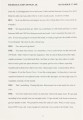
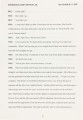
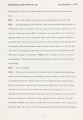
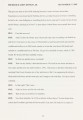
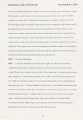
Show FREDERICK JOHN DONKIN, JR. B R 17 2002 The very skilled craftsman who did this very delicate job of in tailing th pin at first would let me watch him do it but didn't let me touch it. I guess he lik d the way I handled tools because one day he asked me if I wanted to hang a landing gear. I said "Sure." So I got to hang the landing gear on one of the bombers. When I was there, we put out the B-170 model, Boeing, and we got it out quicker than Boeing did. [Editor's note: The B-17G was one of the last B-17 models to be mass produced. Unlike early models, the B-17G had a distinguishing chin turret.} BEC: So Lockheed was subcontracting with Boeing? FRE: I don't know what their arrangement was, but they were also building the PV- 1s, and they were building the PV-2. [Editor's note: The PV-1 Ventura was a twin engine patrol bomber built by the Vega Aircraft Company division of Lockheed. The PV- 1 was a version of the Ventura built for the US. Navy. The main differences between the PV-1 and the Army Air Corps Lockheed B-34, which also was based on the Ventura, were the inclusion of special equipment in the PV-1, adapting it to its patrol-bombing role. The PV-2 Harpoon was a major redesign of the Ventura with the wing area increased from 551 jt2 (51. 2 m2 ) to 686 jt2 (63. 7 ml) giving an increased load-carrying capability. The motivation for redesign was weaknesses in the PV-1, since it had shown to have poor-quality takeoffs when carrying a full load of fuel. On the PV-2, the armament became standardized at jive forward-firing machine guns. Many early P V-1 s had a bombardier's position, which was deleted in the PV-2.] At that time it was very secret, but they were working on the F-80 jet, the first jet that we had. [Editor's note: The Lockheed P-80 Shooting Star was the first 19 |
| Reference URL |
https://collections.lib.utah.edu/ark:/87278/s6cc32s0/1033269 |