| Title |
Tyler Jewkes, Salt Lake City, Utah: an interview by John C. Worsencroft, December 14, 2009: Saving the Legacy tape no. IA-26 |
| Alternative Title |
Tyler Jewkes, Saving the legacy: an oral history of Utah's World War II veterans, ACCN 2070, American West Center, University of Utah |
| Creator |
Jewkes, Tyler |
| Contributor |
Worsencroft, John C., 1981-; University of Utah. American West Center |
| Publisher |
Digitized by J. Willard Marriott Library, University of Utah |
| Date |
2009-12-14 |
| Date Digital |
2015-12-16 |
| Access Rights |
I acknowledge and agree that all information I obtain as a result of accessing any oral history provided by the University of Utah's Marriott Library shall be used only for historical or scholarly or academic research purposes, and not for commercial purposes. I understand that any other use of the materials is not authorized by the University of Utah and may exceed the scope of permission granted to the University of Utah by the interviewer or interviewee. I may request permission for other uses, in writing to Special Collections at the Marriott Library, which the University of Utah may choose grant, in its sole discretion. I agree to defend, indemnify and hold the University of Utah and its Marriott Library harmless for and against any actions or claims that relate to my improper use of materials provided by the University of Utah. |
| Spatial Coverage |
Kuwait; Iraq |
| Subject |
Jewkes, Tyler--Interviews; Veterans--Utah--Biography; Iraq War, 2003-2011--Personal narratives, American |
| Description |
Transcript (44 pages) of an interview by John C. Worsencroft with Tyler Jewkes on December 14, 2009. From tape number IA-26 in the "Saving the Legacy" Oral History Project |
| Collection Number and Name |
Accn2070, Saving the Legacy oral history project, 2001-2010 |
| Abstract |
Jewkes was born in Richfield, Utah. He joined the Utah National Guard 222 Field Artillery unit out of high school. He received boot camp training at Fort Sill, Oklahoma, starting in November 2001. That was followed by Advanced Individual Training at the same location. He describes these training experiences. He served a LDS mission to Santiago, Chile, from 2002 to 2004. His unit was deployed to Camp Shelby, Mississippi in January 2005. After training, Jewkes shipped to Kuwait and was stationed at Ramadi, Iraq, for a year, where he rotated through duties: base defense; road and combat patrol; artillery. He left Iraq in June 2006. Interviewed by John C. Worsencroft. 44 pages. |
| Type |
Text |
| Genre |
oral histories (literary works) |
| Format |
application/pdf |
| Extent |
44 pages |
| Language |
eng |
| Rights |
 |
| Scanning Technician |
Mazi Rakhsha |
| Conversion Specifications |
Original scanned with Kirtas 2400 and saved as 400 ppi uncompressed TIFF. PDF generated by Adobe Acrobat Pro X for CONTENTdm display |
| ARK |
ark:/87278/s60p323q |
| Topic |
Personal narratives--American; Veterans; Iraq War (2003-2011) |
| Setname |
uum_slohp |
| ID |
1032154 |
| Reference URL |
https://collections.lib.utah.edu/ark:/87278/s60p323q |
| Title |
Page 38 |
| Format |
application/pdf |
| Setname |
uum_slohp |
| ID |
1032146 |
| OCR Text |
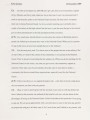
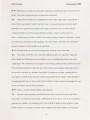
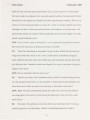
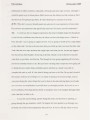
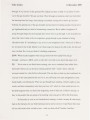
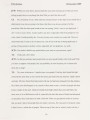
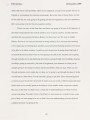
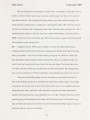
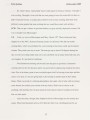
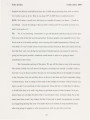
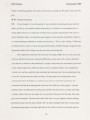
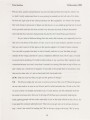
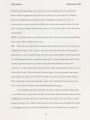
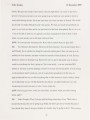
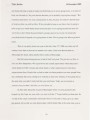
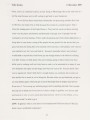
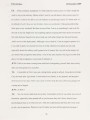
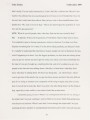
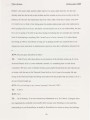
Show Tyler Jewkes 1 bearing. You go into bases, you go into just Guard for weekend and everybody calling each other by their first names rather than using all the military tone . So that wa probably the biggest transition was corning back and going back into National Guard. From going full-time every single day, trying to stay in ranks and just keep your military bearing, to now is it appropriate for me to go back to this kind of leisure way that we go about National Guard? So I say that more than the schooling was the hardest transition. JCW: How did your unit do it, then? Did they go back to the usual National Guard? Was it more of an awkward transition? TJ: By now it has. Now when I go back to drill it's just, yeah, everybody's casual. Everybody goes out after we finish Guard. Some people go out in the mountains, go bunny bashing or hunt or whatever else. But at first, I would say it probably took around six to eight months to get back to that, to get back to where it was just kind of more of this friendly, casual type of atmosphere. I know it's debatable whether it's good or bad, but I would say that the transition did take about six to eight months. I don't ever, I don't know how it happened or where it happened, if it started from just the upper level people kind of changing their demeanor or if it just started with the lower ranks. JCW: What do you think? Is it a good thing or a bad thing? Or are you more ambivalent? TJ: I don't know. There's a lot of good that comes with the military ranks, with keeping your military bearings, standing at parade rest, speaking to a sergeant the way that you're supposed to. There's greater respect that comes in that. Me being a sergeant now, I don't necessarily hope that somebody comes up and stands at parade rest to talk to me. Yeah, that's great, it shows some respect and it shows a little bit of their character, 37 |
| Reference URL |
https://collections.lib.utah.edu/ark:/87278/s60p323q/1032146 |