| Title |
Tyler Jewkes, Salt Lake City, Utah: an interview by John C. Worsencroft, December 14, 2009: Saving the Legacy tape no. IA-26 |
| Alternative Title |
Tyler Jewkes, Saving the legacy: an oral history of Utah's World War II veterans, ACCN 2070, American West Center, University of Utah |
| Creator |
Jewkes, Tyler |
| Contributor |
Worsencroft, John C., 1981-; University of Utah. American West Center |
| Publisher |
Digitized by J. Willard Marriott Library, University of Utah |
| Date |
2009-12-14 |
| Date Digital |
2015-12-16 |
| Access Rights |
I acknowledge and agree that all information I obtain as a result of accessing any oral history provided by the University of Utah's Marriott Library shall be used only for historical or scholarly or academic research purposes, and not for commercial purposes. I understand that any other use of the materials is not authorized by the University of Utah and may exceed the scope of permission granted to the University of Utah by the interviewer or interviewee. I may request permission for other uses, in writing to Special Collections at the Marriott Library, which the University of Utah may choose grant, in its sole discretion. I agree to defend, indemnify and hold the University of Utah and its Marriott Library harmless for and against any actions or claims that relate to my improper use of materials provided by the University of Utah. |
| Spatial Coverage |
Kuwait; Iraq |
| Subject |
Jewkes, Tyler--Interviews; Veterans--Utah--Biography; Iraq War, 2003-2011--Personal narratives, American |
| Description |
Transcript (44 pages) of an interview by John C. Worsencroft with Tyler Jewkes on December 14, 2009. From tape number IA-26 in the "Saving the Legacy" Oral History Project |
| Collection Number and Name |
Accn2070, Saving the Legacy oral history project, 2001-2010 |
| Abstract |
Jewkes was born in Richfield, Utah. He joined the Utah National Guard 222 Field Artillery unit out of high school. He received boot camp training at Fort Sill, Oklahoma, starting in November 2001. That was followed by Advanced Individual Training at the same location. He describes these training experiences. He served a LDS mission to Santiago, Chile, from 2002 to 2004. His unit was deployed to Camp Shelby, Mississippi in January 2005. After training, Jewkes shipped to Kuwait and was stationed at Ramadi, Iraq, for a year, where he rotated through duties: base defense; road and combat patrol; artillery. He left Iraq in June 2006. Interviewed by John C. Worsencroft. 44 pages. |
| Type |
Text |
| Genre |
oral histories (literary works) |
| Format |
application/pdf |
| Extent |
44 pages |
| Language |
eng |
| Rights |
 |
| Scanning Technician |
Mazi Rakhsha |
| Conversion Specifications |
Original scanned with Kirtas 2400 and saved as 400 ppi uncompressed TIFF. PDF generated by Adobe Acrobat Pro X for CONTENTdm display |
| ARK |
ark:/87278/s60p323q |
| Topic |
Personal narratives--American; Veterans; Iraq War (2003-2011) |
| Setname |
uum_slohp |
| ID |
1032154 |
| Reference URL |
https://collections.lib.utah.edu/ark:/87278/s60p323q |
| Title |
Page 4 |
| Format |
application/pdf |
| Setname |
uum_slohp |
| ID |
1032112 |
| OCR Text |
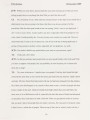
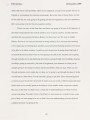
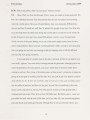
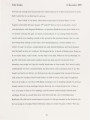
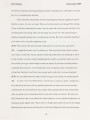
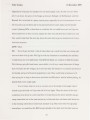
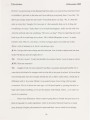
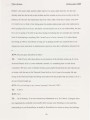
Show Tyler Jewke 14 D c m r 2009 TJ: I don't know if it was necessarily something that was huge for my family. My tw sisters went to college, at least to get associate's degrees. It was important to get good grades, in the sense of being able to get a scholarship into college, but we're a family f usually a lot of physical labor, or hard labor, so it wasn't really get a college degree and have these white collar jobs, more of a blue collar atmosphere. So wasn't that much stress, but it was definitely something that I wanted. I thought personally for myself I always saw myself sitting in an office rather than outside digging trenches (laughs). So I just figured it'd be great to go to college and it was definitely one of the goals that I had. JCW: So what was it about maybe the Guard specifically that piqued your interest regarding college? T J: I think the culture in Richfield, in the whole Sevier County area, small community, lots of small people that. . .I guess not small people, but a lot of people down there that joined the National Guard there in the community of just total in the entire valley around probably 20,000 people. So when people join the National Guard you know most of those families, you know most of the people. When I signed up there were around, I'd say, five to six people in my graduating class-which again is only about 100 people-that signed. So it's just that culture and atmosphere that you join the National Guard because that's what's available in Richfield. You don't really know that there's a whole lot of other options to go regular Army or to even join other units outside of Richfield. That was a lot of the reason why I decided to go there, do field artillery, because that's what everybody did. So you just kind of went along with everything else. JCW: So there's no, like, no Marine Corps recruiter in that area? Or a Navy recruiter? 3 |
| Reference URL |
https://collections.lib.utah.edu/ark:/87278/s60p323q/1032112 |