| Title |
Tyler Jewkes, Salt Lake City, Utah: an interview by John C. Worsencroft, December 14, 2009: Saving the Legacy tape no. IA-26 |
| Alternative Title |
Tyler Jewkes, Saving the legacy: an oral history of Utah's World War II veterans, ACCN 2070, American West Center, University of Utah |
| Creator |
Jewkes, Tyler |
| Contributor |
Worsencroft, John C., 1981-; University of Utah. American West Center |
| Publisher |
Digitized by J. Willard Marriott Library, University of Utah |
| Date |
2009-12-14 |
| Date Digital |
2015-12-16 |
| Access Rights |
I acknowledge and agree that all information I obtain as a result of accessing any oral history provided by the University of Utah's Marriott Library shall be used only for historical or scholarly or academic research purposes, and not for commercial purposes. I understand that any other use of the materials is not authorized by the University of Utah and may exceed the scope of permission granted to the University of Utah by the interviewer or interviewee. I may request permission for other uses, in writing to Special Collections at the Marriott Library, which the University of Utah may choose grant, in its sole discretion. I agree to defend, indemnify and hold the University of Utah and its Marriott Library harmless for and against any actions or claims that relate to my improper use of materials provided by the University of Utah. |
| Spatial Coverage |
Kuwait; Iraq |
| Subject |
Jewkes, Tyler--Interviews; Veterans--Utah--Biography; Iraq War, 2003-2011--Personal narratives, American |
| Description |
Transcript (44 pages) of an interview by John C. Worsencroft with Tyler Jewkes on December 14, 2009. From tape number IA-26 in the "Saving the Legacy" Oral History Project |
| Collection Number and Name |
Accn2070, Saving the Legacy oral history project, 2001-2010 |
| Abstract |
Jewkes was born in Richfield, Utah. He joined the Utah National Guard 222 Field Artillery unit out of high school. He received boot camp training at Fort Sill, Oklahoma, starting in November 2001. That was followed by Advanced Individual Training at the same location. He describes these training experiences. He served a LDS mission to Santiago, Chile, from 2002 to 2004. His unit was deployed to Camp Shelby, Mississippi in January 2005. After training, Jewkes shipped to Kuwait and was stationed at Ramadi, Iraq, for a year, where he rotated through duties: base defense; road and combat patrol; artillery. He left Iraq in June 2006. Interviewed by John C. Worsencroft. 44 pages. |
| Type |
Text |
| Genre |
oral histories (literary works) |
| Format |
application/pdf |
| Extent |
44 pages |
| Language |
eng |
| Rights |
 |
| Scanning Technician |
Mazi Rakhsha |
| Conversion Specifications |
Original scanned with Kirtas 2400 and saved as 400 ppi uncompressed TIFF. PDF generated by Adobe Acrobat Pro X for CONTENTdm display |
| ARK |
ark:/87278/s60p323q |
| Topic |
Personal narratives--American; Veterans; Iraq War (2003-2011) |
| Setname |
uum_slohp |
| ID |
1032154 |
| Reference URL |
https://collections.lib.utah.edu/ark:/87278/s60p323q |
| Title |
Page 27 |
| Format |
application/pdf |
| Setname |
uum_slohp |
| ID |
1032135 |
| OCR Text |
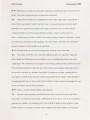
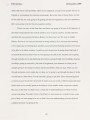
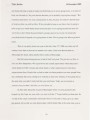
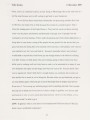
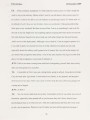
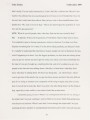
Show Tyler Jewke 1 mb r20 vest that wa itting out on the ground got a bunch of shrapnel in it although I wa never hurt by it or anything else like that. But I remember sitting there after that had happened and just laughing to myself that this is crazy. I'm in a war zone. This is so far from what I ever thought I'd be doing. If you would have asked me this when I was ten years old or eleven years old, this is the last thing that I'd be doing. These are the things you see on TV with actually rockets landing and people getting hurt, everything else like that. But I just remember thinking I can't believe this is actually happening to me. JCW: Was that like the first time that it had sunk in for you that you were there? T J: It might have been, well, I would say so. That was the first time that I sat down and I really, I really felt, I'd say, hatred towards the people that were attacking us. Prior to that, I mean, we'd have rockets landing and they startle you and they spook you, but they usually never get close enough to make an impact. By the time it actually affects somebody that you know, or even being that close to yourself, it just, I remember just sitting there thinking I really hate these people and I really don't wish any [unclear]. JCW: So you talked about the other mission you guys were doing was combat patrols. T J: So after I went into FOB defense, I did that for, I would say about a month and a half, and then I got back with my regular section and we went out to do our road and combat patrol. So we would drive out, usually about, around noon to one o'clock, then there was about a two to three hour drive to get out to where we were at. We were out OP2 [unclear] is what it was called. Our whole objective was we had this bridge that was linking our main supply route. There were two bridges previously, but one of the bridges had been blown up. So our job basically to watch the bridge and make sure that nothing 26 |
| Reference URL |
https://collections.lib.utah.edu/ark:/87278/s60p323q/1032135 |