| Title |
Richard W. Johnson, Salt Lake City, Utah: an interview by Becky B. Lloyd, June 3, 2004: Saving the Legacy tape no. 654 |
| Alternative Title |
Richard W. Johnson, Saving the legacy: an oral history of Utah's World War II veterans, ACCN 2070, American West Center, University of Utah |
| Creator |
Johnson, Richard W., 1923- |
| Contributor |
Lloyd, Becky B.; University of Utah. American West Center |
| Publisher |
Digitized by J. Willard Marriott Library, University of Utah |
| Date |
2004-06-03 |
| Date Digital |
2015-12-16 |
| Access Rights |
I acknowledge and agree that all information I obtain as a result of accessing any oral history provided by the University of Utah's Marriott Library shall be used only for historical or scholarly or academic research purposes, and not for commercial purposes. I understand that any other use of the materials is not authorized by the University of Utah and may exceed the scope of permission granted to the University of Utah by the interviewer or interviewee. I may request permission for other uses, in writing to Special Collections at the Marriott Library, which the University of Utah may choose grant, in its sole discretion. I agree to defend, indemnify and hold the University of Utah and its Marriott Library harmless for and against any actions or claims that relate to my improper use of materials provided by the University of Utah. |
| Spatial Coverage |
Hawaii |
| Subject |
Johnson, Richard W., 1923- --Interviews; Veterans--United States--Biography; World War, 1939-1945--Personal narratives, American; World War, 1939-1945--Naval operations, American |
| Keywords |
Electrical engineering; Electronics officer; Radar; Troop transport |
| Description |
Transcript (48 pages) of an interview by Becky B. Lloyd with Richard W. Johnson on June 3, 2004. From tape number 654 in the "Saving the Legacy" Oral History Project |
| Collection Number and Name |
Accn2070, Saving the Legacy oral history project, 2001-2010 |
| Abstract |
Mr. Johnson was born on July 21, 1923, in Salt Lake City, Utah. He graduated South High School in 1940 and attended the University of Utah studying engineering. He was allowed to defer enlistment until the spring of 1944 when he graduated for college and entered the Navy as an ensign. Traveled to Fort Schulyer, New York, for naval indoctrination school, then was sent to Harvard University for advanced studies in electrical engineering from December 1944 to March 1945. He then attended radar school at MIT from March 1945 to June 1945. His next assignment was to Bell Telephone Laboratories in New York. When the war ended, he was ordered to Pearl Harbor where he was assigned to the USS Wisconsin BB-64 ferrying returning GIs to San Francisco. He was the electronics officer in charge of radar onboard the Wisconsin. He describes his experiences during that time. The Wisconsin traveled through the Panama Canal to Norfolk, Virginia, for repairs. While waiting for repairs, he was assigned to a different ship on training maneuvers for a month. He describes his experiences there. He separated from the Navy in September 1946, but stayed in the Naval Reserves for a few years following. Mr. Johnson worked for Hughes Aircraft as an electrical engineer. Interviewed by Becky Lloyd. 48 pages. |
| Type |
Text |
| Genre |
oral histories (literary works) |
| Format |
application/pdf |
| Extent |
48 pages |
| Language |
eng |
| Rights |
 |
| Scanning Technician |
Mazi Rakhsha |
| Conversion Specifications |
Original scanned with Kirtas 2400 and saved as 400 ppi uncompressed TIFF. PDF generated by Adobe Acrobat Pro X for CONTENTdm display |
| ARK |
ark:/87278/s6kw7j4t |
| Topic |
Personal narratives--American; Veterans; World War (1939-1945); Military operations, Naval--American |
| Setname |
uum_slohp |
| ID |
1031984 |
| Reference URL |
https://collections.lib.utah.edu/ark:/87278/s6kw7j4t |
| Title |
Page 41 |
| Format |
application/pdf |
| Setname |
uum_slohp |
| ID |
1031976 |
| OCR Text |
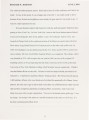
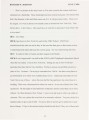
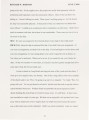
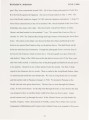
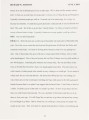
Show RI HARD W. JOH ON '200-t was twelve students. When I was teaching it was eighty tudent . his wa b cau f the GI Bill. All these returning veterans were returning to school. ne year eighty graduating electrical engineers went to Southern California, every one of them. Not one of them stayed in Utah. That condition continued on for years. You know, Sid Smith, who's twelve years younger than I am or more ended up finding that he couldn't stay in Utah. But he went even further because he had a PhD. The offers from companies he got from companies all over the country just made it impossible to stay here. That situation didn't change for many years. A company named Sperry came here. They came here because they recognized that they could get cheap engineers. People who wanted to stay here and were willing to take less pay. So, all of us down at the big company I worked for, Hughes down there, a crew from Utah went up and interviewed with Sperry and they looked at us and they said, "You're paid too much. We're not interested in you." Now I have a good friend who was working for the Navy Research Labs down in San Diego and their pay was held down because it was tied to the Congressmen's pay or something. Federal Government pay was held low for a while. He was caught up in that so he immediately took Sperry's offer and came up here. That's how Sid Smith-Sid, by that time had a master's degree, and he worked for Sperry. But Sid saw the handwriting on the wall, that Sperry was going to disappear. That's why he quit Sperry and went to work on his PhD and finished a PhD. But then he found that he couldn't stay in Utah. BEC: Right. DICK: So he chose the closest place, similar to what I did. He chose, rather than going to Southern California or Washington or back East, he chose Broomfield, which is very 41 |
| Reference URL |
https://collections.lib.utah.edu/ark:/87278/s6kw7j4t/1031976 |