| Title |
Richard W. Johnson, Salt Lake City, Utah: an interview by Becky B. Lloyd, June 3, 2004: Saving the Legacy tape no. 654 |
| Alternative Title |
Richard W. Johnson, Saving the legacy: an oral history of Utah's World War II veterans, ACCN 2070, American West Center, University of Utah |
| Creator |
Johnson, Richard W., 1923- |
| Contributor |
Lloyd, Becky B.; University of Utah. American West Center |
| Publisher |
Digitized by J. Willard Marriott Library, University of Utah |
| Date |
2004-06-03 |
| Date Digital |
2015-12-16 |
| Access Rights |
I acknowledge and agree that all information I obtain as a result of accessing any oral history provided by the University of Utah's Marriott Library shall be used only for historical or scholarly or academic research purposes, and not for commercial purposes. I understand that any other use of the materials is not authorized by the University of Utah and may exceed the scope of permission granted to the University of Utah by the interviewer or interviewee. I may request permission for other uses, in writing to Special Collections at the Marriott Library, which the University of Utah may choose grant, in its sole discretion. I agree to defend, indemnify and hold the University of Utah and its Marriott Library harmless for and against any actions or claims that relate to my improper use of materials provided by the University of Utah. |
| Spatial Coverage |
Hawaii |
| Subject |
Johnson, Richard W., 1923- --Interviews; Veterans--United States--Biography; World War, 1939-1945--Personal narratives, American; World War, 1939-1945--Naval operations, American |
| Keywords |
Electrical engineering; Electronics officer; Radar; Troop transport |
| Description |
Transcript (48 pages) of an interview by Becky B. Lloyd with Richard W. Johnson on June 3, 2004. From tape number 654 in the "Saving the Legacy" Oral History Project |
| Collection Number and Name |
Accn2070, Saving the Legacy oral history project, 2001-2010 |
| Abstract |
Mr. Johnson was born on July 21, 1923, in Salt Lake City, Utah. He graduated South High School in 1940 and attended the University of Utah studying engineering. He was allowed to defer enlistment until the spring of 1944 when he graduated for college and entered the Navy as an ensign. Traveled to Fort Schulyer, New York, for naval indoctrination school, then was sent to Harvard University for advanced studies in electrical engineering from December 1944 to March 1945. He then attended radar school at MIT from March 1945 to June 1945. His next assignment was to Bell Telephone Laboratories in New York. When the war ended, he was ordered to Pearl Harbor where he was assigned to the USS Wisconsin BB-64 ferrying returning GIs to San Francisco. He was the electronics officer in charge of radar onboard the Wisconsin. He describes his experiences during that time. The Wisconsin traveled through the Panama Canal to Norfolk, Virginia, for repairs. While waiting for repairs, he was assigned to a different ship on training maneuvers for a month. He describes his experiences there. He separated from the Navy in September 1946, but stayed in the Naval Reserves for a few years following. Mr. Johnson worked for Hughes Aircraft as an electrical engineer. Interviewed by Becky Lloyd. 48 pages. |
| Type |
Text |
| Genre |
oral histories (literary works) |
| Format |
application/pdf |
| Extent |
48 pages |
| Language |
eng |
| Rights |
 |
| Scanning Technician |
Mazi Rakhsha |
| Conversion Specifications |
Original scanned with Kirtas 2400 and saved as 400 ppi uncompressed TIFF. PDF generated by Adobe Acrobat Pro X for CONTENTdm display |
| ARK |
ark:/87278/s6kw7j4t |
| Topic |
Personal narratives--American; Veterans; World War (1939-1945); Military operations, Naval--American |
| Setname |
uum_slohp |
| ID |
1031984 |
| Reference URL |
https://collections.lib.utah.edu/ark:/87278/s6kw7j4t |
| Title |
Page 8 |
| Format |
application/pdf |
| Setname |
uum_slohp |
| ID |
1031943 |
| OCR Text |
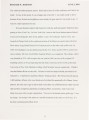
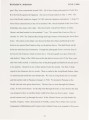
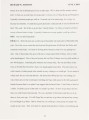
Show RICHARD W. JOHN ON J 2004 So the whole engineering school, who were not seniors ready to graduate w nt trooping down to the post office. The Salt Lake recruiting office of the Navy got a gold star that month, they recruited so much. Well, my draft board sent me a letter saying "We see that you're within three months of graduating so we're going to give you another deferment." You know, deferments were given for short periods of time. So then, I could graduate. Well that was good for me when I looked around to see what my options were after that. With a college degree, my options were extended. The Navy had a program where I joined and received a commission and became an officer. That was interesting because I knew nothing about the Navy. I received this telegram saying, "Your ensign commission held this office. Go find a Navy officer and give him these papers and get him to swear you in." So I went down to the Salt Lake City post office on Fourth South and Main Street. The only Navy officer that I knew about was the medical doctor who was giving the physical exams in the recruiting office. So I went into him and stuffed these papers in his hand and he looked at the papers. He said, "Is this you?" I said, "Yes." He said, "Kind of young, aren't you?" He said, "Raise your hand." He swore me in as an officer in the Navy. I went down to the Deseret Book Store and bought a book called the Naval Officer's Guide and sat down to read this book to find out what I was getting into (laughs). BEC: Did that wind up being usef\11, that book? DICK: Yes, the book was helpful. You know, the thing that was scary was that if you walked down the street and other naval persons were supposed to salute you, I thought, "What do I need with that?" I had to buy all of the uniforms here in Salt Lake City. They gave me a list of all the things. I was ordered to arrive at a station in New York 8 |
| Reference URL |
https://collections.lib.utah.edu/ark:/87278/s6kw7j4t/1031943 |