| Title |
Richard W. Johnson, Salt Lake City, Utah: an interview by Becky B. Lloyd, June 3, 2004: Saving the Legacy tape no. 654 |
| Alternative Title |
Richard W. Johnson, Saving the legacy: an oral history of Utah's World War II veterans, ACCN 2070, American West Center, University of Utah |
| Creator |
Johnson, Richard W., 1923- |
| Contributor |
Lloyd, Becky B.; University of Utah. American West Center |
| Publisher |
Digitized by J. Willard Marriott Library, University of Utah |
| Date |
2004-06-03 |
| Date Digital |
2015-12-16 |
| Access Rights |
I acknowledge and agree that all information I obtain as a result of accessing any oral history provided by the University of Utah's Marriott Library shall be used only for historical or scholarly or academic research purposes, and not for commercial purposes. I understand that any other use of the materials is not authorized by the University of Utah and may exceed the scope of permission granted to the University of Utah by the interviewer or interviewee. I may request permission for other uses, in writing to Special Collections at the Marriott Library, which the University of Utah may choose grant, in its sole discretion. I agree to defend, indemnify and hold the University of Utah and its Marriott Library harmless for and against any actions or claims that relate to my improper use of materials provided by the University of Utah. |
| Spatial Coverage |
Hawaii |
| Subject |
Johnson, Richard W., 1923- --Interviews; Veterans--United States--Biography; World War, 1939-1945--Personal narratives, American; World War, 1939-1945--Naval operations, American |
| Keywords |
Electrical engineering; Electronics officer; Radar; Troop transport |
| Description |
Transcript (48 pages) of an interview by Becky B. Lloyd with Richard W. Johnson on June 3, 2004. From tape number 654 in the "Saving the Legacy" Oral History Project |
| Collection Number and Name |
Accn2070, Saving the Legacy oral history project, 2001-2010 |
| Abstract |
Mr. Johnson was born on July 21, 1923, in Salt Lake City, Utah. He graduated South High School in 1940 and attended the University of Utah studying engineering. He was allowed to defer enlistment until the spring of 1944 when he graduated for college and entered the Navy as an ensign. Traveled to Fort Schulyer, New York, for naval indoctrination school, then was sent to Harvard University for advanced studies in electrical engineering from December 1944 to March 1945. He then attended radar school at MIT from March 1945 to June 1945. His next assignment was to Bell Telephone Laboratories in New York. When the war ended, he was ordered to Pearl Harbor where he was assigned to the USS Wisconsin BB-64 ferrying returning GIs to San Francisco. He was the electronics officer in charge of radar onboard the Wisconsin. He describes his experiences during that time. The Wisconsin traveled through the Panama Canal to Norfolk, Virginia, for repairs. While waiting for repairs, he was assigned to a different ship on training maneuvers for a month. He describes his experiences there. He separated from the Navy in September 1946, but stayed in the Naval Reserves for a few years following. Mr. Johnson worked for Hughes Aircraft as an electrical engineer. Interviewed by Becky Lloyd. 48 pages. |
| Type |
Text |
| Genre |
oral histories (literary works) |
| Format |
application/pdf |
| Extent |
48 pages |
| Language |
eng |
| Rights |
 |
| Scanning Technician |
Mazi Rakhsha |
| Conversion Specifications |
Original scanned with Kirtas 2400 and saved as 400 ppi uncompressed TIFF. PDF generated by Adobe Acrobat Pro X for CONTENTdm display |
| ARK |
ark:/87278/s6kw7j4t |
| Topic |
Personal narratives--American; Veterans; World War (1939-1945); Military operations, Naval--American |
| Setname |
uum_slohp |
| ID |
1031984 |
| Reference URL |
https://collections.lib.utah.edu/ark:/87278/s6kw7j4t |
| Title |
Page 39 |
| Format |
application/pdf |
| Setname |
uum_slohp |
| ID |
1031974 |
| OCR Text |
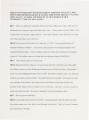
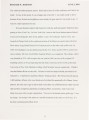
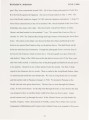
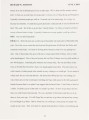
Show RI HARDW.JOHN ON J 2004 about ten dollars more a week than a young lady who got out of high ch 1 and b cam a secretary. All I had to do was go any other place and I could get much bett r professional situations. So I looked for some time and didn't find anything that I thought was worthwhile. Finally, I went down to the steel plant in Provo, Geneva Steel it was called. I found that there was an electrical engineer down there. He would have hired me but he said, "I think you shouldn't work in my office. You'll really have to go down on the floor if you're going to become a steel man and become an electrician." I finally decided that maybe I'd do that, but when I finally went down there, I found that some guy who graduated from school five years before I did had taken that job. So I found a professional job. I still had a negative feeling about Los Angeles. That was irrational but I found this job over in Denver, Colorado, which was a professional engineers job with the Bureau of Reclamation. So I took it. That was in 1947, early 1947. I arranged for it in December. While I was working at the Chief Engineer's office in the Bureau of Reclamation, which I worked for approximately two years, they taught graduate courses. The head of the Department of Electrical Engineering from Boulder, Colorado, the University of Colorado, came down to the Bureau of Reclamation and taught classes right in the Bureau's offices. So I just took some classes there and I kept at it during the time I worked for them. Then I still had the feeling that I wanted to get back to Utah. This was after I was married. So a fellow that had been in my class at the University of Utah was teaching there and he called and said, "How would you like to come and teach at the University of Utah?" The Bureau of Reclamation had a serious problem with the appropriation of 39 |
| Reference URL |
https://collections.lib.utah.edu/ark:/87278/s6kw7j4t/1031974 |