| Title |
Paul W. Levorsen, Murray, Utah: an interview by Benjamin Bahlmann, September 21, 2002: Saving the Legacy tape no. 541 |
| Alternative Title |
Paul W. Levorsen, Saving the legacy: an oral history of Utah's World War II veterans, ACCN 2070, American West Center, University of Utah |
| Creator |
Levorsen, Paul W., 1922-2011 |
| Contributor |
Bahlmann, Benjamin J.; University of Utah. American West Center |
| Publisher |
Digitized by J. Willard Marriott Library, University of Utah |
| Date |
2002-09-21 |
| Date Digital |
2015-12-16 |
| Access Rights |
I acknowledge and agree that all information I obtain as a result of accessing any oral history provided by the University of Utah's Marriott Library shall be used only for historical or scholarly or academic research purposes, and not for commercial purposes. I understand that any other use of the materials is not authorized by the University of Utah and may exceed the scope of permission granted to the University of Utah by the interviewer or interviewee. I may request permission for other uses, in writing to Special Collections at the Marriott Library, which the University of Utah may choose grant, in its sole discretion. I agree to defend, indemnify and hold the University of Utah and its Marriott Library harmless for and against any actions or claims that relate to my improper use of materials provided by the University of Utah. |
| Spatial Coverage |
New Zealand; Tarawa Atoll, Kiribati; Saipan, Northern Mariana Islands; Hawaii |
| Subject |
Levorsen, Paul W., 1922-2011--Interviews; Veterans--Utah--Biography; World War, 1939-1945--Personal narratives, American; World War, 1939-1945--Military operations, American; World War, 1939-1945--Artillery operations, American; World War, 1939-1945--Campaigns--Pacific Area--Personal narratives, American |
| Keywords |
Marine Corps; Burial detail; Howitzer |
| Description |
Transcript (30 pages) of an interview by Benjamin Bahlmann with Paul W. Levorsen on September 21, 2002. From tape number 541 in the "Saving the Legacy" Oral History Project |
| Collection Number and Name |
Accn2070, Saving the Legacy oral history project, 2001-2010 |
| Abstract |
Levorsen (b. 1922) was born in Magna, Utah. He joined the Marine Corps "Mormon Battalion of 1943" and took training in San Diego, California. He was based in New Zealand before joining combat in Tarawa and later Saipan. He briefly discusses his experiences. He was part of the 4th Battalion, Battery L, 10th Marines, 2nd Division. He returned to the US (North Carolina and Florida) for additional training before discharge when the war ended. Mr. Levorsen worked as a school teacher for his profession. Interviewed by Benjamin Bahlmann. 30 pages. |
| Type |
Text |
| Genre |
oral histories (literary works) |
| Format |
application/pdf |
| Extent |
30 pages |
| Language |
eng |
| Rights |
 |
| Scanning Technician |
Mazi Rakhsha |
| Conversion Specifications |
Original scanned with Kirtas 2400 and saved as 400 ppi uncompressed TIFF. PDF generated by Adobe Acrobat Pro X for CONTENTdm display |
| ARK |
ark:/87278/s6t45w57 |
| Topic |
Personal narratives--American; Veterans; World War (1939-1945) |
| Setname |
uum_slohp |
| ID |
1029863 |
| Reference URL |
https://collections.lib.utah.edu/ark:/87278/s6t45w57 |
| Title |
Page 17 |
| Format |
application/pdf |
| Setname |
uum_slohp |
| ID |
1029848 |
| OCR Text |
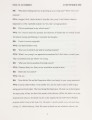
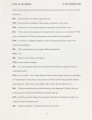
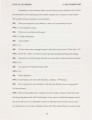
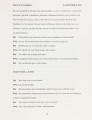
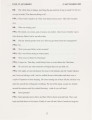
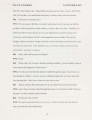
Show P UL W. LEVOR E 21 p B R2 02 crawl d in my foxhole, we had a two-man foxhole and it was a nic big c mfi rtabl and this plane came over and circled around looking for us and our old sergeant t k off with a thirty caliber machine gun and was going to shoot him down. So he just turned around and dropped all his bombs right there. Boy, the whole ground shook. Anyway, the next night I had a smaller single man foxhole. That big one was too big. I was afraid they'd drop a bomb in. But there wasn't too much response from the enemy. [Regarding his time on Tarawa, Paul wrote, "Continuing in a north-northeast direction we approached another chain of islands, the [Gilbert] Islands. Circling the group, our battleships fired broadside at one of the islands which was heavily fortified: Tarawa. It was really interesting to watch one of those huge battleships fire on the island. Their huge bulk would roll away from the muzzles of the guns, and as the ship would roll back, the sights lined up again, and another broadside would deafen all around. The Air Force had bombed the fortress heavily for two days before this. Then with the terrible fire from the battleships, it was thought that nothing would be alive on the island. (Not many trees were left.) So, pulling into the lagoon, the flotilla began to unload the Marines. Hundreds of amphibious tractors slowly approached the beach. The AmTracs (amphibious tractors) lowered their gates and the boys streamed toward shore. However, the Japs were dug in the sand very deep, with cocoanut logs overhead. So the Marines were met by the almost complete garrison that was defending the island. Needless to say, the slaughter was gruesome. To establish a beachhead nearby one thousand boys and men gave up their lives. The water was littered with crushed boats and vehicles-not counting the endless pile-up of dead bodies. Finally, though, a breach was forced and the Marines pushed the enemy to the end of the island. Then it was time 16 |
| Reference URL |
https://collections.lib.utah.edu/ark:/87278/s6t45w57/1029848 |