| Title |
Robert Keith "Scotty" Allan, Magna, Utah: an interview by Becky B. Lloyd, August 11, 2004: Saving the Legacy tape no. 697 |
| Alternative Title |
Robert Keith "Scotty" Allan, Saving the legacy: an oral history of Utah's World War II veterans, ACCN 2070, American West Center, University of Utah |
| Creator |
Allan, Scotty (Robert Keith), 1919-2007 |
| Contributor |
Lloyd, Becky B.; University of Utah. American West Center |
| Publisher |
Digitized by J. Willard Marriott Library, University of Utah |
| Date |
2004-08-11 |
| Date Digital |
2015-12-16 |
| Access Rights |
I acknowledge and agree that all information I obtain as a result of accessing any oral history provided by the University of Utah's Marriott Library shall be used only for historical or scholarly or academic research purposes, and not for commercial purposes. I understand that any other use of the materials is not authorized by the University of Utah and may exceed the scope of permission granted to the University of Utah by the interviewer or interviewee. I may request permission for other uses, in writing to Special Collections at the Marriott Library, which the University of Utah may choose grant, in its sole discretion. I agree to defend, indemnify and hold the University of Utah and its Marriott Library harmless for and against any actions or claims that relate to my improper use of materials provided by the University of Utah. |
| Spatial Coverage |
Solomon Islands; Hawaii; Philippines; Midway Islands; Okinawa, Japan; Korea |
| Subject |
Allan, Scotty (Robert Keith), 1919-2007--Interviews; Veterans--United States--Biography; World War, 1939-1945--Personal narratives, American; World War, 1939-1945--Military operations, American; World War, 1939-1945--Campaigns--Pacific Area--Personal narratives, American; World War, 1939-1945--Campaigns--Japan--Okinawa Island--Personal narratives, American |
| Description |
Transcript (34 pages) of an interview by Becky B. Lloyd with Robert Keith "Scotty" Allan on August 11, 2004. From tape number 697 in the "Saving the Legacy" Oral History Project |
| Collection Number and Name |
Accn2070, Saving the Legacy oral history project, 2001-2010 |
| Abstract |
Allan (b. 1919) was born in Garfield, Utah. He enlisted in the army in 1941, took basic training in Everett, Washington, and was shipped to a B-17 squadron at Hickam Field. He was at Midway and in the Solomon Islands in 1942, then graduated from OCS at Camp Davis in 1943. He was assigned to 10th Army headquarters at Fort Sam Houston, Texas, then shipped to Hawaii to participate in the planning for the invasion of Okinawa. He was engaged in the battle for Okinawa. After the war Allan was assigned to the 17th Army headquarters in Seoul, Korea, as liaison officer. He was discharged in early 1946, but stayed in the reserves and retired with 36 years of military service. Interviewed by Becky Lloyd. 34 pages. |
| Type |
Text |
| Genre |
oral histories (literary works) |
| Format |
application/pdf |
| Extent |
34 pages |
| Language |
eng |
| Rights |
 |
| Scanning Technician |
Mazi Rakhsha |
| Conversion Specifications |
Original scanned with Kirtas 2400 and saved as 400 ppi uncompressed TIFF. PDF generated by Adobe Acrobat Pro X for CONTENTdm display |
| ARK |
ark:/87278/s6vh7qxw |
| Topic |
Personal narratives--American; Veterans; World War (1939-1945) |
| Setname |
uum_slohp |
| ID |
1029250 |
| Reference URL |
https://collections.lib.utah.edu/ark:/87278/s6vh7qxw |
| Title |
Page 19 |
| Format |
application/pdf |
| Setname |
uum_slohp |
| ID |
1029234 |
| OCR Text |
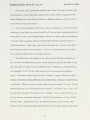
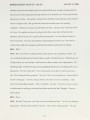
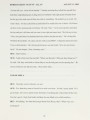
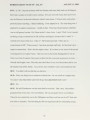
Show He made a liaison officer out of me up there. I went down to th Japan Seventeenth Army Headquarters there in Seoul. They had a big headquarter . o I g t a language officer as an interpreter. His name was Joe Boswell. He looked just like Harold Lloyd, you know, the movie comedian with the big horn rimmed glasses. He was about as funny. He was a Harvard graduate and he'd learned Japanese as a hobby when he was a kid. He could read it and write it. You could get interpreters and stuff but he wrote the surrender document when we went to Korea for them to sign. He was a brilliant kid but he was funny. He had a tender stomach and we weren't supposed to fraternize, as they called it, with the enemy. We were just supposed to keep track of them. I went down there. The first day I went in, there was a big, good-looking Japanese lieutenant who came out and saluted me and told me what his name was and all that stuff and I talked to him a minute in English. Boswell sat there and listened to him. So I finally said to him, "Where are you from, anyway? You speak American. You don't speak English." All the English that the Japanese knew they got from the Australians. So the ones who'd been taught English in Japan all spoke the King's English. They'd have instructors come from Australia. You could tell them, the Japanese who spoke the King's English and the ones who spoke American. So I said to him, "Where are you from, anyway?" He said, "Well, I'm from Long Beach." I said, "What the hell are you doing over here?'' He said, "Well, before the war, the family moved back here and they drafted me." So anyway, I said, "Did you go to Long Beach High School?" He said, "Yes." I said, "Did you know Georgia Bluccark?" He said, "Yes, I graduated with her." She was a girlfriend I used to go with in Los Angeles. 19 |
| Reference URL |
https://collections.lib.utah.edu/ark:/87278/s6vh7qxw/1029234 |