| Title |
Francine Sorensen, Salt Lake City, Utah: an interview by Frances Merrill, April 14, 2004 |
| Alternative Title |
Francine Sorensen, Saving the legacy: an oral history of Utah's World War II veterans, ACCN 2070, American West Center, University of Utah |
| Creator |
Sorensen, Francine, 1948- |
| Contributor |
Merrill, Frances; University of Utah. American West Center |
| Publisher |
Digitized by J. Willard Marriott Library, University of Utah |
| Date |
2004-04-14 |
| Date Digital |
2015-12-16 |
| Access Rights |
I acknowledge and agree that all information I obtain as a result of accessing any oral history provided by the University of Utah's Marriott Library shall be used only for historical or scholarly or academic research purposes, and not for commercial purposes. I understand that any other use of the materials is not authorized by the University of Utah and may exceed the scope of permission granted to the University of Utah by the interviewer or interviewee. I may request permission for other uses, in writing to Special Collections at the Marriott Library, which the University of Utah may choose grant, in its sole discretion. I agree to defend, indemnify and hold the University of Utah and its Marriott Library harmless for and against any actions or claims that relate to my improper use of materials provided by the University of Utah. |
| Spatial Coverage |
San Diego, San Diego County, California, United States |
| Subject |
Sorensen, Francine, 1948- --Interviews; Vietnam War, 1961-1975--Personal narratives, American; Vietnam War, 1961-1975--Women--United States--Biography; United States--Naval Reserve--Women's Reserve; Veterans--United States--Biography |
| Keywords |
Disbursing clerk; Naval Finance Center; WAVEs |
| Description |
Transcript (20 pages) of an interview by Frances Merrill with Francine Sorensen on April 14, 2004. Part of the "Saving the Legacy" Oral History Project |
| Collection Number and Name |
Accn2070, Saving the Legacy oral history project, 2001-2010 |
| Abstract |
Sorensen (b. 1948) enlisted in the Navy in March 1968. She served as a Petty Officer 3rd Class Disbursing Clerk at the Naval Finance Center in San Diego until 1970. Interviewed by Frances Merrill. 20 pages. |
| Type |
Text |
| Genre |
oral histories (literary works) |
| Format |
application/pdf |
| Extent |
20 pages |
| Language |
eng |
| Rights |
 |
| Scanning Technician |
Mazi Rakhsha |
| Conversion Specifications |
Original scanned with Kirtas 2400 and saved as 400 ppi uncompressed TIFF. PDF generated by Adobe Acrobat Pro X for CONTENTdm display |
| ARK |
ark:/87278/s67s9qtg |
| Topic |
Personal narratives--American; Veterans; Vietnam War (1961-1975); United States. Naval Reserve. Women's Reserve |
| Setname |
uum_slohp |
| ID |
1029004 |
| Reference URL |
https://collections.lib.utah.edu/ark:/87278/s67s9qtg |
| Title |
Page 9 |
| Format |
application/pdf |
| Setname |
uum_slohp |
| ID |
1028991 |
| OCR Text |
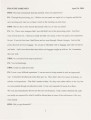
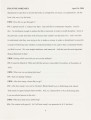
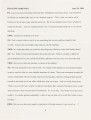
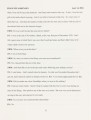
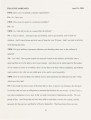
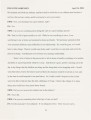
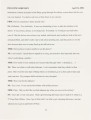
Show FRANCINE OREN EN pril 14, 2004 F : I ate in the mess hall when I lived on base. Breakfasts were pretty good. I can rem mber for dinner our standard joke was-it was "breaded surprise.' That's what we used to call it because we never knew quite what the meat was. But it was standard issue to have a bottle of catsup on the table. And our standard practice was, if you put enough catsup on it, you can eat anything. FHM: And did you find that to be true? FS: That's exactly what we did if it was something that we just could not identify, had no clue. You just put on enough catsup and you can eat anything. FHM: So, at the place that you worked in San Diego they did have a mess hall facility there? FS: Yes. When I lived in the barracks I ate in the mess hall. When I was able to afford it I got an apartment of my own, and lived off base, and then took care of my own food after that. FHM: Did you ever feel any pressure, or stress, in the military? FS: We were pressured to do a lot of work. As women in the military we were kind of trained to prove ourselves that we were valuable members of a team. There was resentment towards the women. Particularly, the men would come in on the big ships, and they'd bring all their payroll records in and work out of our office while their ship was in port. And we would always hear, "Well, if you weren't here, maybe I could have had shore duty, instead of having to be on a ship." And, you know, there was that kind of resentment. So, it was like, "You better prove that you're worth it. You better perform adequately so that we can see that you're worth this bother to have you here." FHM: Did you ever have any negative experiences of losing someone's pay record, or ... ? 8 |
| Reference URL |
https://collections.lib.utah.edu/ark:/87278/s67s9qtg/1028991 |