| Title |
Joseph A. Cha, Price, Utah: an interview by Winston P. Erickson, June 28, 2002: Saving the Legacy tape nos. 460 & 461 |
| Alternative Title |
Joseph A. Cha, Saving the legacy: an oral history of Utah's World War II veterans, ACCN 2070, American West Center, University of Utah |
| Creator |
Cha, Joseph A., 1921-2009 |
| Contributor |
Erickson, Winston P., 1943-; University of Utah. American West Center |
| Publisher |
Digitized by J. Willard Marriott Library, University of Utah |
| Date |
2002-06-28 |
| Date Digital |
2015-12-16 |
| Access Rights |
I acknowledge and agree that all information I obtain as a result of accessing any oral history provided by the University of Utah's Marriott Library shall be used only for historical or scholarly or academic research purposes, and not for commercial purposes. I understand that any other use of the materials is not authorized by the University of Utah and may exceed the scope of permission granted to the University of Utah by the interviewer or interviewee. I may request permission for other uses, in writing to Special Collections at the Marriott Library, which the University of Utah may choose grant, in its sole discretion. I agree to defend, indemnify and hold the University of Utah and its Marriott Library harmless for and against any actions or claims that relate to my improper use of materials provided by the University of Utah. |
| Spatial Coverage |
Algeria; Tunisia; Italy; Carbon County, Utah, United States |
| Subject |
Cha, Joseph A., 1921-2009--Interviews; Veterans--United States--Biography; World War, 1939-1945--Personal narratives, American; World War, 1939-1945--Campaigns--Europe, Southern--Personal narratives, American |
| Keywords |
Aircraft mechanics; Army Air Corps; Aerial photographs; Photographic reconnaissance; Panama Canal; Coal mining; Mining camps; Coal miners |
| Description |
Transcript (50 pages) of an interview by Becky B. Lloyd with Joseph A. Cha on June 28, 2002. From tape numbers 460 and 461 in the "Saving the Legacy" Oral History Project |
| Collection Number and Name |
Accn2070, Saving the Legacy oral history project, 2001-2010 |
| Abstract |
Mr. Cha (b. 1921) was born in Kenilworth, Utah. He discusses life growing up in coal mining camps of Utah. He enlisted in the Army Air Corps on November 6, 1942. Received basic training at Fort Ord. Attended aircraft mechanics school in La Junta, Colorado. He was transferred to Kearns, Utah, for advanced training. Eventually he left from New York to leMarse. He was assigned to the 3rd Photo Recon group, 12th Photo Squadron in September 1943. Served as crew chief and mechanic for P-38s. He moved with his unit north into Italy where he stayed until the war ended in Europe. His group boarded ships to cross the Atlantic. VJ Day was announced as they approached the Panama Canal. Passed through the canal, turned around, passed through the opposite way and traveled to New Jersey. He was discharged from Fort Douglas in October 1945 at the rank of sergeant. Mr. Cha's career was spent working in the coal mining industry in Utah. Interviewed by Winston Erickson. 50 pages. |
| Type |
Text |
| Genre |
oral histories (literary works) |
| Format |
application/pdf |
| Extent |
50 pages |
| Language |
eng |
| Rights |
 |
| Scanning Technician |
Mazi Rakhsha |
| Conversion Specifications |
Original scanned with Kirtas 2400 and saved as 400 ppi uncompressed TIFF. PDF generated by Adobe Acrobat Pro X for CONTENTdm display |
| ARK |
ark:/87278/s6h43tjs |
| Topic |
Personal narratives--American; Veterans; World War (1939-1945) |
| Setname |
uum_slohp |
| ID |
1028933 |
| Reference URL |
https://collections.lib.utah.edu/ark:/87278/s6h43tjs |
| Title |
Page 49 |
| Format |
application/pdf |
| Setname |
uum_slohp |
| ID |
1028931 |
| OCR Text |
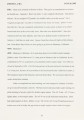
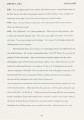
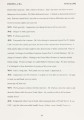
Show JO PH A. H J 2 2 2 di ea e endemic to the region of North Africa where Mr. ha r ed. Th di ea e ha reemerged recently in America Forces deployed in Iraq. It i cau ed by infection from viruse of the Bunyaviridae family. The virus is transmitted by bite from femal sandjlies. Symptoms may include fever, frontal headache, lethargy, malaise, retroorbital pain, conjunctivitis, photophobia, neck rigidity, low back pain, myalgia, meningitis, encephalitis, and confusion. Treatment is as f or any other viral infection. Prevention is achieved though use of insect repellent.] It made me feel like I had the flu, a bad flu. I was so weak that I wasn't able to go out of my tent to work on my plane. I had to go to the medical sergeant who was in charge of our squadron. He asked me what was wrong and I told him what I had and so they took me down to Tunis. They had an Army hospital there. They told me I had Sandfly Fever and I was there for about two weeks in the hospital. They had to build my resistance back up so I was able to get back to my squadron to work at the base. When I was there at the Army hospital, I saw many soldiers who were worse off than I was. Some had amputated legs and arms, yellow jaundice, and different illness. There were guys with shellshock. I thought I was pretty lucky just to get away from that hospital and get back to the squadron. WIN: I guess if you're going to have something happen to you, Sandfly Fever can't be too bad. MAR: That's for sure. JOE: I've talked to this one girl. She worked for the hospital. I asked her, "Have you ever heard of Sandfly Fever. She told me yes. There is such a thing as Sandfly Fever and I thought it would be a good thing to mention in this report. WIN: Sure. 49 |
| Reference URL |
https://collections.lib.utah.edu/ark:/87278/s6h43tjs/1028931 |