| Title |
Joseph A. Cha, Price, Utah: an interview by Winston P. Erickson, June 28, 2002: Saving the Legacy tape nos. 460 & 461 |
| Alternative Title |
Joseph A. Cha, Saving the legacy: an oral history of Utah's World War II veterans, ACCN 2070, American West Center, University of Utah |
| Creator |
Cha, Joseph A., 1921-2009 |
| Contributor |
Erickson, Winston P., 1943-; University of Utah. American West Center |
| Publisher |
Digitized by J. Willard Marriott Library, University of Utah |
| Date |
2002-06-28 |
| Date Digital |
2015-12-16 |
| Access Rights |
I acknowledge and agree that all information I obtain as a result of accessing any oral history provided by the University of Utah's Marriott Library shall be used only for historical or scholarly or academic research purposes, and not for commercial purposes. I understand that any other use of the materials is not authorized by the University of Utah and may exceed the scope of permission granted to the University of Utah by the interviewer or interviewee. I may request permission for other uses, in writing to Special Collections at the Marriott Library, which the University of Utah may choose grant, in its sole discretion. I agree to defend, indemnify and hold the University of Utah and its Marriott Library harmless for and against any actions or claims that relate to my improper use of materials provided by the University of Utah. |
| Spatial Coverage |
Algeria; Tunisia; Italy; Carbon County, Utah, United States |
| Subject |
Cha, Joseph A., 1921-2009--Interviews; Veterans--United States--Biography; World War, 1939-1945--Personal narratives, American; World War, 1939-1945--Campaigns--Europe, Southern--Personal narratives, American |
| Keywords |
Aircraft mechanics; Army Air Corps; Aerial photographs; Photographic reconnaissance; Panama Canal; Coal mining; Mining camps; Coal miners |
| Description |
Transcript (50 pages) of an interview by Becky B. Lloyd with Joseph A. Cha on June 28, 2002. From tape numbers 460 and 461 in the "Saving the Legacy" Oral History Project |
| Collection Number and Name |
Accn2070, Saving the Legacy oral history project, 2001-2010 |
| Abstract |
Mr. Cha (b. 1921) was born in Kenilworth, Utah. He discusses life growing up in coal mining camps of Utah. He enlisted in the Army Air Corps on November 6, 1942. Received basic training at Fort Ord. Attended aircraft mechanics school in La Junta, Colorado. He was transferred to Kearns, Utah, for advanced training. Eventually he left from New York to leMarse. He was assigned to the 3rd Photo Recon group, 12th Photo Squadron in September 1943. Served as crew chief and mechanic for P-38s. He moved with his unit north into Italy where he stayed until the war ended in Europe. His group boarded ships to cross the Atlantic. VJ Day was announced as they approached the Panama Canal. Passed through the canal, turned around, passed through the opposite way and traveled to New Jersey. He was discharged from Fort Douglas in October 1945 at the rank of sergeant. Mr. Cha's career was spent working in the coal mining industry in Utah. Interviewed by Winston Erickson. 50 pages. |
| Type |
Text |
| Genre |
oral histories (literary works) |
| Format |
application/pdf |
| Extent |
50 pages |
| Language |
eng |
| Rights |
 |
| Scanning Technician |
Mazi Rakhsha |
| Conversion Specifications |
Original scanned with Kirtas 2400 and saved as 400 ppi uncompressed TIFF. PDF generated by Adobe Acrobat Pro X for CONTENTdm display |
| ARK |
ark:/87278/s6h43tjs |
| Topic |
Personal narratives--American; Veterans; World War (1939-1945) |
| Setname |
uum_slohp |
| ID |
1028933 |
| Reference URL |
https://collections.lib.utah.edu/ark:/87278/s6h43tjs |
| Title |
Page 29 |
| Format |
application/pdf |
| Setname |
uum_slohp |
| ID |
1028911 |
| OCR Text |
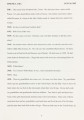
Show JO EPHA.CHA J 2 2002 WIN: I guess the missions of the airplanes then was, was it to a s s bomb damag r was it to photograph enemy troop locations? JOE: Well, we lost a pilot and P-38. I was assistant crew chief on this plane. It was a brand new plane. It was a G-series, a beautiful plane. Everything on that plane was automatic. They even came out with hydraulic ailerons. The pilots were kind of worried about that hydraulic aileron, you know? It was a new modification to that plane. This pilot, I don't remember his name. He was a second lieutenant. He took off. That's when they were pulling the invasion of the Anzio beachhead. He went to fly to photograph that and the plane never did come back. The guys waited at the airbase there but he never did come back. That's the only plane that we lost when I was there during the war. WIN: That's the only one you lost? JOE: But this Lieutenant Toomey, he was shot down twice. Twice he was shot down over enemy lines. He lost both planes but he was able work his way back to the squadron. WIN: Did he fly again? JOE: Oh, yes. He loved to fly. He, like some others of those pilots, took two tours. [Editor's note: In the Air Corps pilots or other air crew who completed a .fixed number of combat missions (a tour) or were eligible to rotate home. Length of a tour early in the war was twenty-five combat missions. This was later increased to thirty-five combat missions.] They'd fly a tour, go home, come back and go on a second tour. They'd fly. It's just like they say, "If you get bucked off a horse, you'd better climb right back on him, again." That's what they'd do. 29 |
| Reference URL |
https://collections.lib.utah.edu/ark:/87278/s6h43tjs/1028911 |