| Title |
Joseph A. Cha, Price, Utah: an interview by Winston P. Erickson, June 28, 2002: Saving the Legacy tape nos. 460 & 461 |
| Alternative Title |
Joseph A. Cha, Saving the legacy: an oral history of Utah's World War II veterans, ACCN 2070, American West Center, University of Utah |
| Creator |
Cha, Joseph A., 1921-2009 |
| Contributor |
Erickson, Winston P., 1943-; University of Utah. American West Center |
| Publisher |
Digitized by J. Willard Marriott Library, University of Utah |
| Date |
2002-06-28 |
| Date Digital |
2015-12-16 |
| Access Rights |
I acknowledge and agree that all information I obtain as a result of accessing any oral history provided by the University of Utah's Marriott Library shall be used only for historical or scholarly or academic research purposes, and not for commercial purposes. I understand that any other use of the materials is not authorized by the University of Utah and may exceed the scope of permission granted to the University of Utah by the interviewer or interviewee. I may request permission for other uses, in writing to Special Collections at the Marriott Library, which the University of Utah may choose grant, in its sole discretion. I agree to defend, indemnify and hold the University of Utah and its Marriott Library harmless for and against any actions or claims that relate to my improper use of materials provided by the University of Utah. |
| Spatial Coverage |
Algeria; Tunisia; Italy; Carbon County, Utah, United States |
| Subject |
Cha, Joseph A., 1921-2009--Interviews; Veterans--United States--Biography; World War, 1939-1945--Personal narratives, American; World War, 1939-1945--Campaigns--Europe, Southern--Personal narratives, American |
| Keywords |
Aircraft mechanics; Army Air Corps; Aerial photographs; Photographic reconnaissance; Panama Canal; Coal mining; Mining camps; Coal miners |
| Description |
Transcript (50 pages) of an interview by Becky B. Lloyd with Joseph A. Cha on June 28, 2002. From tape numbers 460 and 461 in the "Saving the Legacy" Oral History Project |
| Collection Number and Name |
Accn2070, Saving the Legacy oral history project, 2001-2010 |
| Abstract |
Mr. Cha (b. 1921) was born in Kenilworth, Utah. He discusses life growing up in coal mining camps of Utah. He enlisted in the Army Air Corps on November 6, 1942. Received basic training at Fort Ord. Attended aircraft mechanics school in La Junta, Colorado. He was transferred to Kearns, Utah, for advanced training. Eventually he left from New York to leMarse. He was assigned to the 3rd Photo Recon group, 12th Photo Squadron in September 1943. Served as crew chief and mechanic for P-38s. He moved with his unit north into Italy where he stayed until the war ended in Europe. His group boarded ships to cross the Atlantic. VJ Day was announced as they approached the Panama Canal. Passed through the canal, turned around, passed through the opposite way and traveled to New Jersey. He was discharged from Fort Douglas in October 1945 at the rank of sergeant. Mr. Cha's career was spent working in the coal mining industry in Utah. Interviewed by Winston Erickson. 50 pages. |
| Type |
Text |
| Genre |
oral histories (literary works) |
| Format |
application/pdf |
| Extent |
50 pages |
| Language |
eng |
| Rights |
 |
| Scanning Technician |
Mazi Rakhsha |
| Conversion Specifications |
Original scanned with Kirtas 2400 and saved as 400 ppi uncompressed TIFF. PDF generated by Adobe Acrobat Pro X for CONTENTdm display |
| ARK |
ark:/87278/s6h43tjs |
| Topic |
Personal narratives--American; Veterans; World War (1939-1945) |
| Setname |
uum_slohp |
| ID |
1028933 |
| Reference URL |
https://collections.lib.utah.edu/ark:/87278/s6h43tjs |
| Title |
Page 30 |
| Format |
application/pdf |
| Setname |
uum_slohp |
| ID |
1028912 |
| OCR Text |
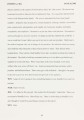
Show JO EPHA.CH J 2 2002 WIN: I heard that if you were shot down and made it back you could a k t b nt home. JOE: Yes they would send them home, but they'd come back for a second tour. WIN: They wanted to come back. JOE: It's just like this Captain Hill; he was our CO (commanding officer) at the time. We had a lot of CO's: Bart, Captain Hill, and a lot of them. He came in one day and his one engine had received some flak. He came in and landed on one engine. But he landed that plane. He went down the runway just as straight as an arrow. Most of our runways were mats; they had those landing mats on (interlocked, perforated steel planking) because we were out in the country. WIN: So how long were you in North Africa? JOE: I stayed in Africa for two and a half years. WIN: You were in Africa that long? JOE: Except for five months in the States. WIN: Did they ever move your squadron to Italy? JOE: Yes, my squadron ... after the fall of the Palermo area in Sicily, our squadron, the lih Photo Squadron of the 3rd Photo Group, air-mapped the whole island of Sicily. It covered a whole big wall. After the fall of the Palermo area, when they got ready to invade, the armies, Patton and Clark and all the other generals, decided to land in Italy; they landed in Salerno, Italy. As they advanced in Southern Italy there they also advanced on the Adriatic side at Bari and Foggia, Italy. Our squadron boarded LSTs, (landing ship, tank) these transport landing ships and they went to Naples. They landed there. Before our squadron took off, I was picked 30 |
| Reference URL |
https://collections.lib.utah.edu/ark:/87278/s6h43tjs/1028912 |