| Title |
Ralph Tracy Clark, Smithfield, Utah: an interview by Becky B. Lloyd, September 9, 2006: Saving the Legacy tape nos. 767 & 768 |
| Alternative Title |
Ralph Tracy Clark, Saving the legacy: an oral history of Utah's World War II veterans, ACCN 2070, American West Center, University of Utah |
| Creator |
Clark, Ralph Tracy, 1926- |
| Contributor |
Lloyd, Becky B.; University of Utah. American West Center |
| Publisher |
Digitized by J. Willard Marriott Library, University of Utah |
| Date |
2006-09-09 |
| Date Digital |
2015-12-16 |
| Access Rights |
I acknowledge and agree that all information I obtain as a result of accessing any oral history provided by the University of Utah's Marriott Library shall be used only for historical or scholarly or academic research purposes, and not for commercial purposes. I understand that any other use of the materials is not authorized by the University of Utah and may exceed the scope of permission granted to the University of Utah by the interviewer or interviewee. I may request permission for other uses, in writing to Special Collections at the Marriott Library, which the University of Utah may choose grant, in its sole discretion. I agree to defend, indemnify and hold the University of Utah and its Marriott Library harmless for and against any actions or claims that relate to my improper use of materials provided by the University of Utah. |
| Spatial Coverage |
Saipan, Northern Mariana Islands; Tinian, Northern Mariana Islands; Okinawa, Japan |
| Subject |
Clark, Ralph Tracy, 1926- --Interviews; Veterans--United States--Biography; World War, 1939-1945--Personal narratives, American; World War, 1939-1945--Naval operations, American; World War, 1939-1945--Campaigns--Pacific Area--Personal narratives, American; Korean War, 1950-1953--Personal narratives, American |
| Keywords |
Nagasaki |
| Description |
Transcript (116 pages) of an interview by Becky B. Lloydl with Ralph Tracy Clark on September 9, 2006. From tape numbers 767 and 768. of the "Saving the Legacy" Oral History Project |
| Collection Number and Name |
Accn2070, Saving the Legacy oral history project, 2001-2010 |
| Abstract |
Clark (b. 1926) briefly describes his childhood in Smithfield, Utah. He enlisted in the Navy in March 1944. His boot camp training took place in San Diego, California, then he was assigned to the DD782 as a "plank owner." He describes his duties as a water tender machinist's mate. Clark served in Saipan, Agulon, Okinawa, and Japan. He describes his time in postwar Nagasaki. He was discharged in 1946. In 1950 he joined the army and was shipped to Korea where he joined the 2nd Infantry Division, Battery A, 38th Field Artillery Battalion, Company B. His recollections include time on "Heartbreak Ridge." After receiving the Silver Star, he was transferred from the infantry to air observer and flew 135 missions. He describes the experience that led to his being awarded the Distinguished Flying Cross. Discharged in 1954 as a first lieutenant. Interviewed by Becky Lloyd. 116 pages. |
| Type |
Text |
| Genre |
oral histories (literary works) |
| Format |
application/pdf |
| Extent |
116 pages |
| Language |
eng |
| Rights |
 |
| Scanning Technician |
Mazi Rakhsha |
| Conversion Specifications |
Original scanned with Kirtas 2400 and saved as 400 ppi uncompressed TIFF. PDF generated by Adobe Acrobat Pro X for CONTENTdm display |
| ARK |
ark:/87278/s6447phs |
| Topic |
Personal narratives--American; Veterans; World War (1939-1945); Military operations, Naval--American; Korean War (1950-1953) |
| Setname |
uum_slohp |
| ID |
1028236 |
| Reference URL |
https://collections.lib.utah.edu/ark:/87278/s6447phs |
| Title |
Page 71 |
| Format |
application/pdf |
| Setname |
uum_slohp |
| ID |
1028190 |
| OCR Text |
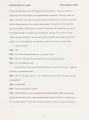
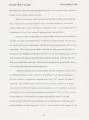
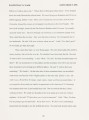
Show RALPH TRA Y L RK P MB R 9, 200 y ur poon to break it up and then you had a cup of hot choc I at . I aid, ' , y u k p it. You'll need it.' Anyway ... BEC: Back at that dugout place where those guys were, did all of them get injur d r killed? RAL: A lot of them did. I don't know whether they had any killed or not. I can't tell you that. It's graphic, but yet I don't think we did. I think they just all got wounded, well, not all. Rakestraw, the medic came over to him, and looked at his knee and the shrapnel didn't penetrate. It just cut him up a bit. Rick was a tough old bird from "Longga Island, New York," he called it. He was a character. He was a lousy soldier back in the battery, in garrison, you might say. He couldn't keep his pants tucked in. He couldn't do this. He couldn't do that. He lost his rifle about two or three times. But up on the hill he'd put that forty or fifty pound radio on his back and he was with me all day long. He'd pack that baby. He was good. He'd carry the rations on top of the radio and I'd carry a blanket or two. Day and night, we'd roll together back to back in those blankets just to keep warm, wet blankets maybe. From that standpoint we had a good relationship. Other than that I didn't believe in the things he did. He didn't believe in the things I did. He'd go on R&R and he'd come back totally dissipated. He had another name for it. But I won't tell you what that was. It was drink and so forth. Once he came up and I said, "Rakestraw, I don't want you up here anymore. You go back right now." He said, "How do I get out?" I said, "You find your own way out. I don't want you here. You get in your tent and don't you dare let the battery commander see you. When you feel like you're ready to come back up, then you can find your way back up again. They can tell you where we are. I don't want you up here." I couldn't depend on him. He 71 |
| Reference URL |
https://collections.lib.utah.edu/ark:/87278/s6447phs/1028190 |