| Title |
Ralph Tracy Clark, Smithfield, Utah: an interview by Becky B. Lloyd, September 9, 2006: Saving the Legacy tape nos. 767 & 768 |
| Alternative Title |
Ralph Tracy Clark, Saving the legacy: an oral history of Utah's World War II veterans, ACCN 2070, American West Center, University of Utah |
| Creator |
Clark, Ralph Tracy, 1926- |
| Contributor |
Lloyd, Becky B.; University of Utah. American West Center |
| Publisher |
Digitized by J. Willard Marriott Library, University of Utah |
| Date |
2006-09-09 |
| Date Digital |
2015-12-16 |
| Access Rights |
I acknowledge and agree that all information I obtain as a result of accessing any oral history provided by the University of Utah's Marriott Library shall be used only for historical or scholarly or academic research purposes, and not for commercial purposes. I understand that any other use of the materials is not authorized by the University of Utah and may exceed the scope of permission granted to the University of Utah by the interviewer or interviewee. I may request permission for other uses, in writing to Special Collections at the Marriott Library, which the University of Utah may choose grant, in its sole discretion. I agree to defend, indemnify and hold the University of Utah and its Marriott Library harmless for and against any actions or claims that relate to my improper use of materials provided by the University of Utah. |
| Spatial Coverage |
Saipan, Northern Mariana Islands; Tinian, Northern Mariana Islands; Okinawa, Japan |
| Subject |
Clark, Ralph Tracy, 1926- --Interviews; Veterans--United States--Biography; World War, 1939-1945--Personal narratives, American; World War, 1939-1945--Naval operations, American; World War, 1939-1945--Campaigns--Pacific Area--Personal narratives, American; Korean War, 1950-1953--Personal narratives, American |
| Keywords |
Nagasaki |
| Description |
Transcript (116 pages) of an interview by Becky B. Lloydl with Ralph Tracy Clark on September 9, 2006. From tape numbers 767 and 768. of the "Saving the Legacy" Oral History Project |
| Collection Number and Name |
Accn2070, Saving the Legacy oral history project, 2001-2010 |
| Abstract |
Clark (b. 1926) briefly describes his childhood in Smithfield, Utah. He enlisted in the Navy in March 1944. His boot camp training took place in San Diego, California, then he was assigned to the DD782 as a "plank owner." He describes his duties as a water tender machinist's mate. Clark served in Saipan, Agulon, Okinawa, and Japan. He describes his time in postwar Nagasaki. He was discharged in 1946. In 1950 he joined the army and was shipped to Korea where he joined the 2nd Infantry Division, Battery A, 38th Field Artillery Battalion, Company B. His recollections include time on "Heartbreak Ridge." After receiving the Silver Star, he was transferred from the infantry to air observer and flew 135 missions. He describes the experience that led to his being awarded the Distinguished Flying Cross. Discharged in 1954 as a first lieutenant. Interviewed by Becky Lloyd. 116 pages. |
| Type |
Text |
| Genre |
oral histories (literary works) |
| Format |
application/pdf |
| Extent |
116 pages |
| Language |
eng |
| Rights |
 |
| Scanning Technician |
Mazi Rakhsha |
| Conversion Specifications |
Original scanned with Kirtas 2400 and saved as 400 ppi uncompressed TIFF. PDF generated by Adobe Acrobat Pro X for CONTENTdm display |
| ARK |
ark:/87278/s6447phs |
| Topic |
Personal narratives--American; Veterans; World War (1939-1945); Military operations, Naval--American; Korean War (1950-1953) |
| Setname |
uum_slohp |
| ID |
1028236 |
| Reference URL |
https://collections.lib.utah.edu/ark:/87278/s6447phs |
| Title |
Page 60 |
| Format |
application/pdf |
| Setname |
uum_slohp |
| ID |
1028179 |
| OCR Text |
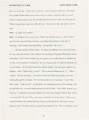
Show RALPH TRACY LARK PT B R 9, 2006 Kor a it wa an area with mountains all the way around it and it wa kind f d wn 1n. It was not excavated but it was lower like a punch bowl. [Editor ' note: The Punchbo·wl i a crater-like depres ion a few miles wide surrounded by rugged hillsju t outh of the Demarcation Line in Korea. In the summer of 1951, the battle lines between the combatants in Korea stretched diagonally across the Korean Peninsula from around the 381h parallel on the West Coast to about midway between the North Korean towns of Kosong and Kansong on the East Coast. Ten or twenty miles inland from the East Coast the battle lines sagged south to the northern rim of the Punchbowl. The area is dominated by a tangle of high, hill-studded ridges running generally north and south. Many of the hills along the ridges rise more than 1000 meters above the surrounding countryside. With the truce talks stalled and the war stalemated, both sides tested each other's resolve and struggled to shift the battle lines in order to gain more favorable positions in any eventual truce settlement. Fighting raged all around the ridges, river valleys, and hills near Punchbowl area during the late summer and through the fall. The North Koreans took and held a series of hills and connecting ridges a few miles to the southwest of the Punchbowl. Since these enemy positions, on what became known as Bloody Ridge, threatened the allied lines, the Second Division, augmented by other UN forces, attacked and drove the enemy from these hills in fierce battles during the late summer. Approximately 15,000 North Koreans and 2, 700 UN soldiers were killed, wounded, or captured on Bloody Ridge 's slopes. Unfortunately, the surviving enemy forces, reinforced, simply shifted across a few miles to the north and took up new commanding positions on a ridge due west of the Punchbowl. This seven-mile long ridge was also studded with high hills that served as mutually supporting strong points. In the 60 |
| Reference URL |
https://collections.lib.utah.edu/ark:/87278/s6447phs/1028179 |