| Title |
Simon K. Benson, Provo, Utah: an interview by Benjamin Bahlmann, August 29, 2002: Saving the Legacy tape no. 526 |
| Alternative Title |
Simon K. Benson, Saving the legacy: an oral history of Utah's World War II veterans, ACCN 2070, American West Center, University of Utah |
| Creator |
Benson, Simon K., 1923-2003 |
| Contributor |
University of Utah. American West Center; Bahlmann, Benjamin J. |
| Publisher |
Digitized by J. Willard Marriott Library, University of Utah |
| Date |
2002-08-29 |
| Date Digital |
2015-12-16 |
| Access Rights |
I acknowledge and agree that all information I obtain as a result of accessing any oral history provided by the University of Utah's Marriott Library shall be used only for historical or scholarly or academic research purposes, and not for commercial purposes. I understand that any other use of the materials is not authorized by the University of Utah and may exceed the scope of permission granted to the University of Utah by the interviewer or interviewee. I may request permission for other uses, in writing to Special Collections at the Marriott Library, which the University of Utah may choose grant, in its sole discretion. I agree to defend, indemnify and hold the University of Utah and its Marriott Library harmless for and against any actions or claims that relate to my improper use of materials provided by the University of Utah. |
| Spatial Coverage |
England; Germany |
| Subject |
Benson, Simon K., 1923-2003--Interviews; Veterans--Utah--Biography; World War, 1939-1945--Personal narratives, American |
| Description |
Transcript (59 pages) of an interview by Benjamin Bahlmann with Simon K. Benson on August 29, 2002. From tape number 526 in the "Saving the Legacy" Oral History Project |
| Collection Number and Name |
Accn2070, Saving the Legacy oral history project, 2001-2010 |
| Abstract |
Benson (b. 1923) grew up in Parowan, Utah. He discusses his family, farming, schooling, and work. He enlisted in the Army Air Corps, was inducted at Fort Douglas, and sent to Pullman, Washington, for civilian flight training in March 1943. From there, his training included: pre-flight at Santa Ana, California; basic flight at Marana Air Base in Tucson, Arizona; and advanced training at Pecos, Texas. He was sent to Yuma, Arizona, for B-17 gunnery training before joining his crew in Lincoln, Nebraska. Transported across the Atlantic on the Queen Mary in March 1945, he joined the 8th Air Force, 94th Bombardment Group, 410th Bombardment Squadron (Heavy) at Bury St. Edmund, England. His first mission was in April 1945. He completed six missions before the war ended. After the war, he helped ship supplies into Germany and other war-affected countries. He returned home during the summer of 1946 for discharge. Benson worked as a school teacher in civilian life. Interviewed by Benjamin Bahlmann. 59 pages. |
| Type |
Text |
| Genre |
oral histories (literary works) |
| Format |
application/pdf |
| Extent |
59 pages |
| Language |
eng |
| Rights |
 |
| Scanning Technician |
Mazi Rakhsha |
| Conversion Specifications |
Original scanned with Kirtas 2400 and saved as 400 ppi uncompressed TIFF. PDF generated by Adobe Acrobat Pro X for CONTENTdm display |
| ARK |
ark:/87278/s6rf7x5w |
| Topic |
Personal narratives--American; Veterans; World War (1939-1945) |
| Setname |
uum_slohp |
| ID |
1027634 |
| Reference URL |
https://collections.lib.utah.edu/ark:/87278/s6rf7x5w |
| Title |
Page 52 |
| Format |
application/pdf |
| Setname |
uum_slohp |
| ID |
1027626 |
| OCR Text |
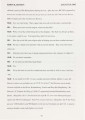
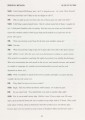
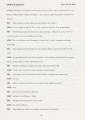
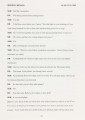
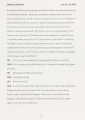
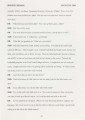
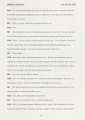
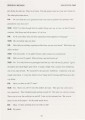
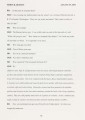
Show IMO K.B 0 29 20 2 A the e dual threat from the Luftwaffe ub ided, the bomber were l ift unpainted e ept for identification marking . Not painting the bomber lightened them omewhat and aved a production tep. By 1945, all the B-17 groups in the srh Air Force werefl ing the latest and last model of B-17s, the B-17G. The most distinguishing feature of the B-17G wa the chin turret, that corrected a vulnerability to head-on attacks in earlier B-17 models. It should be stated that by 1945, the B-17 was ten-year old technology. At the end of the war in Europe, B-17 production was already ramping down and Mr. Benson was probably among some of the last B-17 pilots trained. Neither the B-17 or the B-24 had sufficient range for effective strategic bombing missions to Japan. In the Pacific, modified B-17s and B-24s were mostly used for tactical ground support, reconnaissance and search and rescue. The 201 h Strategic Air Force on Saipan and Tinian was equipped with new bigger, longer range B-29s. ] BB: Do you view your experiences as having a positive influence on your life? SKB: Yes, I was truly a Lucky Rebel, truly lucky. I've gone by the name, Lucky, quite a bit since. BB: What did you do when you came back? SKB: I went back to school. BB: Back to Cedar City? SKB: No, I went to Logan, Utah. Cedar City (BAC) was a branch of State Agricultural College in Logan. We lived in Logan, Utah, for a year, and then we went back to Moscow, Idaho, and Pullman, Washington. That's where our first baby was born. Actually, I stayed up there and built our first home in the little town of Troy, Idaho. [Editor's note: Troy is east of Moscow.] 52 |
| Reference URL |
https://collections.lib.utah.edu/ark:/87278/s6rf7x5w/1027626 |