| Title |
Simon K. Benson, Provo, Utah: an interview by Benjamin Bahlmann, August 29, 2002: Saving the Legacy tape no. 526 |
| Alternative Title |
Simon K. Benson, Saving the legacy: an oral history of Utah's World War II veterans, ACCN 2070, American West Center, University of Utah |
| Creator |
Benson, Simon K., 1923-2003 |
| Contributor |
University of Utah. American West Center; Bahlmann, Benjamin J. |
| Publisher |
Digitized by J. Willard Marriott Library, University of Utah |
| Date |
2002-08-29 |
| Date Digital |
2015-12-16 |
| Access Rights |
I acknowledge and agree that all information I obtain as a result of accessing any oral history provided by the University of Utah's Marriott Library shall be used only for historical or scholarly or academic research purposes, and not for commercial purposes. I understand that any other use of the materials is not authorized by the University of Utah and may exceed the scope of permission granted to the University of Utah by the interviewer or interviewee. I may request permission for other uses, in writing to Special Collections at the Marriott Library, which the University of Utah may choose grant, in its sole discretion. I agree to defend, indemnify and hold the University of Utah and its Marriott Library harmless for and against any actions or claims that relate to my improper use of materials provided by the University of Utah. |
| Spatial Coverage |
England; Germany |
| Subject |
Benson, Simon K., 1923-2003--Interviews; Veterans--Utah--Biography; World War, 1939-1945--Personal narratives, American |
| Description |
Transcript (59 pages) of an interview by Benjamin Bahlmann with Simon K. Benson on August 29, 2002. From tape number 526 in the "Saving the Legacy" Oral History Project |
| Collection Number and Name |
Accn2070, Saving the Legacy oral history project, 2001-2010 |
| Abstract |
Benson (b. 1923) grew up in Parowan, Utah. He discusses his family, farming, schooling, and work. He enlisted in the Army Air Corps, was inducted at Fort Douglas, and sent to Pullman, Washington, for civilian flight training in March 1943. From there, his training included: pre-flight at Santa Ana, California; basic flight at Marana Air Base in Tucson, Arizona; and advanced training at Pecos, Texas. He was sent to Yuma, Arizona, for B-17 gunnery training before joining his crew in Lincoln, Nebraska. Transported across the Atlantic on the Queen Mary in March 1945, he joined the 8th Air Force, 94th Bombardment Group, 410th Bombardment Squadron (Heavy) at Bury St. Edmund, England. His first mission was in April 1945. He completed six missions before the war ended. After the war, he helped ship supplies into Germany and other war-affected countries. He returned home during the summer of 1946 for discharge. Benson worked as a school teacher in civilian life. Interviewed by Benjamin Bahlmann. 59 pages. |
| Type |
Text |
| Genre |
oral histories (literary works) |
| Format |
application/pdf |
| Extent |
59 pages |
| Language |
eng |
| Rights |
 |
| Scanning Technician |
Mazi Rakhsha |
| Conversion Specifications |
Original scanned with Kirtas 2400 and saved as 400 ppi uncompressed TIFF. PDF generated by Adobe Acrobat Pro X for CONTENTdm display |
| ARK |
ark:/87278/s6rf7x5w |
| Topic |
Personal narratives--American; Veterans; World War (1939-1945) |
| Setname |
uum_slohp |
| ID |
1027634 |
| Reference URL |
https://collections.lib.utah.edu/ark:/87278/s6rf7x5w |
| Title |
Page 49 |
| Format |
application/pdf |
| Setname |
uum_slohp |
| ID |
1027623 |
| OCR Text |
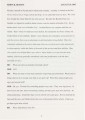
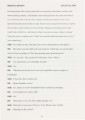
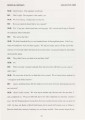
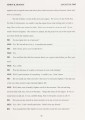
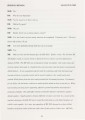
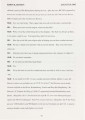
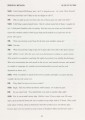
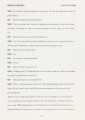
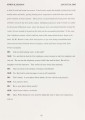
Show IMONK.BE ON 2 2 02 KB: I did, General McNarney and ... oh I ve forgotten now. A I aid, I fl w G n ral McNarney into Pari on VJ Day on my la t flight on a B-17. BB: Did you pick up any souvenirs, like any of those guns you aid were there? SKB: I did bring a special pistol home. Out of a whole room full of them, it caught my eye. It had pearl (handles) and everything. But then one year when my kid needed a typewriter, another teacher owned a gun shop and he traded me a typewriter for the pistol. He's got it. BB: Were you anxious to get home by the time your numbers came up? SKB: You bet. BB: Were you actively trying to get out? I guess they were still on the point system, right? [Editor's note: After the war, men were discharged according to a point system. Men needed to accumulate something like eighty-two points to by eligible for discharge. Men were award points for each month in the service, each month overseas, each month in combat or campaign, for wounds received and medals received, and for each dependent at home, etc.] SKB: Well, I would have stayed in the service, maybe, and made it a career, but they wouldn't let my wife come over. BB: They didn't let any wives over, correct? SKB: Right. That was before the Berlin Airlift started. So I called it quits. BB: So you came back. You sailed home, you said, on another ship, right? SKB: Yes, it was a small victory ship. [Editor's note: Victory ships were US cargo ships, mass-produced during the war to replace cargo ships sunk by U-boats. They could make about 15 knots, about a third faster than their predecessors, the liberty ships. Victory ships were not nearly as large or fast as the Queen Mary and therefore didn't 49 |
| Reference URL |
https://collections.lib.utah.edu/ark:/87278/s6rf7x5w/1027623 |