| Title |
Evan Pearson, Salt Lake City, Utah: an interview by Joel C. Calderon, April 5, 2002: Saving the Legacy tape no. 346 |
| Alternative Title |
Evan Pearson, Saving the legacy: an oral history of Utah's World War II veterans, ACCN 2070, American West Center, University of Utah |
| Creator |
Pearson, Evan J., 1921-2002 |
| Contributor |
University of Utah. American West Center; Calderon, Joel C. |
| Publisher |
Digitized by J. Willard Marriott Library, University of Utah |
| Date |
2002-04-05 |
| Date Digital |
2015-12-16 |
| Access Rights |
I acknowledge and agree that all information I obtain as a result of accessing any oral history provided by the University of Utah's Marriott Library shall be used only for historical or scholarly or academic research purposes, and not for commercial purposes. I understand that any other use of the materials is not authorized by the University of Utah and may exceed the scope of permission granted to the University of Utah by the interviewer or interviewee. I may request permission for other uses, in writing to Special Collections at the Marriott Library, which the University of Utah may choose grant, in its sole discretion. I agree to defend, indemnify and hold the University of Utah and its Marriott Library harmless for and against any actions or claims that relate to my improper use of materials provided by the University of Utah. |
| Spatial Coverage |
India; Burma; China |
| Subject |
Pearson, Evan J., 1921-2002--Interviews; Veterans--United States--Biography; World War, 1939-1945--Personal narratives, American; World War, 1939-1945--Aerial operations, American; World War, 1939-1945--Campaigns--Asia--Personal narratives, American |
| Description |
Transcript (28 pages) of an interview by Joel C. Calderon with Evan Pearson on April 5, 2002. From tape number 346 in the "Saving the Legacy" Oral History Project |
| Collection Number and Name |
Accn2070, Saving the Legacy oral history project, 2001-2010 |
| Abstract |
Mr. Pearson was born in Meadow, Utah, on April 30, 1921. He joined the ROTC at the University of Utah and was activated in 1943. Received basic training at Camp Roberts, California, then returned to Fort Douglas where he joined the Army Air Corps. Received pre-flight training at Santa Ana, California; primary flight training at Blithe, California; and basic flight training at Pomona, California. After graduation, he picked up a crew and orders to Dohazari, India. As part of the 1st Combat Cargo Group, 4th Combat Cargo Squadron, they flew, mostly in C-46s and C-47s, from that base into Burma, supplying mainly British troops. Mr. Pearson discusses his experiences during this time. After the war ended, he was based in Kumming, China, flying Chinese dignitaries to various locations. Later, he transported Chinese Nationalist troops. Left China in December 1945 and was separated on April 15, 1946 as a first lieutenant. Mr. Pearson received the Distinguished Flying Cross and an oak leaf cluster for over 500 combat hours of flying. Interviewed by Joel Calderon. 28 pages. |
| Type |
Text |
| Genre |
oral histories (literary works) |
| Format |
application/pdf |
| Extent |
28 pages |
| Language |
eng |
| Rights |
 |
| Scanning Technician |
Mazi Rakhsha |
| Conversion Specifications |
Original scanned with Kirtas 2400 and saved as 400 ppi uncompressed TIFF. PDF generated by Adobe Acrobat Pro X for CONTENTdm display |
| ARK |
ark:/87278/s6tf20dk |
| Topic |
Personal narratives--American; Veterans; World War (1939-1945); Military operations, Aerial--American |
| Setname |
uum_slohp |
| ID |
1026847 |
| Reference URL |
https://collections.lib.utah.edu/ark:/87278/s6tf20dk |
| Title |
Page 17 |
| Format |
application/pdf |
| Setname |
uum_slohp |
| ID |
1026835 |
| OCR Text |
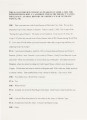
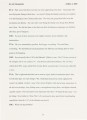
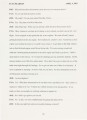
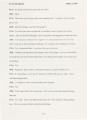
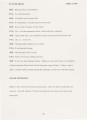
Show EVA PEAR ON PRIL , 2002 EVA: They were but that's not who we were supporting at the tim . The p pl wh were flying the Hump at that time ... we weren't flying the Hump (carrying war upplie over the Himalayas into China) at this time. We were just going from India over th mountains into Burma. The ones who were flying the Hump were flying from Burma into China. We did that later on but that was after the Burmese campaign was finished, after they got to Rangoon. JOE: So most of these missions were supply missions, food, medicine, and ammunition. EVA: Oh, yes, ammunition, gasoline, food, eggs, everything. We could drop everything. We had different sized parachutes for different sized things that we were going to be dropping. JOE: So you mostly flew C-47s, the Dakotas? [Editor's note: The US Army version of the Douglas DC-3 was called C-47. The British called them Dakotas. The US Navy called them RD4; wags called them Gooney Birds; a paratrooper version was called the C-53.] EVA: That's right and then later on we went to Agra, India, for transition into C-46s. For the later part, we were flying C-46s, which had more power, more capacity but weren't as reliable. [Editor's note: The Curtiss-Wright C-46A had a large cargo door in the left rear fuselage, forty folding seats, a strengthened cargo floor, and higher-altitude capable engines. This last feature was important when the C-46 began flying cargo "over the Hump" from India to China. The C-46 was found to have much better load-hauling capabilities than the C-47 at the altitudes involved.] JOE: What was the problem? 17 |
| Reference URL |
https://collections.lib.utah.edu/ark:/87278/s6tf20dk/1026835 |