| Title |
Evan Pearson, Salt Lake City, Utah: an interview by Joel C. Calderon, April 5, 2002: Saving the Legacy tape no. 346 |
| Alternative Title |
Evan Pearson, Saving the legacy: an oral history of Utah's World War II veterans, ACCN 2070, American West Center, University of Utah |
| Creator |
Pearson, Evan J., 1921-2002 |
| Contributor |
University of Utah. American West Center; Calderon, Joel C. |
| Publisher |
Digitized by J. Willard Marriott Library, University of Utah |
| Date |
2002-04-05 |
| Date Digital |
2015-12-16 |
| Access Rights |
I acknowledge and agree that all information I obtain as a result of accessing any oral history provided by the University of Utah's Marriott Library shall be used only for historical or scholarly or academic research purposes, and not for commercial purposes. I understand that any other use of the materials is not authorized by the University of Utah and may exceed the scope of permission granted to the University of Utah by the interviewer or interviewee. I may request permission for other uses, in writing to Special Collections at the Marriott Library, which the University of Utah may choose grant, in its sole discretion. I agree to defend, indemnify and hold the University of Utah and its Marriott Library harmless for and against any actions or claims that relate to my improper use of materials provided by the University of Utah. |
| Spatial Coverage |
India; Burma; China |
| Subject |
Pearson, Evan J., 1921-2002--Interviews; Veterans--United States--Biography; World War, 1939-1945--Personal narratives, American; World War, 1939-1945--Aerial operations, American; World War, 1939-1945--Campaigns--Asia--Personal narratives, American |
| Description |
Transcript (28 pages) of an interview by Joel C. Calderon with Evan Pearson on April 5, 2002. From tape number 346 in the "Saving the Legacy" Oral History Project |
| Collection Number and Name |
Accn2070, Saving the Legacy oral history project, 2001-2010 |
| Abstract |
Mr. Pearson was born in Meadow, Utah, on April 30, 1921. He joined the ROTC at the University of Utah and was activated in 1943. Received basic training at Camp Roberts, California, then returned to Fort Douglas where he joined the Army Air Corps. Received pre-flight training at Santa Ana, California; primary flight training at Blithe, California; and basic flight training at Pomona, California. After graduation, he picked up a crew and orders to Dohazari, India. As part of the 1st Combat Cargo Group, 4th Combat Cargo Squadron, they flew, mostly in C-46s and C-47s, from that base into Burma, supplying mainly British troops. Mr. Pearson discusses his experiences during this time. After the war ended, he was based in Kumming, China, flying Chinese dignitaries to various locations. Later, he transported Chinese Nationalist troops. Left China in December 1945 and was separated on April 15, 1946 as a first lieutenant. Mr. Pearson received the Distinguished Flying Cross and an oak leaf cluster for over 500 combat hours of flying. Interviewed by Joel Calderon. 28 pages. |
| Type |
Text |
| Genre |
oral histories (literary works) |
| Format |
application/pdf |
| Extent |
28 pages |
| Language |
eng |
| Rights |
 |
| Scanning Technician |
Mazi Rakhsha |
| Conversion Specifications |
Original scanned with Kirtas 2400 and saved as 400 ppi uncompressed TIFF. PDF generated by Adobe Acrobat Pro X for CONTENTdm display |
| ARK |
ark:/87278/s6tf20dk |
| Topic |
Personal narratives--American; Veterans; World War (1939-1945); Military operations, Aerial--American |
| Setname |
uum_slohp |
| ID |
1026847 |
| Reference URL |
https://collections.lib.utah.edu/ark:/87278/s6tf20dk |
| Title |
Page 5 |
| Format |
application/pdf |
| Setname |
uum_slohp |
| ID |
1026823 |
| OCR Text |
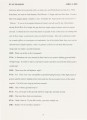
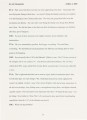
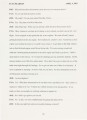
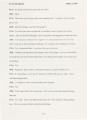
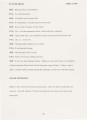
Show EVANPEAR ON PRI 20 2 pilots who, all the time I flew, wore glasses. [Editor's note: Mr. Pear on wa extr mel lucky in two respects. Almost every young man who volunteered for ervice World War II tried to get into pilot training. Eyesight and every other physical attribute usually had to be perfect to get into the program. For Mr. Pearson to get into pilot's training wearing glasses was extraordinary. If he'd remained in the ASTP program, he would probably have ended up as a rifleman in the Infantry. Between its establishment late in I942, and its termination in 1946, the Army Specialized Training Program underwent continuous change. By September I943, the Army Specialized Training Program had reached a strength of approximately 124,000 trainees and was still growing. That month, the War Department let it be known that the program would probably be reduced. The program reached a peak strength of 140,000 in January 1944, but on 16 February, the War Department cut all but 30,000 men. This became effective on 1 April1944. Those who remained in the program consisted entirely of advanced technical and professional trainees. 110,000 of the "college men" in the ASTP, who had expected to receive college degrees and to become officers, suddenly found themselves reassigned, mostly as riflemen in newly formed infantry divisions. Life as an infantryman was widely (and rightly) felt to be unglamorous and dangerous. The infantry experienced the poorest living conditions relative to other branches. After minimal training, many of these former ASTP men arrived in Europe in late fall of 1944. The new 1 06th and 99th Infantry Divisions comprised of former ASTP men and new draftees, were sent in early December '44 to a quiet section of the front line in Luxembourg and Belgium where they were to conduct more infantry training exercises. Two weeks later, half a million German soldiers in three German Panzer Armies struck the 99th and 1 06th head-on in what 5 |
| Reference URL |
https://collections.lib.utah.edu/ark:/87278/s6tf20dk/1026823 |