| Title |
Cora Lee Johnson, Springville, Utah: an interview by Becky B. Lloyd, March 6, 2002: Saving the legacy tape no. 433 and 434 |
| Alternative Title |
Cora Lee Johnson, Saving the legacy: an oral history of Utah's World War II veterans, ACCN 2070, American West Center, University of Utah |
| Creator |
Johnson, Cora Lee, 1920- |
| Contributor |
Lloyd, Becky B.; University of Utah. American West Center |
| Publisher |
Digitized by J. Willard Marriott Library, University of Utah |
| Date |
2002-03-06 |
| Date Digital |
2015-09-16 |
| Access Rights |
I acknowledge and agree that all information I obtain as a result of accessing any oral history provided by the University of Utah's Marriott Library shall be used only for historical or scholarly or academic research purposes, and not for commercial purposes. I understand that any other use of the materials is not authorized by the University of Utah and may exceed the scope of permission granted to the University of Utah by the interviewer or interviewee. I may request permission for other uses, in writing to Special Collections at the Marriott Library, which the University of Utah may choose grant, in its sole discretion. I agree to defend, indemnify and hold the University of Utah and its Marriott Library harmless for and against any actions or claims that relate to my improper use of materials provided by the University of Utah. |
| Spatial Coverage |
Thistle, Utah County, Utah, United States; Palm Beach, Palm Beach County, Florida, United States |
| Subject |
Johnson, Cora Lee, 1920- --Interviews; World War, 1939-1945--Personal narratives, American; United States. Coast Guard--History--World War, 1939-1945; Veterans--Utah--Biography |
| Description |
Transcript (54 pages) of an interview by Becky B. Lloyd with Cora Lee Johnson on March 6, 2002. This is from tapes number 433 and 434 in the "Saving the Legacy Oral History Project |
| Collection Number and Name |
Accn2070, Saving the Legacy oral history project, 2001-2010 |
| Abstract |
Cora Lee Johnson (b. 1920) talks about her family's history as Canadian pioneers and growing up in Thistle, Utah. She joined the U.S. Coast Guard and was assigned to the post office in Palm Beach, Florida. She was later transferred to San Diego. 54 pages. |
| Type |
Text |
| Genre |
oral histories (literary works) |
| Format |
application/pdf |
| Extent |
54 pages |
| Language |
eng |
| Rights |
 |
| Scanning Technician |
Mazi Rakhsha |
| Conversion Specifications |
Original scanned with Kirtas 2400 and saved as 400 ppi uncompressed TIFF. PDF generated by Adobe Acrobat Pro X for CONTENTdm display |
| ARK |
ark:/87278/s6ck0cp9 |
| Topic |
Personal narratives--American; Veterans; World War (1939-1945); United States. Coast Guard |
| Setname |
uum_slohp |
| ID |
1026519 |
| Reference URL |
https://collections.lib.utah.edu/ark:/87278/s6ck0cp9 |
| Title |
Page 39 |
| Format |
application/pdf |
| Setname |
uum_slohp |
| ID |
1026502 |
| OCR Text |
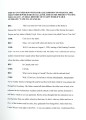
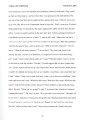
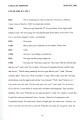
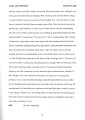
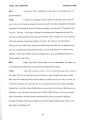
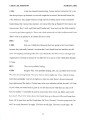
Show CORA LEE JOHNSON MARCH 6, 2002 office. Our audit wasn't the same but I knew what it was, only I didn't know what he was bringing over to you." Short time later, he was sent to sea. But he said to me, "Johnson, you know more about it than I do." I said, "But you didn't have to prove it." So anyway, they made me postmaster. All three of the men-the one man I'd never met and then the one from up in Los Angeles and then Ray-went to sea. I had another obligation then. I was never asked to stand a watch because I was on call twenty-four hours a day. Because they had to be so secretive, when these ships came in, there was a big radar base there. I'd get a call maybe at midnight and they would way, "Do you have a bag of mail that has eight letters in it that starts with a 'B'?" I'd say, "Yes sir." "You'll be picked up." So someone from the base in a jeep would come to the hotel-that was when we was in San Diego-and that's where I was the postmaster. And they'd take me back and I was the only one that had that key. And I always wore a .38, with a lanyard on here, a .38 pistol, and I kept it locked in the safe. I was the only one that was in there. And these would stand guard until they came in; I was in there by myself, until they picked up the mail. BEC: Really? COR: It was that secretive. They'd bring me back. 'Course they didn't want me standing any watches or anything like that. The watches was the telephone, the little telephone booths they had in that beautiful hotel so people could go out and use them in the hall. That's where we had the watches. But I had to learn a lot. When I became the postmaster, they took me to the rifle range and it was Sporati was his name, and he was the chief warrant. Took me out there to teach me how to use that pistol. And when they put up the target he showed me and, of course, I could target practice. I had a .22 rifle when I was ten years old. We used to shoot eggshells off currant bushes when we'd go 38 |
| Reference URL |
https://collections.lib.utah.edu/ark:/87278/s6ck0cp9/1026502 |