| Title |
Robert D. Teran, Sandy, Utah: an interview by Winston P. Erickson, May 23, 2000: Saving the legacy tape no. 18 and 19 |
| Alternative Title |
Robert D. Teran, Saving the legacy: an oral history of Utah's World War II veterans, ACCN 2070, American West Center, University of Utah |
| Creator |
Teran, Robert D., 1922-2009 |
| Contributor |
Erickson, Winston P., 1943-; University of Utah. American West Center |
| Publisher |
Digitized by J. Willard Marriott Library, University of Utah |
| Date |
2000-05-23 |
| Date Digital |
2015-09-16 |
| Access Rights |
I acknowledge and agree that all information I obtain as a result of accessing any oral history provided by the University of Utah's Marriott Library shall be used only for historical or scholarly or academic research purposes, and not for commercial purposes. I understand that any other use of the materials is not authorized by the University of Utah and may exceed the scope of permission granted to the University of Utah by the interviewer or interviewee. I may request permission for other uses, in writing to Special Collections at the Marriott Library, which the University of Utah may choose grant, in its sole discretion. I agree to defend, indemnify and hold the University of Utah and its Marriott Library harmless for and against any actions or claims that relate to my improper use of materials provided by the University of Utah. |
| Spatial Coverage |
England, United Kingdom; Germany; Poland; New Mexico, United States |
| Subject |
Teran, Robert D., 1922-2009--Interviews; World War, 1939-1945--Personal narratives, American; Veterans--Utah--Biography; World War, 1939-1945--Artillery operations, American; World War, 1939-1945--Campaigns--Europe, Northern--Personal narratives, American; Prisoners of war--United States; Prisoners of war--Poland |
| Keywords |
POWs; B-17 |
| Description |
Transcript (51 pages) of an interview by Winston P. Erickson with Robert D. Teran on May 23, 2000. This is from tape numbers 18 and 19 in the "Saving the Legacy Oral History Project |
| Collection Number and Name |
Accn2070, Saving the Legacy oral history project, 2001-2010 |
| Abstract |
Teran (b. 1922) describes a difficult childhood in New Mexico during the Depression, and recalls his education at Fort Lewis College, army enlistment, and schooling at Scott air base in Illinois. He also details his experiences in flight training, B-17 crew assignments, and crossing the Atlantic to England, where he served in the 8th Air Force, 379th Bomb Group, 527th Squadron, based at Kimbolton Field near London. He flew twenty missions before being shot down and captured by German soldiers, ending up at Stalag Luft 3. He recounts his days as a prisoner of war, including a forced march away from the advancing Russions, incarceration in Stalag 7A, liberation, and his return to the United States. 51 pages. |
| Type |
Text |
| Genre |
oral histories (literary works) |
| Format |
application/pdf |
| Extent |
51 pages |
| Language |
eng |
| Rights |
 |
| Scanning Technician |
Mazi Rakhsha |
| Conversion Specifications |
Original scanned with Kirtas 2400 and saved as 400 ppi uncompressed TIFF. PDF generated by Adobe Acrobat Pro X for CONTENTdm display |
| ARK |
ark:/87278/s6kh2mks |
| Topic |
Personal narratives--American; Veterans; World War (1939-1945); Military operations, Artillery--American; Prisoners of war |
| Setname |
uum_slohp |
| ID |
1025307 |
| Reference URL |
https://collections.lib.utah.edu/ark:/87278/s6kh2mks |
| Title |
Page 47 |
| Format |
application/pdf |
| Setname |
uum_slohp |
| ID |
1025301 |
| OCR Text |
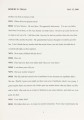
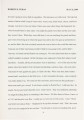
Show ROBERT D. TERAN 2 2 WIN: Talking about fear, you must have suppressed the fear and that cau ed th twitching. Did you channel your fear? Did you get the adrenaline rush to help you through? It may not have been as important in a bomber as it would have been in a fighter. BOB: Why do you say that? I think we were more susceptible. WIN: Well more susceptible. There was less that you could do yourself to avoid flak or avoid the fighters. You pretty much had to go your route. BOB: That's absolutely right. The support fighters, the P-51, was what I would consider, the best support. They had P -4 7 s but. ... WIN: Well it had the longest range, and it could stay with you a lot longer. BOB: With extra tanks and everything, they could stay a lot longer. I knew this pilot that flew a P-4 7, and he got shot down also, but the difference was that the P-51 was water cooled. If you hit that, then they're done. A P-4 7 is air cooled, and they could fly a lot longer. I didn't ever see P-38s. I thought they were, to me at the time, I thought they were really great. By the time I was flying they discovered that by sending one group of fighters, later another group would come up and carry on for the first group. Speaking of fear, I guess the one thing I did, I remember reading in the paper about this tail gunner. They did have one you know, I didn't mention that before I don't think, but apparently a fighter came up, shot from down below, and just went right through him. That scared me. I thought that's not good. That could happen to anybody on any part of the plane. I went 46 |
| Reference URL |
https://collections.lib.utah.edu/ark:/87278/s6kh2mks/1025301 |