| Title |
Robert D. Teran, Sandy, Utah: an interview by Winston P. Erickson, May 23, 2000: Saving the legacy tape no. 18 and 19 |
| Alternative Title |
Robert D. Teran, Saving the legacy: an oral history of Utah's World War II veterans, ACCN 2070, American West Center, University of Utah |
| Creator |
Teran, Robert D., 1922-2009 |
| Contributor |
Erickson, Winston P., 1943-; University of Utah. American West Center |
| Publisher |
Digitized by J. Willard Marriott Library, University of Utah |
| Date |
2000-05-23 |
| Date Digital |
2015-09-16 |
| Access Rights |
I acknowledge and agree that all information I obtain as a result of accessing any oral history provided by the University of Utah's Marriott Library shall be used only for historical or scholarly or academic research purposes, and not for commercial purposes. I understand that any other use of the materials is not authorized by the University of Utah and may exceed the scope of permission granted to the University of Utah by the interviewer or interviewee. I may request permission for other uses, in writing to Special Collections at the Marriott Library, which the University of Utah may choose grant, in its sole discretion. I agree to defend, indemnify and hold the University of Utah and its Marriott Library harmless for and against any actions or claims that relate to my improper use of materials provided by the University of Utah. |
| Spatial Coverage |
England, United Kingdom; Germany; Poland; New Mexico, United States |
| Subject |
Teran, Robert D., 1922-2009--Interviews; World War, 1939-1945--Personal narratives, American; Veterans--Utah--Biography; World War, 1939-1945--Artillery operations, American; World War, 1939-1945--Campaigns--Europe, Northern--Personal narratives, American; Prisoners of war--United States; Prisoners of war--Poland |
| Keywords |
POWs; B-17 |
| Description |
Transcript (51 pages) of an interview by Winston P. Erickson with Robert D. Teran on May 23, 2000. This is from tape numbers 18 and 19 in the "Saving the Legacy Oral History Project |
| Collection Number and Name |
Accn2070, Saving the Legacy oral history project, 2001-2010 |
| Abstract |
Teran (b. 1922) describes a difficult childhood in New Mexico during the Depression, and recalls his education at Fort Lewis College, army enlistment, and schooling at Scott air base in Illinois. He also details his experiences in flight training, B-17 crew assignments, and crossing the Atlantic to England, where he served in the 8th Air Force, 379th Bomb Group, 527th Squadron, based at Kimbolton Field near London. He flew twenty missions before being shot down and captured by German soldiers, ending up at Stalag Luft 3. He recounts his days as a prisoner of war, including a forced march away from the advancing Russions, incarceration in Stalag 7A, liberation, and his return to the United States. 51 pages. |
| Type |
Text |
| Genre |
oral histories (literary works) |
| Format |
application/pdf |
| Extent |
51 pages |
| Language |
eng |
| Rights |
 |
| Scanning Technician |
Mazi Rakhsha |
| Conversion Specifications |
Original scanned with Kirtas 2400 and saved as 400 ppi uncompressed TIFF. PDF generated by Adobe Acrobat Pro X for CONTENTdm display |
| ARK |
ark:/87278/s6kh2mks |
| Topic |
Personal narratives--American; Veterans; World War (1939-1945); Military operations, Artillery--American; Prisoners of war |
| Setname |
uum_slohp |
| ID |
1025307 |
| Reference URL |
https://collections.lib.utah.edu/ark:/87278/s6kh2mks |
| Title |
Page 46 |
| Format |
application/pdf |
| Setname |
uum_slohp |
| ID |
1025300 |
| OCR Text |
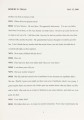
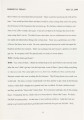
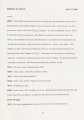
Show ROBERT D. TERAN 2 2 00 Messerschmitjet that the Germans developed toward the end of the war. W w r talking about you having seen one. Would you like to continue? BOB: Yes. Actually, they flew through our formation. At the time they didn' t have any armament. I just remember them coming down and flying right through our formation. It scared us particularly because of the speed that they had. We could see that there was no armament. I guess they were just testing out to see how the thing went. Fortunately for us, they never did get any armament that we knew about. WIN: I guess they had about 100 mile per hour better speed than anything the United States had, and that's quite significant, isn't it? BOB: Oh yes. Well the P-51, I guess they could fly at about 300, I'm sure. The 252 could fly at about 400 or 500 miles an hour. They went by so fast, you know, it was just a "whoosh!" by us. It was an experience that was different. We didn't know what to expect at all. Of course we are flying our B-17's at 150 miles an hour, you know. WIN: I understand that sometimes the German fighters would fly through your formations so that the gunners would start shooting at them and then maybe shoot at other people-! mean, accidentally hit other planes in the formation. Did that occur very often? BOB: We never really had fighter planes that I remember of. The thing that really got us, and was around us, was flak. The Germans began to shoot up and just cover an area above the city, or wherever it was, the oil target, or whatever. If you flew through that and it missed, you were fortunate. 45 |
| Reference URL |
https://collections.lib.utah.edu/ark:/87278/s6kh2mks/1025300 |