| Title |
Lee S. Manwill, Salt Lake City, Utah: an interview by Luke Kelly, July 11, 2001: Saving the legacy tape no. 267 |
| Alternative Title |
Lee S. Manwill, Saving the legacy: an oral history of Utah's World War II veterans, ACCN 2070, American West Center, University of Utah |
| Creator |
Manwill, Lee S., 1916-2008 |
| Contributor |
Kelly, Luke; University of Utah. American West Center |
| Publisher |
Digitized by J. Willard Marriott Library, University of Utah |
| Date |
2001-07-11 |
| Date Digital |
2015-09-16 |
| Access Rights |
I acknowledge and agree that all information I obtain as a result of accessing any oral history provided by the University of Utah's Marriott Library shall be used only for historical or scholarly or academic research purposes, and not for commercial purposes. I understand that any other use of the materials is not authorized by the University of Utah and may exceed the scope of permission granted to the University of Utah by the interviewer or interviewee. I may request permission for other uses, in writing to Special Collections at the Marriott Library, which the University of Utah may choose grant, in its sole discretion. I agree to defend, indemnify and hold the University of Utah and its Marriott Library harmless for and against any actions or claims that relate to my improper use of materials provided by the University of Utah. |
| Spatial Coverage |
England, United Kingdom; New York City, New York, United States; Virginia, United States; North Carolina, United States; Rupert, Minidoka County, Idaho, United States; Salt Lake City, Salt Lake County, Utah, United States |
| Subject |
Manwill, Lee S., 1916-2008--Interviews; World War, 1939-1945--Personal narratives, American; Veterans--Utah--Biography; Radio operators--Biography |
| Keywords |
radio operator; Governor's Island; Officer Candidate School; Army Air Corps |
| Description |
Transcript (30 pages) of an interview by Luke Kelly with Lee S. Manwill on July 11, 2001. This is from tape number 267 in the "Saving the Legacy Oral History Project |
| Collection Number and Name |
Accn2070, Saving the Legacy oral history project, 2001-2010 |
| Abstract |
Lee Manwill (b. 1916) ran movie projectors and served an LDS mission to England before being drafted into the Army in 1941. He served as a radio operator at Governor's Island, New York, before completing Officer Candidate School and joining the Army Air Corps. He then served in Virginia and North Carolina, retiring in 1945 as a Captain. 30 pages. |
| Type |
Text |
| Genre |
oral histories (literary works) |
| Format |
application/pdf |
| Extent |
30 pages |
| Language |
eng |
| Rights |
 |
| Scanning Technician |
Mazi Rakhsha |
| Conversion Specifications |
Original scanned with Kirtas 2400 and saved as 400 ppi uncompressed TIFF. PDF generated by Adobe Acrobat Pro X for CONTENTdm display |
| ARK |
ark:/87278/s6z91bnb |
| Topic |
Personal narratives--American; Veterans; World War (1939-1945); Radio operators |
| Setname |
uum_slohp |
| ID |
1025075 |
| Reference URL |
https://collections.lib.utah.edu/ark:/87278/s6z91bnb |
| Title |
Page 25 |
| Format |
application/pdf |
| Setname |
uum_slohp |
| ID |
1025067 |
| OCR Text |
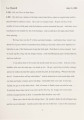
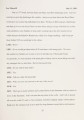
Show Lee Manwill Jul 11,2001 eyes; being near sighted." The Signal Corps is classed as a cmnbatant arm. I aid. " combatant arm?" He said, "Yes." And I said, "What's the reason [i r that?" They aid. "Well, they haven't changed it yet. During World War I the Signal Corps laid t lephon lines for the infantry." So that's why it was a combatant arm. Of course, they don't do that now. But they didn't have walkie talkies, or anything like that, you know. So it was telephone lines for the infantry. But they said, "You can go to the Chemical Warfare OCS. You qualify for OCS." I passed the exam, and I had a high enough I.Q., and this and that and other. "You can go to chemical warfare because that's a noncombatant service," which I did. I went to Chemical Warfare OCS. And in ninety days I became a shavetail they call them, or a ninety day wonder, and a 2"d lieutenant. And just before we graduated two-thirds of them washed out. I was among the lucky third. They did all kinds of things to make you blow up. I was sitting there at breakfast one day, and my companion, a real nice Jewish boy by the name of Dave Schlonski was sitting by the side of us in the mess hall. And the tack officer came up and said, "Cadet Schlonski, that will be three demerits." And Schlonski sat at attention and said, "What for sir?" He said, "Conduct unbecoming an officer and a gentleman. You buttered a half a slice of bread, and it's ungentlemanly to butter more than a quarter slice of a bread at one time." And he got three demerits and lost his weekend privilege. You can see why these guys would blow up. But I could see through it all. He made it, too. But I could see through it all. We'd take it, you know, because we had to. 23 |
| Reference URL |
https://collections.lib.utah.edu/ark:/87278/s6z91bnb/1025067 |