| Title |
Lee S. Manwill, Salt Lake City, Utah: an interview by Luke Kelly, July 11, 2001: Saving the legacy tape no. 267 |
| Alternative Title |
Lee S. Manwill, Saving the legacy: an oral history of Utah's World War II veterans, ACCN 2070, American West Center, University of Utah |
| Creator |
Manwill, Lee S., 1916-2008 |
| Contributor |
Kelly, Luke; University of Utah. American West Center |
| Publisher |
Digitized by J. Willard Marriott Library, University of Utah |
| Date |
2001-07-11 |
| Date Digital |
2015-09-16 |
| Access Rights |
I acknowledge and agree that all information I obtain as a result of accessing any oral history provided by the University of Utah's Marriott Library shall be used only for historical or scholarly or academic research purposes, and not for commercial purposes. I understand that any other use of the materials is not authorized by the University of Utah and may exceed the scope of permission granted to the University of Utah by the interviewer or interviewee. I may request permission for other uses, in writing to Special Collections at the Marriott Library, which the University of Utah may choose grant, in its sole discretion. I agree to defend, indemnify and hold the University of Utah and its Marriott Library harmless for and against any actions or claims that relate to my improper use of materials provided by the University of Utah. |
| Spatial Coverage |
England, United Kingdom; New York City, New York, United States; Virginia, United States; North Carolina, United States; Rupert, Minidoka County, Idaho, United States; Salt Lake City, Salt Lake County, Utah, United States |
| Subject |
Manwill, Lee S., 1916-2008--Interviews; World War, 1939-1945--Personal narratives, American; Veterans--Utah--Biography; Radio operators--Biography |
| Keywords |
radio operator; Governor's Island; Officer Candidate School; Army Air Corps |
| Description |
Transcript (30 pages) of an interview by Luke Kelly with Lee S. Manwill on July 11, 2001. This is from tape number 267 in the "Saving the Legacy Oral History Project |
| Collection Number and Name |
Accn2070, Saving the Legacy oral history project, 2001-2010 |
| Abstract |
Lee Manwill (b. 1916) ran movie projectors and served an LDS mission to England before being drafted into the Army in 1941. He served as a radio operator at Governor's Island, New York, before completing Officer Candidate School and joining the Army Air Corps. He then served in Virginia and North Carolina, retiring in 1945 as a Captain. 30 pages. |
| Type |
Text |
| Genre |
oral histories (literary works) |
| Format |
application/pdf |
| Extent |
30 pages |
| Language |
eng |
| Rights |
 |
| Scanning Technician |
Mazi Rakhsha |
| Conversion Specifications |
Original scanned with Kirtas 2400 and saved as 400 ppi uncompressed TIFF. PDF generated by Adobe Acrobat Pro X for CONTENTdm display |
| ARK |
ark:/87278/s6z91bnb |
| Topic |
Personal narratives--American; Veterans; World War (1939-1945); Radio operators |
| Setname |
uum_slohp |
| ID |
1025075 |
| Reference URL |
https://collections.lib.utah.edu/ark:/87278/s6z91bnb |
| Title |
Page 14 |
| Format |
application/pdf |
| Setname |
uum_slohp |
| ID |
1025056 |
| OCR Text |
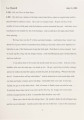
Show Lee Manwill ul 11,2 01 their old Model T and went somewhere else. unday was Cokeville, Monday was Laketown, and then I'd com into It ak to the film exchange and exchange the movies at Paramount Pictur s, or son1e ther place, for a new program. Then I'd start out the next week. Then I went to Woodruff and put on a show there one night a week on Wednesday. And Friday I put on a show at Pinedale, Wyoming. I got started there in a congregational church. They wanted a movie. There were no movies in any of those places. Of course, there was no TV or anything like that. So I ran that circuit for two or three years, and then I got drafted into the army. LUK: What year did you get drafted? Was it in '41? LEE: Yes, in 1941. LUK: Okay. Going back to the movies. What kind of movies were you able to get? LEE: Oh, we got all the latest movies. LUK: Not only the silent ones, but the talkies as well? LEE: Well, they were talkies. Yes, the silent ones were kind of out by then. LUK: So how much did you charge? Was it a good business? LEE: Well, we charged forty or fifty cents. And, you know, a dollar was a lot of money in those days. Once in awhile something would come along that I would increase the price. Like I remember the Baer-Braddock prize fight for the heavyweight championship of the world. I got those films, and I advertised them in advance in Big Piney. And I charged a dollar. And a dollar was a pile of money in those days. It really was. You 12 |
| Reference URL |
https://collections.lib.utah.edu/ark:/87278/s6z91bnb/1025056 |