| Title |
Harold Carroll, Salt Lake City, Utah: an interview by Winston Erickson, August 7, 2001: Saving the legacy tape no. 299 |
| Alternative Title |
Harold Carroll, Saving the legacy: an oral history of Utah's World War II veterans, ACCN 2070, American West Center, University of Utah |
| Creator |
Carroll, Harold, 1919-2008 |
| Contributor |
Erickson, Winston P., 1943-; University of Utah. American West Center |
| Publisher |
Digitized by J. Willard Marriott Library, University of Utah |
| Date |
2001-08-07 |
| Date Digital |
2015-09-16 |
| Access Rights |
I acknowledge and agree that all information I obtain as a result of accessing any oral history provided by the University of Utah's Marriott Library shall be used only for historical or scholarly or academic research purposes, and not for commercial purposes. I understand that any other use of the materials is not authorized by the University of Utah and may exceed the scope of permission granted to the University of Utah by the interviewer or interviewee. I may request permission for other uses, in writing to Special Collections at the Marriott Library, which the University of Utah may choose grant, in its sole discretion. I agree to defend, indemnify and hold the University of Utah and its Marriott Library harmless for and against any actions or claims that relate to my improper use of materials provided by the University of Utah. |
| Spatial Coverage |
India; Burma; China |
| Subject |
Carroll, Harold, 1919-2008--Interviews; World War, 1939-1945--Personal narratives, American; Veterans--Utah--Biography; World War, 1939-1945--Military operations, American; World War, 1939-1945--Campaigns--Southeast Asia |
| Keywords |
Signal corps; New Orleans; Chittagong; Luzhou, China |
| Description |
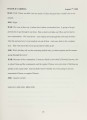
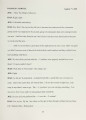
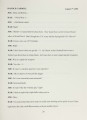
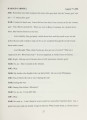
Transcript (41 pages) of an interview by Winston P. Erickson with Harold Carroll on August 7, 2001. This is from tape number 299 in the "Saving the Legacy Oral History Project |
| Collection Number and Name |
Accn2070, Saving the Legacy oral history project, 2001-2010 |
| Abstract |
Carroll (b. 1919) recalls growing up in Utah, being drafted in October 1941, going through basic training, and being assigned to the signal corps stationed in New Orleans before going to India. He was in Chittagong before being sent to Burma, where he recalls hunting a tiger. Later sent to Luzhou, China, he remained there until the war ended. He concludes with his recollections of being a mechanic and working at various car dealerships in Salt Lake County. 41 pages. |
| Type |
Text |
| Genre |
oral histories (literary works) |
| Format |
application/pdf |
| Extent |
41 pages |
| Language |
eng |
| Rights |
 |
| Scanning Technician |
Mazi Rakhsha |
| Conversion Specifications |
Original scanned with Kirtas 2400 and saved as 400 ppi uncompressed TIFF. PDF generated by Adobe Acrobat Pro X for CONTENTdm display |
| ARK |
ark:/87278/s65q6v9z |
| Topic |
Personal narratives--American; Veterans; World War (1939-1945) |
| Setname |
uum_slohp |
| ID |
1023266 |
| Reference URL |
https://collections.lib.utah.edu/ark:/87278/s65q6v9z |
| Title |
Page 19 |
| Format |
application/pdf |
| Setname |
uum_slohp |
| ID |
1023240 |
| OCR Text |
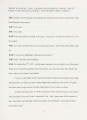
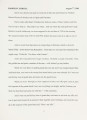
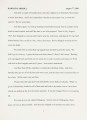
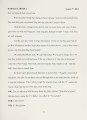
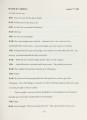
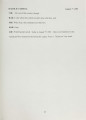
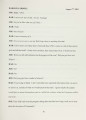
Show OLDC OLL it taken over by the Japanese at night. JOE: I see. HAR: I said, "Okay." So I got the radio and got on this C-47 ( hich i n th prop airplanes that they mostly used to haul different stuff around) ... JOE: Right. 7" HAR: And flew into this airfield. I have no idea where it was - I just did what I was told. And I got in there, and the plane landed, and the pilot said (there's a pilot and a co-pilot is all that was on there), he said: "Now, I'm going to warn you. At such-and-such a time we're going to leave. If you're not here you're not going, because we're leaving irregardless of whether you're here or not." I thought, "Oh boy!" But I went in and asked a few questions and found out where this radio was supposed to go and got somebody to take me in a jeep to the company area where they wanted the radio, and I got back just as that plane was starting to warm up to get ready to go. So I was mighty happy to get out of there! JOE: So you went into, I think, that was called Myitkyina Field, at the time? Myitkyina, that was the name of the air field, or was it a different part of Burma? HAR: I didn't go into a field in Burma. They landed- they took us out of Chittagong and we went by truck up on this hill in Burma and set up a tent, and our radio, and all that stuff. And we were out there about two, three months. 17 |
| Reference URL |
https://collections.lib.utah.edu/ark:/87278/s65q6v9z/1023240 |