| Title |
Harold Carroll, Salt Lake City, Utah: an interview by Winston Erickson, August 7, 2001: Saving the legacy tape no. 299 |
| Alternative Title |
Harold Carroll, Saving the legacy: an oral history of Utah's World War II veterans, ACCN 2070, American West Center, University of Utah |
| Creator |
Carroll, Harold, 1919-2008 |
| Contributor |
Erickson, Winston P., 1943-; University of Utah. American West Center |
| Publisher |
Digitized by J. Willard Marriott Library, University of Utah |
| Date |
2001-08-07 |
| Date Digital |
2015-09-16 |
| Access Rights |
I acknowledge and agree that all information I obtain as a result of accessing any oral history provided by the University of Utah's Marriott Library shall be used only for historical or scholarly or academic research purposes, and not for commercial purposes. I understand that any other use of the materials is not authorized by the University of Utah and may exceed the scope of permission granted to the University of Utah by the interviewer or interviewee. I may request permission for other uses, in writing to Special Collections at the Marriott Library, which the University of Utah may choose grant, in its sole discretion. I agree to defend, indemnify and hold the University of Utah and its Marriott Library harmless for and against any actions or claims that relate to my improper use of materials provided by the University of Utah. |
| Spatial Coverage |
India; Burma; China |
| Subject |
Carroll, Harold, 1919-2008--Interviews; World War, 1939-1945--Personal narratives, American; Veterans--Utah--Biography; World War, 1939-1945--Military operations, American; World War, 1939-1945--Campaigns--Southeast Asia |
| Keywords |
Signal corps; New Orleans; Chittagong; Luzhou, China |
| Description |
Transcript (41 pages) of an interview by Winston P. Erickson with Harold Carroll on August 7, 2001. This is from tape number 299 in the "Saving the Legacy Oral History Project |
| Collection Number and Name |
Accn2070, Saving the Legacy oral history project, 2001-2010 |
| Abstract |
Carroll (b. 1919) recalls growing up in Utah, being drafted in October 1941, going through basic training, and being assigned to the signal corps stationed in New Orleans before going to India. He was in Chittagong before being sent to Burma, where he recalls hunting a tiger. Later sent to Luzhou, China, he remained there until the war ended. He concludes with his recollections of being a mechanic and working at various car dealerships in Salt Lake County. 41 pages. |
| Type |
Text |
| Genre |
oral histories (literary works) |
| Format |
application/pdf |
| Extent |
41 pages |
| Language |
eng |
| Rights |
 |
| Scanning Technician |
Mazi Rakhsha |
| Conversion Specifications |
Original scanned with Kirtas 2400 and saved as 400 ppi uncompressed TIFF. PDF generated by Adobe Acrobat Pro X for CONTENTdm display |
| ARK |
ark:/87278/s65q6v9z |
| Topic |
Personal narratives--American; Veterans; World War (1939-1945) |
| Setname |
uum_slohp |
| ID |
1023266 |
| Reference URL |
https://collections.lib.utah.edu/ark:/87278/s65q6v9z |
| Title |
Page 4 |
| Format |
application/pdf |
| Setname |
uum_slohp |
| ID |
1023225 |
| OCR Text |
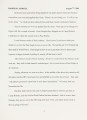
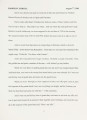
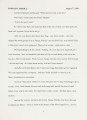
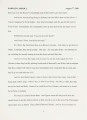
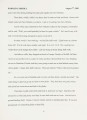
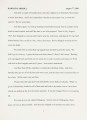
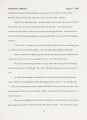
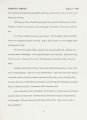
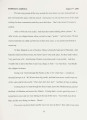
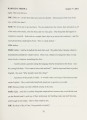
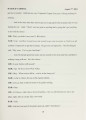
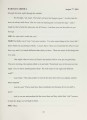
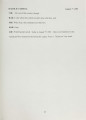
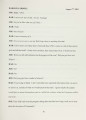
Show OL OLL In the previous year before being drafted it was pretty hard to find a j b b u everywhere you went and applied they d say "There's no use hiring you. Y u 11 ju t in the Army." So I had just done odd jobs here and there mostly working for farm rs. Then in October of '41 I was drafted into the Army. Went up to Fort Douglas to begin with, for a couple of weeks. From Douglas they shipped me to Camp Roberts California, to which the closest town is Paso Robles. I took thirteen weeks of basic infantry. I don't know if you know what basic infantry is or not, but they taught us how to use a rifle. We had the old 1917 Enfield that they used in World War I. They taught us how to use a gas mask, how to shoot a gun (squeeze a trigger instead of pulling it), march, all that kind of stuff. After thirteen weeks of basic training - about two weeks before the thirteen weeks were up -they said we had earned a weekend pass. So we went down to Paso Robles to do whatever. Sunday afternoon we went to a show. In the middle of the show they turned on all the lights and the MP's lined each row and shuffled us out of the show house. They said, "All military personnel report back to your bases immediately." Of course, that was December the 7th. But they didn't tell us why and we hadn't heard about it until we got back in Camp Roberts, and they told us Pearl Harbor had been bombed. And of course, then, Monday, they put us out on the rifle range and said, "Now, you either shoot to kill or they're going to kill you." 2 |
| Reference URL |
https://collections.lib.utah.edu/ark:/87278/s65q6v9z/1023225 |