| Title |
Herman Oliekan, Salt Lake City, Utah: an interview by Winston P. Erickson, September 28, 2000: Saving the legacy tape no. 112 |
| Alternative Title |
Herman Oliekan, Saving the legacy: an oral history of Utah's World War II veterans, ACCN 2070, American West Center, University of Utah |
| Creator |
Oliekan, Herman, 1916-2009 |
| Contributor |
Erickson, Winston P., 1943-; University of Utah. American West Center |
| Publisher |
Digitized by J. Willard Marriott Library, University of Utah |
| Date |
2000-09-28 |
| Date Digital |
2015-09-16 |
| Access Rights |
I acknowledge and agree that all information I obtain as a result of accessing any oral history provided by the University of Utah's Marriott Library shall be used only for historical or scholarly or academic research purposes, and not for commercial purposes. I understand that any other use of the materials is not authorized by the University of Utah and may exceed the scope of permission granted to the University of Utah by the interviewer or interviewee. I may request permission for other uses, in writing to Special Collections at the Marriott Library, which the University of Utah may choose grant, in its sole discretion. I agree to defend, indemnify and hold the University of Utah and its Marriott Library harmless for and against any actions or claims that relate to my improper use of materials provided by the University of Utah. |
| Spatial Coverage |
Hawaii; Guadalcanal, Solomon Islands; Salt Lake City, Salt Lake County, Utah, United States |
| Subject |
Oliekan, Herman, 1916-2009--Interviews; World War, 1939-1945--Personal narratives, American; Veterans--Utah--Biography; World War, 1939-1945--Military operations, American; World War, 1939-1945--Campaigns--Pacific Area--Personal narratives, American |
| Description |
Transcript (31 pages) of an interview by Winston P. Erickson with Herman Oliekan on September 28, 2000. This is from tape number 112 in the "Saving the Legacy Oral History Project |
| Collection Number and Name |
Accn2070, Saving the Legacy oral history project, 2001-2010 |
| Abstract |
Herman Oliekan (b. 1916) emigrated from Holland to the United States in 1925. Drafted into the Army in 1940, he served in the infantry in Hawaii and Guadalcanal. After contracting malaria and impetigo, he was discharged in 1945. 31 pages. |
| Type |
Text |
| Genre |
oral histories (literary works) |
| Format |
application/pdf |
| Extent |
48 pages |
| Language |
eng |
| Rights |
 |
| Scanning Technician |
Mazi Rakhsha |
| Conversion Specifications |
Original scanned with Kirtas 2400 and saved as 400 ppi uncompressed TIFF. PDF generated by Adobe Acrobat Pro X for CONTENTdm display |
| ARK |
ark:/87278/s6224t08 |
| Topic |
Personal narratives--American; Veterans; World War (1939-1945) |
| Setname |
uum_slohp |
| ID |
1023221 |
| Reference URL |
https://collections.lib.utah.edu/ark:/87278/s6224t08 |
| Title |
Page 21 |
| Format |
application/pdf |
| Setname |
uum_slohp |
| ID |
1023208 |
| OCR Text |
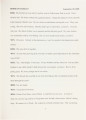
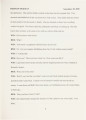
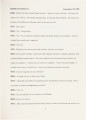
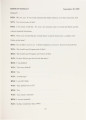
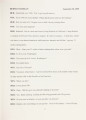
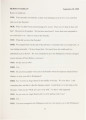
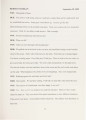
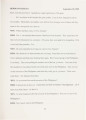
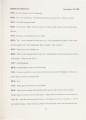
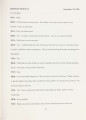
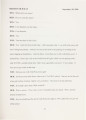
Show HERMAN OLIEKAN pt rn r 2 200 se en destroyers in Guadalcanal. Oh, I fl rgot to tell you. W had a parr t fi rap t. used to call him Cavillo and they clipped his wings. He was a real pet. But th n, wh n you went on the convoy to make another landing, you had abandon d th parr t and h had grown wings. So when we left, we saw him circle above the camp. It was funny. Anyway, we went on this convoy again. I stayed on deck again on this destroyer; most of us did. We got to New Georgia about-hell, I will never forget that-about three o'clock at night, and we had to climb over the cargo net, you know, landing nets, in the dark with all our equipment on. You've seen it. WIN: Oh, yes. HER: The landing barge was on the side of the ship and we had to get into that-all dark. And I got in a position in the front by the door. WIN: Sure. HER: And the cook named McKay-he was a good man-was sitting right behind me. We started puttering along, pitch dark in these lagoons, when we lost our way. Then McKay, the cook, said to me, he whispered to me-he used to call me Oli-he said, "I think we are going to get it this time." I says, "Well, maybe, maybe not." But we finally found a landing place against the jungle. The trees were right up against the water. We got out in the water, held our rifles up-water up to here (demonstrating). We got out of the barges; then onto the land. They called our cook, and he was laying down so he could work. Don't think were wasn't a confusion. The navy was in there with their boats, and they had medical equipment in boxes. 19 |
| Reference URL |
https://collections.lib.utah.edu/ark:/87278/s6224t08/1023208 |