| Title |
Herman Oliekan, Salt Lake City, Utah: an interview by Winston P. Erickson, September 28, 2000: Saving the legacy tape no. 112 |
| Alternative Title |
Herman Oliekan, Saving the legacy: an oral history of Utah's World War II veterans, ACCN 2070, American West Center, University of Utah |
| Creator |
Oliekan, Herman, 1916-2009 |
| Contributor |
Erickson, Winston P., 1943-; University of Utah. American West Center |
| Publisher |
Digitized by J. Willard Marriott Library, University of Utah |
| Date |
2000-09-28 |
| Date Digital |
2015-09-16 |
| Access Rights |
I acknowledge and agree that all information I obtain as a result of accessing any oral history provided by the University of Utah's Marriott Library shall be used only for historical or scholarly or academic research purposes, and not for commercial purposes. I understand that any other use of the materials is not authorized by the University of Utah and may exceed the scope of permission granted to the University of Utah by the interviewer or interviewee. I may request permission for other uses, in writing to Special Collections at the Marriott Library, which the University of Utah may choose grant, in its sole discretion. I agree to defend, indemnify and hold the University of Utah and its Marriott Library harmless for and against any actions or claims that relate to my improper use of materials provided by the University of Utah. |
| Spatial Coverage |
Hawaii; Guadalcanal, Solomon Islands; Salt Lake City, Salt Lake County, Utah, United States |
| Subject |
Oliekan, Herman, 1916-2009--Interviews; World War, 1939-1945--Personal narratives, American; Veterans--Utah--Biography; World War, 1939-1945--Military operations, American; World War, 1939-1945--Campaigns--Pacific Area--Personal narratives, American |
| Description |
Transcript (31 pages) of an interview by Winston P. Erickson with Herman Oliekan on September 28, 2000. This is from tape number 112 in the "Saving the Legacy Oral History Project |
| Collection Number and Name |
Accn2070, Saving the Legacy oral history project, 2001-2010 |
| Abstract |
Herman Oliekan (b. 1916) emigrated from Holland to the United States in 1925. Drafted into the Army in 1940, he served in the infantry in Hawaii and Guadalcanal. After contracting malaria and impetigo, he was discharged in 1945. 31 pages. |
| Type |
Text |
| Genre |
oral histories (literary works) |
| Format |
application/pdf |
| Extent |
48 pages |
| Language |
eng |
| Rights |
 |
| Scanning Technician |
Mazi Rakhsha |
| Conversion Specifications |
Original scanned with Kirtas 2400 and saved as 400 ppi uncompressed TIFF. PDF generated by Adobe Acrobat Pro X for CONTENTdm display |
| ARK |
ark:/87278/s6224t08 |
| Topic |
Personal narratives--American; Veterans; World War (1939-1945) |
| Setname |
uum_slohp |
| ID |
1023221 |
| Reference URL |
https://collections.lib.utah.edu/ark:/87278/s6224t08 |
| Title |
Page 19 |
| Format |
application/pdf |
| Setname |
uum_slohp |
| ID |
1023206 |
| OCR Text |
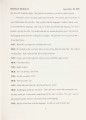
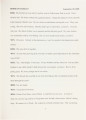
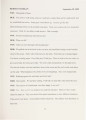
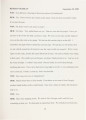
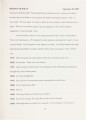
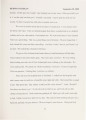
Show HERMAN OLIEKAN WI : Thousands of them. pt mbcr 2 , 2 0 HER: You used to walk along, and you would see a corpse ther and it w uld n1 ll, and we would hold our noses. Some guys would throw up. I used to go like this (demonstrating) when you'd see them lying there. There were corpses all over di tend d, you know. Well, it's too filthy to talk about it. That's enough. WIN: So from Guadalcanal what did you do? HER: What we did? WIN: After you were through with Guadalcanal? HER: We pulled out in the back, in the rear area, and established camps on the beaches close to the ocean. That's what I showed you, the tents. From then on we trained again. You know, training again. Very little play I'll tell you. Then, in order to do our wash, we got a good idea, devised a good idea. We took a rope and attached it to the palm trees. We tied our clothes onto that and threw them in the ocean and the surf would wash them on the sand. What happened, the clothes wore out (laughing). They soon stopped that. WIN: Rub bing against the sand back and forth, huh? HER: Our laundry. We did have a thing, I will tell you, that dirty water from the river. WIN: The natives of Guadalcanal, were they happy to see you? HER: Yes. They weren't too happy to be under the Japanese. Better to-they would rather be under us. They were head of the patrol sometimes to show different situations. They never wore shoes. You wouldn't believe their feet. The calluses were that thick on their feet. 17 |
| Reference URL |
https://collections.lib.utah.edu/ark:/87278/s6224t08/1023206 |