| Title |
Herman Oliekan, Salt Lake City, Utah: an interview by Winston P. Erickson, September 28, 2000: Saving the legacy tape no. 112 |
| Alternative Title |
Herman Oliekan, Saving the legacy: an oral history of Utah's World War II veterans, ACCN 2070, American West Center, University of Utah |
| Creator |
Oliekan, Herman, 1916-2009 |
| Contributor |
Erickson, Winston P., 1943-; University of Utah. American West Center |
| Publisher |
Digitized by J. Willard Marriott Library, University of Utah |
| Date |
2000-09-28 |
| Date Digital |
2015-09-16 |
| Access Rights |
I acknowledge and agree that all information I obtain as a result of accessing any oral history provided by the University of Utah's Marriott Library shall be used only for historical or scholarly or academic research purposes, and not for commercial purposes. I understand that any other use of the materials is not authorized by the University of Utah and may exceed the scope of permission granted to the University of Utah by the interviewer or interviewee. I may request permission for other uses, in writing to Special Collections at the Marriott Library, which the University of Utah may choose grant, in its sole discretion. I agree to defend, indemnify and hold the University of Utah and its Marriott Library harmless for and against any actions or claims that relate to my improper use of materials provided by the University of Utah. |
| Spatial Coverage |
Hawaii; Guadalcanal, Solomon Islands; Salt Lake City, Salt Lake County, Utah, United States |
| Subject |
Oliekan, Herman, 1916-2009--Interviews; World War, 1939-1945--Personal narratives, American; Veterans--Utah--Biography; World War, 1939-1945--Military operations, American; World War, 1939-1945--Campaigns--Pacific Area--Personal narratives, American |
| Description |
Transcript (31 pages) of an interview by Winston P. Erickson with Herman Oliekan on September 28, 2000. This is from tape number 112 in the "Saving the Legacy Oral History Project |
| Collection Number and Name |
Accn2070, Saving the Legacy oral history project, 2001-2010 |
| Abstract |
Herman Oliekan (b. 1916) emigrated from Holland to the United States in 1925. Drafted into the Army in 1940, he served in the infantry in Hawaii and Guadalcanal. After contracting malaria and impetigo, he was discharged in 1945. 31 pages. |
| Type |
Text |
| Genre |
oral histories (literary works) |
| Format |
application/pdf |
| Extent |
48 pages |
| Language |
eng |
| Rights |
 |
| Scanning Technician |
Mazi Rakhsha |
| Conversion Specifications |
Original scanned with Kirtas 2400 and saved as 400 ppi uncompressed TIFF. PDF generated by Adobe Acrobat Pro X for CONTENTdm display |
| ARK |
ark:/87278/s6224t08 |
| Topic |
Personal narratives--American; Veterans; World War (1939-1945) |
| Setname |
uum_slohp |
| ID |
1023221 |
| Reference URL |
https://collections.lib.utah.edu/ark:/87278/s6224t08 |
| Title |
Page 16 |
| Format |
application/pdf |
| Setname |
uum_slohp |
| ID |
1023203 |
| OCR Text |
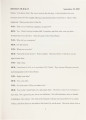
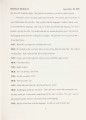
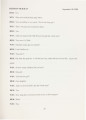
Show H RMA OLI pt mb r 2 2000 WIN: o instead of going to a berth you went ut and l pt n th d ck? HER: Yes, and it was all blackout. WIN: Was it cold? HER: No. It wasn't cold at that time, no. WIN: So you got to Hawaii. What was your assignment? HER: From Hawaii we went to Ft. Shafter, and we got our cots and n1osquito netting. We were there for awhile and we did training there. We did detail like building officers quarters, you know, prefabricated and things like this. WIN: You mentioned before we started about the barbed wire. Would you like to describe that? HER: Well, we were assigned to stretch this barbed wire. The wire was rolled on big rolls. If I remember right it had a bar with one man on the right side and one man on the left side, then we would roll it out, you know. Barbed wire went all around Oahu in double apron, which is an apron which was about seven or eight feet high. And they are quite wide, maybe about eight feet and maybe more, maybe ten feet wide. In between that they had barbed wire cut out, you know, for the guns. So we had great big guns pointing out to the ocean, and machine guns. It was littered with machine guns. I was on all those details. I could show you photographs. That's what we did. WIN: You had to spend time out there keeping watch at night on guard? HER: Yes, on guard. I used to walk guard. A lot of us guys did on the windy side of Oahu. It was in the middle of the night, dark. They would wake you up, maybe at three 14 |
| Reference URL |
https://collections.lib.utah.edu/ark:/87278/s6224t08/1023203 |