| OCR Text |
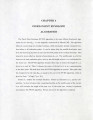
Show 4 literature at least as far back as the 1920s [16 , 29]. There are many reasons why parallel processing is so promising. On one end, the advance of software for parallel systems has made the system easier to use. For example, many compilers already exist for converting sequential programs to parallelized versions; parallel programming languages allow programmers to express in a natural way the parallelism of algorithms to solve specific problems; software development tools are implemented for generating efficient parallel software. In addition, the economic factors also solidify the role of parallel systems, since their prices are usually a fraction of that of supercomputer with equal computing power. On the other hand, it is realized that sequential machines are approaching a fundamental physical limit, that is, the speed of light, which restricts the maximal signal transmission speed allowed for any devices such as silicon chips. For example, Decegama [15] estimated that a CPU built on a chip of 3 em in diameter can have computing power of at most 1 GFLOPS (109 floating point operations per second). Current single-processor supercomputers based on silicon technology are less than one order of magnitude from this limit. The conclusion is also the same for chips based on gallium arsenide (GaAs) technology, even though they are faster than silicon chips due to lower gate switching delay. Many important applications, however, demand over thousands times the computing power of such maximum-power uniprocessor. Such applications include: simulation of 3-D seismi waves, 3-D fluid flow calculations, real-time simulation of complex systems, numerical weather forecasting, large-scale linear systems, and intelligent robots (see, e.g., [15, 32]). We developed parallel algorithms for solving 3-D acoustic wave equations and 3-D elastic wave equations. Both equations are considered in seismology. For example, the acoustic wave equation formulates acoustic waves propagating in acoustic media such as petroleum and water. The elastic wave equation formulates elastic waves propagating through earth which may be caused by artificial explosion or naturally by earthquakes and volcanic eruptions. |