| Title |
Kenneth R. Madsen, Salt Lake City, Utah: an interview by Winston Erickson, February 5 - 8, 2001: Saving the legacy tape no. 178 to 182 |
| Alternative Title |
Kenneth R. Madsen, Saving the legacy: an oral history of Utah's World War II veterans, ACCN 2070, American West Center, University of Utah |
| Creator |
Madsen, Kenneth R., 1925-2003 |
| Contributor |
Erickson, Winston P., 1943-; University of Utah. American West Center |
| Publisher |
Digitized by J. Willard Marriott Library, University of Utah |
| Date |
2001-02-05; 2001-02-06; 2001-02-07; 2001-02-08 |
| Date Digital |
2015-09-16 |
| Access Rights |
I acknowledge and agree that all information I obtain as a result of accessing any oral history provided by the University of Utah's Marriott Library shall be used only for historical or scholarly or academic research purposes, and not for commercial purposes. I understand that any other use of the materials is not authorized by the University of Utah and may exceed the scope of permission granted to the University of Utah by the interviewer or interviewee. I may request permission for other uses, in writing to Special Collections at the Marriott Library, which the University of Utah may choose grant, in its sole discretion. I agree to defend, indemnify and hold the University of Utah and its Marriott Library harmless for and against any actions or claims that relate to my improper use of materials provided by the University of Utah. |
| Spatial Coverage |
France; Germany; Utah County, Utah, United States |
| Subject |
Madsen, Kenneth R., 1925-2003--Interviews; World War, 1939-1945--Personal narratives, American; Veterans--Utah--Biography; World War, 1939-1945--Military operations, American; World War, 1939-1945--Campaigns--Europe, Northern--Personal narratives, American; World War, 1939-1945--Medical care |
| Keywords |
Froidenberg Farm; Alsace-Lorraine; Wounded; Lawyers |
| Description |
Transcript (126 pages) of an interview by Winston P. Erickson with Kenneth R. Madsen on February 5-8, 2001. This is from tape numbers 178, 179, 180, 181, and 182 in the "Saving the Legacy Oral History Project |
| Collection Number and Name |
Accn2070, Saving the Legacy oral history project, 2001-2010 |
| Abstract |
Madsen (b. 1925) details his family genealogy and recalls his childhood in rural Utah. He was inducted into the army when he turned eighteen and was assigned to the 86th Infantry Division and sent to Louisiana for jungle warfare training. Sent to Europe, instead of the Pacific, Madsen saw combat in France and Germany. Other topics covered include descriptions of the Alsace-Lorraine area, the deaths of fellow soldiers, the "Froidenberg Farm" skirmish, being wounded and receiving medical care, and his long convalescence including time spent at Bushnell military hospital in Brigham City, Utah. Madsen also talks about going to law school, being recruited by Ernest Wilkinson when he was a Senior, and joining the firm of Wilkinson, Cragun and Barker, which specialized in Indian claims cases. He left there for a job at AT&T, from which he retired. 126 pages. |
| Type |
Text |
| Genre |
oral histories (literary works) |
| Format |
application/pdf |
| Extent |
126 pages |
| Language |
eng |
| Rights |
 |
| Scanning Technician |
Mazi Rakhsha |
| Conversion Specifications |
Original scanned with Kirtas 2400 and saved as 400 ppi uncompressed TIFF. PDF generated by Adobe Acrobat Pro X for CONTENTdm display |
| ARK |
ark:/87278/s6zw3k5k |
| Topic |
Personal narratives--American; Veterans; World War (1939-1945); Medical care |
| Setname |
uum_slohp |
| ID |
1022305 |
| Reference URL |
https://collections.lib.utah.edu/ark:/87278/s6zw3k5k |
| Title |
Page 118 |
| Format |
application/pdf |
| Setname |
uum_slohp |
| ID |
1022294 |
| OCR Text |
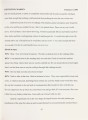
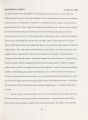
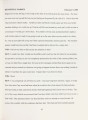
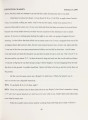
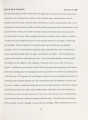
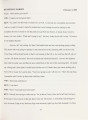
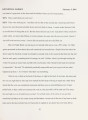
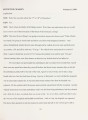
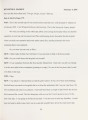
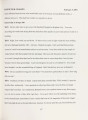
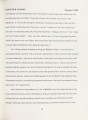
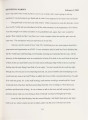
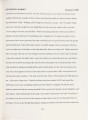
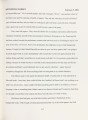
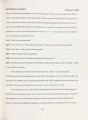
Show NNETH R. MADSEN the same as calling across the street as far as the quality of the service was cone m d. The other terminal for the cable was purchased by the British governm nt t p th British government that runs communications in England and it was brought down. Th cabl terminated at a place called Oban, Scotland. Then it went down to London-microwave the am as stateside-and was connected with the English BBC. It was number one, but England had oth r communication companies that were government units that were involved in it. The laying of the cable was-well, first of all, when the cable was made every, say fifty miles, that sounds a little bit too long-but the same equipment that was on a microwave tower here above the ground. They had to build a repeater that would serve the same function of picking up the old signal coming in, amplifying it and then sending it on with a fresh start to the next repeater and they were all lying on the bottom of the Atlantic, in some places three to three and a half miles deep so they had to have a pretty reliable system within them. They were made by Bell labs. Some of the circuitry in them was gold. Other precious metals were used too because of their longevity and their resistence to corrosion, but those repeaters had to be absolutely water tight. They just looked like the snake that had eaten the mouse and there was a bulge in its stomach. There was a bulge in the cable and then it went on to the next one. So many things happened on that project that it's hard to pick out the highlights, but the project went very well. There were no major problems at all. And there were no legal problems that I couldn't resolve with the various governments such as Newfoundland, which, I find, is very jealous of the United States, or was at that time. New Brunswick and Nova Scotia, after meeting with the mayors and the premiers of all those places, made the job really very interesting apart from just 116 |
| Reference URL |
https://collections.lib.utah.edu/ark:/87278/s6zw3k5k/1022294 |