| Title |
Kenneth R. Madsen, Salt Lake City, Utah: an interview by Winston Erickson, February 5 - 8, 2001: Saving the legacy tape no. 178 to 182 |
| Alternative Title |
Kenneth R. Madsen, Saving the legacy: an oral history of Utah's World War II veterans, ACCN 2070, American West Center, University of Utah |
| Creator |
Madsen, Kenneth R., 1925-2003 |
| Contributor |
Erickson, Winston P., 1943-; University of Utah. American West Center |
| Publisher |
Digitized by J. Willard Marriott Library, University of Utah |
| Date |
2001-02-05; 2001-02-06; 2001-02-07; 2001-02-08 |
| Date Digital |
2015-09-16 |
| Access Rights |
I acknowledge and agree that all information I obtain as a result of accessing any oral history provided by the University of Utah's Marriott Library shall be used only for historical or scholarly or academic research purposes, and not for commercial purposes. I understand that any other use of the materials is not authorized by the University of Utah and may exceed the scope of permission granted to the University of Utah by the interviewer or interviewee. I may request permission for other uses, in writing to Special Collections at the Marriott Library, which the University of Utah may choose grant, in its sole discretion. I agree to defend, indemnify and hold the University of Utah and its Marriott Library harmless for and against any actions or claims that relate to my improper use of materials provided by the University of Utah. |
| Spatial Coverage |
France; Germany; Utah County, Utah, United States |
| Subject |
Madsen, Kenneth R., 1925-2003--Interviews; World War, 1939-1945--Personal narratives, American; Veterans--Utah--Biography; World War, 1939-1945--Military operations, American; World War, 1939-1945--Campaigns--Europe, Northern--Personal narratives, American; World War, 1939-1945--Medical care |
| Keywords |
Froidenberg Farm; Alsace-Lorraine; Wounded; Lawyers |
| Description |
Transcript (126 pages) of an interview by Winston P. Erickson with Kenneth R. Madsen on February 5-8, 2001. This is from tape numbers 178, 179, 180, 181, and 182 in the "Saving the Legacy Oral History Project |
| Collection Number and Name |
Accn2070, Saving the Legacy oral history project, 2001-2010 |
| Abstract |
Madsen (b. 1925) details his family genealogy and recalls his childhood in rural Utah. He was inducted into the army when he turned eighteen and was assigned to the 86th Infantry Division and sent to Louisiana for jungle warfare training. Sent to Europe, instead of the Pacific, Madsen saw combat in France and Germany. Other topics covered include descriptions of the Alsace-Lorraine area, the deaths of fellow soldiers, the "Froidenberg Farm" skirmish, being wounded and receiving medical care, and his long convalescence including time spent at Bushnell military hospital in Brigham City, Utah. Madsen also talks about going to law school, being recruited by Ernest Wilkinson when he was a Senior, and joining the firm of Wilkinson, Cragun and Barker, which specialized in Indian claims cases. He left there for a job at AT&T, from which he retired. 126 pages. |
| Type |
Text |
| Genre |
oral histories (literary works) |
| Format |
application/pdf |
| Extent |
126 pages |
| Language |
eng |
| Rights |
 |
| Scanning Technician |
Mazi Rakhsha |
| Conversion Specifications |
Original scanned with Kirtas 2400 and saved as 400 ppi uncompressed TIFF. PDF generated by Adobe Acrobat Pro X for CONTENTdm display |
| ARK |
ark:/87278/s6zw3k5k |
| Topic |
Personal narratives--American; Veterans; World War (1939-1945); Medical care |
| Setname |
uum_slohp |
| ID |
1022305 |
| Reference URL |
https://collections.lib.utah.edu/ark:/87278/s6zw3k5k |
| Title |
Page 13 |
| Format |
application/pdf |
| Setname |
uum_slohp |
| ID |
1022189 |
| OCR Text |
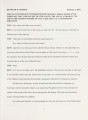
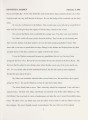
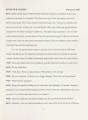
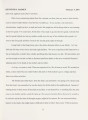
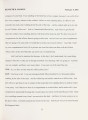
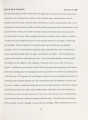
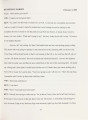
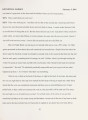
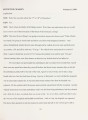
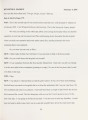
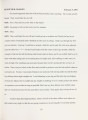
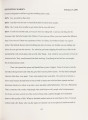
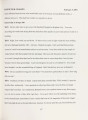
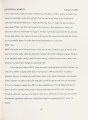
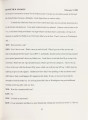
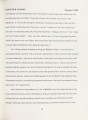
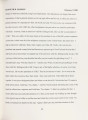
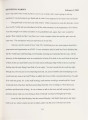
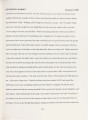
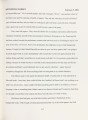
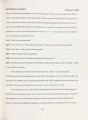
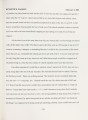
Show NET R. MADSEN F bru 2001 aft r-well eighteen years after I was born. What I was reminiscing about there for a minute was that when my next to older brother went to school I didn't think it was fair that I couldn't go. So my mother, who had been a schoolteacher, taught me how to read and write. She taught me all the things that he was learning in the first grade. Two years later, by the time I was ready to go into the first grade, I already had the first grade behind me, but my mother would never let any of her children skip a grade, so I went to the first grade and then I went to the second grade right on through. Going back to the Depression years, they had a dramatic affect on our family. As I say, Dad had full-time work, but he also had eight children. We never experienced the Depression as far as feeling like we didn't have clothes and things like that because we did. We had clothes and we had enough to eat and we had no financial problems thanks to the most wonderful financial planning team I ever heard of-my mother and my father. As I say, we went to work. That was expected of us. We all went to work. We worked on farms, at least I did. My next older brother did until we both started to go to college and then there were other activities. My brother just older than I, from the time I can remember, was going to be a doctor and, from the time I can remember, he was the doctor for all the kids in the neighborhood. Instead of running home to their moms if they had an accident, or cut themselves, or anything like that, they came to my brother and he would fix them up. The reason I mention that is because he wanted to be a doctor and at that time he thought surgery might be his interest. He was concerned about injuries to his hands that might make it difficult for him to follow that course. With my parents, 11 |
| Reference URL |
https://collections.lib.utah.edu/ark:/87278/s6zw3k5k/1022189 |