| Title |
Kenneth R. Madsen, Salt Lake City, Utah: an interview by Winston Erickson, February 5 - 8, 2001: Saving the legacy tape no. 178 to 182 |
| Alternative Title |
Kenneth R. Madsen, Saving the legacy: an oral history of Utah's World War II veterans, ACCN 2070, American West Center, University of Utah |
| Creator |
Madsen, Kenneth R., 1925-2003 |
| Contributor |
Erickson, Winston P., 1943-; University of Utah. American West Center |
| Publisher |
Digitized by J. Willard Marriott Library, University of Utah |
| Date |
2001-02-05; 2001-02-06; 2001-02-07; 2001-02-08 |
| Date Digital |
2015-09-16 |
| Access Rights |
I acknowledge and agree that all information I obtain as a result of accessing any oral history provided by the University of Utah's Marriott Library shall be used only for historical or scholarly or academic research purposes, and not for commercial purposes. I understand that any other use of the materials is not authorized by the University of Utah and may exceed the scope of permission granted to the University of Utah by the interviewer or interviewee. I may request permission for other uses, in writing to Special Collections at the Marriott Library, which the University of Utah may choose grant, in its sole discretion. I agree to defend, indemnify and hold the University of Utah and its Marriott Library harmless for and against any actions or claims that relate to my improper use of materials provided by the University of Utah. |
| Spatial Coverage |
France; Germany; Utah County, Utah, United States |
| Subject |
Madsen, Kenneth R., 1925-2003--Interviews; World War, 1939-1945--Personal narratives, American; Veterans--Utah--Biography; World War, 1939-1945--Military operations, American; World War, 1939-1945--Campaigns--Europe, Northern--Personal narratives, American; World War, 1939-1945--Medical care |
| Keywords |
Froidenberg Farm; Alsace-Lorraine; Wounded; Lawyers |
| Description |
Transcript (126 pages) of an interview by Winston P. Erickson with Kenneth R. Madsen on February 5-8, 2001. This is from tape numbers 178, 179, 180, 181, and 182 in the "Saving the Legacy Oral History Project |
| Collection Number and Name |
Accn2070, Saving the Legacy oral history project, 2001-2010 |
| Abstract |
Madsen (b. 1925) details his family genealogy and recalls his childhood in rural Utah. He was inducted into the army when he turned eighteen and was assigned to the 86th Infantry Division and sent to Louisiana for jungle warfare training. Sent to Europe, instead of the Pacific, Madsen saw combat in France and Germany. Other topics covered include descriptions of the Alsace-Lorraine area, the deaths of fellow soldiers, the "Froidenberg Farm" skirmish, being wounded and receiving medical care, and his long convalescence including time spent at Bushnell military hospital in Brigham City, Utah. Madsen also talks about going to law school, being recruited by Ernest Wilkinson when he was a Senior, and joining the firm of Wilkinson, Cragun and Barker, which specialized in Indian claims cases. He left there for a job at AT&T, from which he retired. 126 pages. |
| Type |
Text |
| Genre |
oral histories (literary works) |
| Format |
application/pdf |
| Extent |
126 pages |
| Language |
eng |
| Rights |
 |
| Scanning Technician |
Mazi Rakhsha |
| Conversion Specifications |
Original scanned with Kirtas 2400 and saved as 400 ppi uncompressed TIFF. PDF generated by Adobe Acrobat Pro X for CONTENTdm display |
| ARK |
ark:/87278/s6zw3k5k |
| Topic |
Personal narratives--American; Veterans; World War (1939-1945); Medical care |
| Setname |
uum_slohp |
| ID |
1022305 |
| Reference URL |
https://collections.lib.utah.edu/ark:/87278/s6zw3k5k |
| Title |
Page 23 |
| Format |
application/pdf |
| Setname |
uum_slohp |
| ID |
1022199 |
| OCR Text |
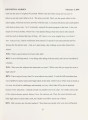
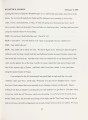
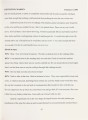
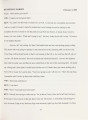
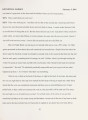
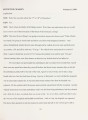
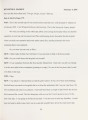
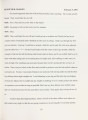
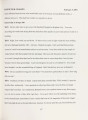
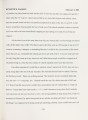
Show T R.MADSEN WIN: The Korean War, maybe? br 20 KEN: The Korean, yeah, the first one following the world war. Yeah that would be Korea. He had opened his practice in Provo in general medicine, or general practice, but he felt that he-since he had gotten his medical training with the help of the navy, he felt that he owed the country a payback. And so he closed his practice and rejoined the navy and was stationed in Japan quite a bit of the time. In fact, I guess most of the time that he was in for-whatever time that was-about two years. WIN: About two years for the war. So you mentioned before that you graduated from high school about the age of eighteen. That would have been in '43? KEN: I graduated when I was seventeen and it was in '43. WIN: In '43. And, so, you didn't have much time between your graduation and your induction into the military? KEN: No, I had been trying for months to join the navy, or something, anything but the army. I believe the last thing I wanted to be in was in the infantry. I mean that seriously. For some reason I just had a total adverse reaction to the thought of being in the infantry. But because my eyes are very poor I was turned down. I tried to enlist in the navy twice and the air force once, and I was turned down. The air force turned me down because they claimed I had heart trouble. The family doctor, because my mother had always had heart trouble, was a heart specialist, and he had always been my doctor. So when the military claimed that I had a heart condition, he wrote a letter telling that he had treated me for ten years and had never been aware of, or found 21 |
| Reference URL |
https://collections.lib.utah.edu/ark:/87278/s6zw3k5k/1022199 |