| Title |
John B. Goddard, Ogden, Utah: an interview by Becky B. Lloyd, September 30, 2004: Saving the legacy tape no. 714 |
| Alternative Title |
John B. Goddard, Saving the legacy: an oral history of Utah's World War II veterans, ACCN 2070, American West Center, University of Utah |
| Creator |
Goddard, John B., 1920-2015 |
| Contributor |
Lloyd, Becky B.; University of Utah. American West Center |
| Publisher |
Digitized by J. Willard Marriott Library, University of Utah |
| Date |
2004-09-30 |
| Date Digital |
2015-09-16 |
| Access Rights |
I acknowledge and agree that all information I obtain as a result of accessing any oral history provided by the University of Utah's Marriott Library shall be used only for historical or scholarly or academic research purposes, and not for commercial purposes. I understand that any other use of the materials is not authorized by the University of Utah and may exceed the scope of permission granted to the University of Utah by the interviewer or interviewee. I may request permission for other uses, in writing to Special Collections at the Marriott Library, which the University of Utah may choose grant, in its sole discretion. I agree to defend, indemnify and hold the University of Utah and its Marriott Library harmless for and against any actions or claims that relate to my improper use of materials provided by the University of Utah. |
| Spatial Coverage |
Africa; Italy; France; Ogden, Weber County, Utah, United States |
| Subject |
Goddard, John B., 1920-2015--Interviews; World War, 1939-1945--Personal narratives, American; Veterans--Utah--Biography; World War, 1939-1945--Campaigns--Europe, Southern--Personal narratives, American; World War, 1939-1945--Military operations, American; World War, 1939-1945--Medical care |
| Keywords |
Hospitals |
| Description |
Transcript (53 pages) of an interview by Becky B. Lloyd with John B. Goddard on September 30, 2004. This is from tape numbers 714.1 and 714.2 in the "Saving the Legacy Oral History Project |
| Collection Number and Name |
Accn2070, Saving the Legacy oral history project, 2001-2010 |
| Abstract |
Goddard (b. 1920) describes his youth in Ogden, Utah. He enlisted in the army in 1942. After basic training at Camp Roberts, California, he completed officer candidate school and parachute school at Fort Benning. He served in Africa, Italy, and France with the Third Infantry Division of the Fifth and Sixth Armies. After he was wounded he was sent to the 300th General Hospital, then to Hammond Hospital in Modesto, California. He also spent time in Madigan Hospital (Seattle), Bushnell Hospital (Utah), and Bruns Hospital (Santa Fe, New Mexico). He was discharged in 1946. 53 pages. |
| Type |
Text |
| Genre |
oral histories (literary works) |
| Format |
application/pdf |
| Extent |
53 pages |
| Language |
eng |
| Rights |
 |
| Scanning Technician |
Mazi Rakhsha |
| Conversion Specifications |
Original scanned with Kirtas 2400 and saved as 400 ppi uncompressed TIFF. PDF generated by Adobe Acrobat Pro X for CONTENTdm display |
| ARK |
ark:/87278/s6m927v2 |
| Topic |
Personal narratives--American; Veterans; World War (1939-1945); Medical care |
| Setname |
uum_slohp |
| ID |
1022128 |
| Reference URL |
https://collections.lib.utah.edu/ark:/87278/s6m927v2 |
| Title |
Page 52 |
| Format |
application/pdf |
| Setname |
uum_slohp |
| ID |
1022125 |
| OCR Text |
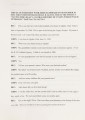
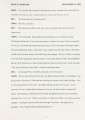
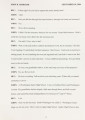
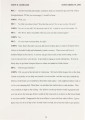
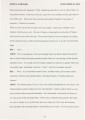
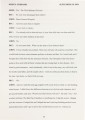
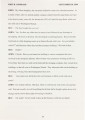
Show JOH B. GODDARD PT MB R 0 2004 w advanced through France there was a lull in the fighting. I wa itting on th in front of a church when a runner appeared from another company and asked what I wanted his company to do. I immediately responded by saying I had no authority to tell his company what to do. He replied by saying that the engagement we had just finished had left me as the ranking officer in the battalion and since we were surrounded, there would be no replacement colonels for a while. My runner asked if we were truly surrounded and when the answer was yes, he responded by saying, " Those poor bastards, when will they ever learn not to surround our company? They must want to commit suicide." Some of them did. One of the amazing things I learned in combat was that you could usually smell a German "Kraut" before you could see him. We always knew if there were Krauts in the area by smelling. [Jack speculated that it was due to the fabric from their uniform combining with perspiration, etc., that put off a unique smell. Jack wondered if the Americans, too, didn't have a "special smell" that was detectable by the Germans.] One evening after being advised we would attack early in the morning the Pastor held church services. During the meeting he asked the question, "How many of you believe in fate that when your time is up, it's up, but until then you're okay?" Almost every hand in the congregation was raised. He then said, "If you feel that way, why don't you all get out of your foxholes in the morning and charge the enemy? If your time is not up, he can't kill you, so there is no need for you to run or crawl or dive into shell holes to protect yourself. He then asked, "How many of you will charge the enemy in the 51 |
| Reference URL |
https://collections.lib.utah.edu/ark:/87278/s6m927v2/1022125 |