| Title |
John B. Goddard, Ogden, Utah: an interview by Becky B. Lloyd, September 30, 2004: Saving the legacy tape no. 714 |
| Alternative Title |
John B. Goddard, Saving the legacy: an oral history of Utah's World War II veterans, ACCN 2070, American West Center, University of Utah |
| Creator |
Goddard, John B., 1920-2015 |
| Contributor |
Lloyd, Becky B.; University of Utah. American West Center |
| Publisher |
Digitized by J. Willard Marriott Library, University of Utah |
| Date |
2004-09-30 |
| Date Digital |
2015-09-16 |
| Access Rights |
I acknowledge and agree that all information I obtain as a result of accessing any oral history provided by the University of Utah's Marriott Library shall be used only for historical or scholarly or academic research purposes, and not for commercial purposes. I understand that any other use of the materials is not authorized by the University of Utah and may exceed the scope of permission granted to the University of Utah by the interviewer or interviewee. I may request permission for other uses, in writing to Special Collections at the Marriott Library, which the University of Utah may choose grant, in its sole discretion. I agree to defend, indemnify and hold the University of Utah and its Marriott Library harmless for and against any actions or claims that relate to my improper use of materials provided by the University of Utah. |
| Spatial Coverage |
Africa; Italy; France; Ogden, Weber County, Utah, United States |
| Subject |
Goddard, John B., 1920-2015--Interviews; World War, 1939-1945--Personal narratives, American; Veterans--Utah--Biography; World War, 1939-1945--Campaigns--Europe, Southern--Personal narratives, American; World War, 1939-1945--Military operations, American; World War, 1939-1945--Medical care |
| Keywords |
Hospitals |
| Description |
Transcript (53 pages) of an interview by Becky B. Lloyd with John B. Goddard on September 30, 2004. This is from tape numbers 714.1 and 714.2 in the "Saving the Legacy Oral History Project |
| Collection Number and Name |
Accn2070, Saving the Legacy oral history project, 2001-2010 |
| Abstract |
Goddard (b. 1920) describes his youth in Ogden, Utah. He enlisted in the army in 1942. After basic training at Camp Roberts, California, he completed officer candidate school and parachute school at Fort Benning. He served in Africa, Italy, and France with the Third Infantry Division of the Fifth and Sixth Armies. After he was wounded he was sent to the 300th General Hospital, then to Hammond Hospital in Modesto, California. He also spent time in Madigan Hospital (Seattle), Bushnell Hospital (Utah), and Bruns Hospital (Santa Fe, New Mexico). He was discharged in 1946. 53 pages. |
| Type |
Text |
| Genre |
oral histories (literary works) |
| Format |
application/pdf |
| Extent |
53 pages |
| Language |
eng |
| Rights |
 |
| Scanning Technician |
Mazi Rakhsha |
| Conversion Specifications |
Original scanned with Kirtas 2400 and saved as 400 ppi uncompressed TIFF. PDF generated by Adobe Acrobat Pro X for CONTENTdm display |
| ARK |
ark:/87278/s6m927v2 |
| Topic |
Personal narratives--American; Veterans; World War (1939-1945); Medical care |
| Setname |
uum_slohp |
| ID |
1022128 |
| Reference URL |
https://collections.lib.utah.edu/ark:/87278/s6m927v2 |
| Title |
Page 33 |
| Format |
application/pdf |
| Setname |
uum_slohp |
| ID |
1022106 |
| OCR Text |
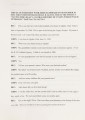
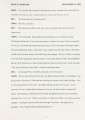
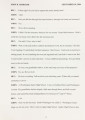
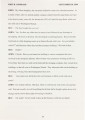
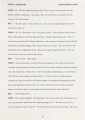
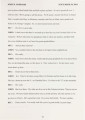
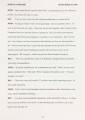
Show JOHN B. GODDARD EPTEMB R 30 2004 that plane. ' Now I hitchhiked home from Fort Lewis in the winter. It wa cold and I got out on the highway, and I can tell you, it took me about three or four days to get home. I got home the morning of the funeral, which was that afternoon. Now that was one experience I had with the Red Cross. The other experience was when I went into the service, I was called out of the ranks when I was at Fort Banning. And they said, "Cadet Goddard, step forward." And they said, "Here's a telegram for you." We were going in for a test. It was an I.Q. test. I opened the telegram and it said, "No need to come now. Dad was buried yesterday." Now the Red Cross had been told where I was and how they could get to me, and they failed to send for me or notify anybody that my father had died. If you want to know, I don't love the Red Cross. On two occasions, when I needed them, they failed me miserably, just failed me miserably. That's a sad story. I give to every community social service that I can think of, but never the Red Cross. I also found out about the big salaries paid there. I started to tell you about the money I was making up there in the Bridge games. Finally, as I was leaving, I said to this partner, "Well you have been a great partner. How long have you been playing Bridge? You're sure good." And he says, "Well, I ought to be pretty good. Eli Culbertson was my partner when we won the National Bridge Championship." I didn't know that until I was ready to leave. But he was sure a player, I'll tell you. But we did pass our time away playing Bridge and things like that. BEC: So that wasn't too bad then. I pictured they'd just have you in some hospital bed the whole time. JOHN: No, I could get around in crutches. I got to where I could run on crutches as fast as you could run on foot, because I could stretch them way out. You really can, you can 32 |
| Reference URL |
https://collections.lib.utah.edu/ark:/87278/s6m927v2/1022106 |