| Title |
David Lofgren, Salt Lake City, Utah: an interview by Luke Kelly, April 4, 2001: Saving the legacy tape no. 209 and 210 |
| Alternative Title |
David E. Lofgren, Saving the legacy: an oral history of Utah's World War II veterans, ACCN 2070, American West Center, University of Utah |
| Creator |
Lofgren, David E., 1922-2006 |
| Contributor |
Kelly, Luke; University of Utah. American West Center |
| Publisher |
Digitized by J. Willard Marriott Library, University of Utah |
| Date |
2001-04-04 |
| Date Digital |
2015-09-16 |
| Access Rights |
I acknowledge and agree that all information I obtain as a result of accessing any oral history provided by the University of Utah's Marriott Library shall be used only for historical or scholarly or academic research purposes, and not for commercial purposes. I understand that any other use of the materials is not authorized by the University of Utah and may exceed the scope of permission granted to the University of Utah by the interviewer or interviewee. I may request permission for other uses, in writing to Special Collections at the Marriott Library, which the University of Utah may choose grant, in its sole discretion. I agree to defend, indemnify and hold the University of Utah and its Marriott Library harmless for and against any actions or claims that relate to my improper use of materials provided by the University of Utah. |
| Spatial Coverage |
Germany; Philippines; Salt Lake County, Utah, United States |
| Subject |
Lofgren, David E., 1922-2006--Interviews; World War, 1939-1945--Personal narratives, American; Veterans--Utah--Biography; World War, 1939-1945--Military operations, American; World War, 1939-1945--Campaigns--Europe, Northern--Personal narratives, American |
| Keywords |
FBI |
| Description |
Transcript (58 pages) of an interview by Luke Kelly with David E. Lofgren on April 4, 2001. This is from tape numbers 209 and 210 in the "Saving the Legacy Oral History Project |
| Collection Number and Name |
Accn2070, Saving the Legacy oral history project, 2001-2010 |
| Abstract |
Lofgren (b. 1922) was born in Butlerville, at the mouth of Big Cottonwood Canyon. He attended Utah State University before going to work for the FBI in 1941. He entered the army in December 1942, and saw his first combat in Cologne, Germany, with the 342nd Infantry. After the war in Europe was over, Lofgren was shipped to the Philippines. 58 pages. |
| Type |
Text |
| Genre |
oral histories (literary works) |
| Format |
application/pdf |
| Extent |
58 pages |
| Language |
eng |
| Rights |
 |
| Scanning Technician |
Mazi Rakhsha |
| Conversion Specifications |
Original scanned with Kirtas 2400 and saved as 400 ppi uncompressed TIFF. PDF generated by Adobe Acrobat Pro X for CONTENTdm display |
| ARK |
ark:/87278/s67963xd |
| Topic |
Personal narratives--American; Veterans; World War (1939-1945) |
| Setname |
uum_slohp |
| ID |
1021680 |
| Reference URL |
https://collections.lib.utah.edu/ark:/87278/s67963xd |
| Title |
Page 36 |
| Format |
application/pdf |
| Setname |
uum_slohp |
| ID |
1021656 |
| OCR Text |
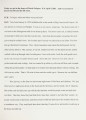
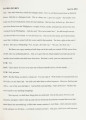
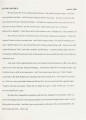
Show DAVID LOFGREN il wounded German, and he's got a U.S. medic armband. And I went up and h at d n guy's chest and lit up a cigar. And I said, "What in the devil are you doing?" " ou'r n t supposed to even have a gun." He says, "Well, I'm a Mormon priest, and I can do as I want. I've got the authority." I said, "When I'm around don't ever say that you're a Mormon even because I'm going to just dissect you." And I knocked the cigar out of his mouth. He said, "You can't do that to me, I'm a medic." And I says, "Why have you got a gun?" 1 "Well, what else are you going to shoot with." I came so close to carving a Zorro Z on his chest it was just funny, because all you do is that, and the knife is there in his middle. But here he was, a wounded German, and he takes out a gun and shoots him. End of tape 1, Side B LUK: Okay. We are back and this is tape two. And we are just talking about ... DAV: World War II. LUK: World War II. You were talking about you had picked up a wounded German soldier in contrast to the medic who had just shot a German soldier. DAV: Okay. This wounded German soldier, when I saw him he was grunting and grizzling and blubbering at the mouth, and he had a hole between his eyes that was big enough I could put my thumb in it. I didn't, but I could have. For bandages we carried Kotexes. And the whole back of his head, from his ears back, was missing. All the brain and everything was gone. But his |
| Reference URL |
https://collections.lib.utah.edu/ark:/87278/s67963xd/1021656 |