| Title |
Glen E. Allred, Bountiful, Utah: an interview by Winston P. Erickson, January 30, 2001: Saving the legacy tape no. 142 and 143 |
| Alternative Title |
Glen E. Allred, Saving the legacy: an oral history of Utah's World War II veterans, ACCN 2070, American West Center, University of Utah |
| Creator |
Allred, Glen E., 1921- |
| Contributor |
Erickson, Winston P., 1943-; University of Utah. American West Center |
| Publisher |
Digitized by J. Willard Marriott Library, University of Utah |
| Date |
2001-01-30 |
| Date Digital |
2015-09-16 |
| Access Rights |
I acknowledge and agree that all information I obtain as a result of accessing any oral history provided by the University of Utah's Marriott Library shall be used only for historical or scholarly or academic research purposes, and not for commercial purposes. I understand that any other use of the materials is not authorized by the University of Utah and may exceed the scope of permission granted to the University of Utah by the interviewer or interviewee. I may request permission for other uses, in writing to Special Collections at the Marriott Library, which the University of Utah may choose grant, in its sole discretion. I agree to defend, indemnify and hold the University of Utah and its Marriott Library harmless for and against any actions or claims that relate to my improper use of materials provided by the University of Utah. |
| Spatial Coverage |
England, United Kingdom; France; Belgium; Holland; Germany; Ballard, Uintah County, Utah, United States |
| Subject |
Allred, Glen E., 1921- --Interviews; World War, 1939-1945--Personal narratives, American; Veterans--Utah--Biography; World War, 1939-1945--Military operations, American; World War, 1939-1945--Campaigns--Europe, Northern--Personal narratives, American |
| Keywords |
246th Engineer Combat Battalion; Berlin occupation |
| Description |
Transcript (58 pages) of an interview by Winston P. Erickson with Glen E. Allred on January 30, 2001. This is from tape numbesr 142 and 143 in the "Saving the Legacy Oral History Project |
| Collection Number and Name |
Accn2070, Saving the Legacy oral history project, 2001-2010 |
| Abstract |
Allred (b. 1921) served in the U. S. Army from 1942 to 1945. He was in the 246th Engineer Combat Battalion staioned in Salisbury, England prior to traveling to France, Belgium, Holland, and Germany. He finished his tour of duty with the occupation army in Berlin. 54 pages. |
| Type |
Text |
| Genre |
oral histories (literary works) |
| Format |
application/pdf |
| Extent |
54 pages |
| Language |
eng |
| Rights |
 |
| Scanning Technician |
Mazi Rakhsha |
| Conversion Specifications |
Original scanned with Kirtas 2400 and saved as 400 ppi uncompressed TIFF. PDF generated by Adobe Acrobat Pro X for CONTENTdm display |
| ARK |
ark:/87278/s6g46pkd |
| Topic |
Personal narratives--American; Veterans; World War (1939-1945) |
| Setname |
uum_slohp |
| ID |
1021463 |
| Reference URL |
https://collections.lib.utah.edu/ark:/87278/s6g46pkd |
| Title |
Page 39 |
| Format |
application/pdf |
| Setname |
uum_slohp |
| ID |
1021442 |
| OCR Text |
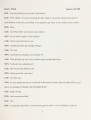
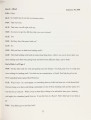
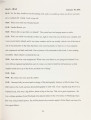
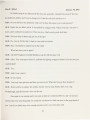
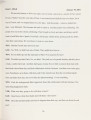
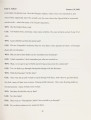
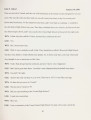
Show Glen E. Allred WIN: We just took a break, and we noticed that th town th t 1 n t 1 in ut th t bombarded so much by the American artillery, and which was irtually d tr d Jul· Germany. He has pictures of that in his book. GLE: It was on the Roer River. WIN: On the Roer River, okay. So you got through. We were talking about noticing the superiority of American fighters, or American air power, and that shortly after you got into Germany, you seldom saw German planes, although you did have a couple of experiences where they did cause some damage. After you crossed the Roer in Jiilich, where did your unit go? GLE: We went further east and somewhat north to- oh, I remember a town named Monchengladbach. We were headed toward the Rhine River now, and there was little opposition of any kind with the enemy for the rest of the time that we were there. WIN: So after you got across the Roer you didn't have much opposition? GLE: Not much at all. WIN: Just token opposition, and the Germans were moving rapidly inland? GLE: Right. WIN: More toward Berlin. So did you move rapidly through Germany? GLE: Fairly rapidly. In the engineer unit, we found a lot of bunkers that the Germans had built. We called them pillboxes. Those are concrete bunkers that they had. WIN: Did you destroy those, or did you just bypass them? GLE: That was one of our assignments was to destroy them, in case of counterattacks and the enemy retaking the country. We found that a hundred sticks of dynamite put in one of them- 36 |
| Reference URL |
https://collections.lib.utah.edu/ark:/87278/s6g46pkd/1021442 |