| Title |
John Perschon, Salt Lake City, Utah: an interview by Becky B. Lloyd, January 15, 2002: Saving the legacy tape no. 421 |
| Alternative Title |
John Perschon, Saving the legacy: an oral history of Utah's World War II veterans, ACCN 2070, American West Center, University of Utah |
| Creator |
Perschon, John, 1921- |
| Contributor |
Lloyd, Becky B.; University of Utah. American West Center |
| Publisher |
Digitized by J. Willard Marriott Library, University of Utah |
| Date |
2002-01-15 |
| Date Digital |
2015-09-16 |
| Access Rights |
I acknowledge and agree that all information I obtain as a result of accessing any oral history provided by the University of Utah's Marriott Library shall be used only for historical or scholarly or academic research purposes, and not for commercial purposes. I understand that any other use of the materials is not authorized by the University of Utah and may exceed the scope of permission granted to the University of Utah by the interviewer or interviewee. I may request permission for other uses, in writing to Special Collections at the Marriott Library, which the University of Utah may choose grant, in its sole discretion. I agree to defend, indemnify and hold the University of Utah and its Marriott Library harmless for and against any actions or claims that relate to my improper use of materials provided by the University of Utah. |
| Spatial Coverage |
Italy |
| Subject |
Perschon, John, 1921- --Interviews; World War, 1939-1945--Personal narratives, American; World War, 1939-1945--Military operations, American; World War, 1939-1945--Campaigns--Europe, Southern--Personal narratives, American; Veterans--Utah--Biography; United States. Army. Mountain Division, 10th--History--World War, 1939-1945 |
| Keywords |
10th Mountain Division |
| Description |
Transcript (46 pages) of an interview by Becky B. Lloyd with John Perschon on January 15, 2001. This is from tape number 421 in the "Saving the Legacy Oral History Project |
| Collection Number and Name |
Accn2070, Saving the Legacy oral history project, 2001-2010 |
| Abstract |
John Perschon (b. 1921) was a member of the Tenth Mountain Division, which was shipped to Italy shortly after Anzio. He discusses training at various bases, fighting alongside the 442nd regiment, the heavy casualty rate under Major General George Hayes, digging foxholes, life at the front, and the fighting methods of Gurkhas. Perschon was awarded two Bronze Stars. 46 pages. |
| Type |
Text |
| Genre |
oral histories (literary works) |
| Format |
application/pdf |
| Extent |
46 pages |
| Language |
eng |
| Rights |
 |
| Scanning Technician |
Mazi Rakhsha |
| Conversion Specifications |
Original scanned with Kirtas 2400 and saved as 400 ppi uncompressed TIFF. PDF generated by Adobe Acrobat Pro X for CONTENTdm display |
| ARK |
ark:/87278/s6j40rrt |
| Topic |
Personal narratives--American; Veterans; World War (1939-1945); United States. Army. Mountain Division, 10th |
| Setname |
uum_slohp |
| ID |
1021368 |
| Reference URL |
https://collections.lib.utah.edu/ark:/87278/s6j40rrt |
| Title |
Page 7 |
| Format |
application/pdf |
| Setname |
uum_slohp |
| ID |
1021327 |
| OCR Text |
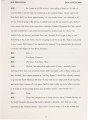
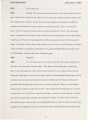
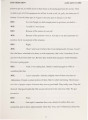
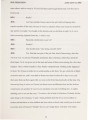
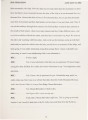
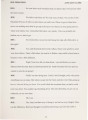
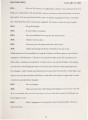
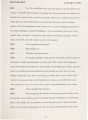
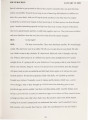
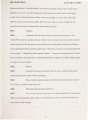
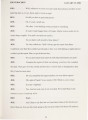
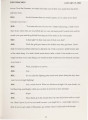
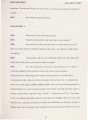
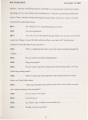
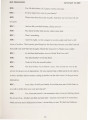
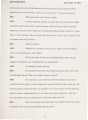
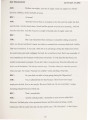
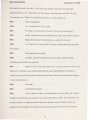
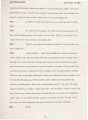
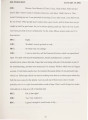
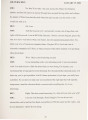
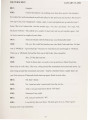
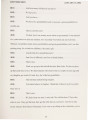
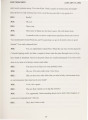
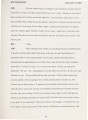
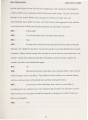
Show JO P R HO R 1 20 2 I d ay Well if you have a ense of humor you can put up with anything. ' nd r all that s true. You've got to be able to laugh at yourself and laugh at thing t k pan n keel because if not you get ground to bits. And we were in the thick of battl . W had a heavy casualty rate because the division leader was a major general who was called George Hayes. We used to call him "Little Blood and Guts' after George Patton. He was just about as fierce as George Patton, just about as energetic, and I don't think he was quite as egotistical as George Patton. So we had the division commander, and we had an assistant division commander by the name of Duff, and he was a one-star general. And to our outfit, we had assigned to us a regiment of mule pack field artillery, and that had a general. So we had three generals in our outfit. The mule pack had the howitzers. And I can still sometimes hear the creaking of the leather as the mules would move up to our position at night, and then we would go ahead in the daytime, and then they'd shoot over our heads. And you could still hear that creaking of the leather as those mules would come up. When the war was over we gave the mules to Italy. We didn't bring any of them back. But that basically was my experience in the war. But we had a lot of, like I said, a lot of casualties. We did not use our skis, however, that year. It was the winter of '44-'45. There was not very much snow in Italy at the time. We did some mountain climbing up cliffs and such as that to surprise the enemy. And went through the Po Valley all the way up. We were chasing the Germans out of Italy, is what we were doing, capturing them. And at the end we captured them so fast that we just took their weapons away and had them walk to the rear on their own. We just couldn't- BEe: No place to keep them. 6 |
| Reference URL |
https://collections.lib.utah.edu/ark:/87278/s6j40rrt/1021327 |