| Title |
J. Harold Johnson, Salt Lake City, Utah: an interview by Becky B. Lloyd, June 27, 2003: Saving the legacy tape no. 633 |
| Alternative Title |
J. Harold Johnson, Saving the legacy: an oral history of Utah's World War II veterans, ACCN 2070, American West Center, University of Utah |
| Creator |
Johnson, J. Harold (John Harold), 1921-2012 |
| Contributor |
Lloyd, Becky B.; University of Utah. American West Center |
| Publisher |
Digitized by J. Willard Marriott Library, University of Utah |
| Date |
2003-06-27 |
| Date Digital |
2015-09-16 |
| Access Rights |
I acknowledge and agree that all information I obtain as a result of accessing any oral history provided by the University of Utah's Marriott Library shall be used only for historical or scholarly or academic research purposes, and not for commercial purposes. I understand that any other use of the materials is not authorized by the University of Utah and may exceed the scope of permission granted to the University of Utah by the interviewer or interviewee. I may request permission for other uses, in writing to Special Collections at the Marriott Library, which the University of Utah may choose grant, in its sole discretion. I agree to defend, indemnify and hold the University of Utah and its Marriott Library harmless for and against any actions or claims that relate to my improper use of materials provided by the University of Utah. |
| Spatial Coverage |
France; Belgium; Austria; Salt Lake City, Salt Lake County, Utah, United States |
| Subject |
Johnson, J. Harold (John Harold), 1921-2012--Interviews; World War, 1939-1945--Personal narratives, American; Veterans--Utah--Biography; World War, 1939-1945--Military operations, American; World War, 1939-1945--Campaigns--Europe, Northern--Personal narratives, American; World War, 1939-1945--Concentration camps--Austria |
| Description |
Transcript (31 pages) of an interview by Becky B. Lloyd with J. Harold Johnson on June 27, 2003. This is from tape number 633 in the "Saving the Legacy Oral History Project |
| Collection Number and Name |
Accn2070, Saving the Legacy oral history project, 2001-2010 |
| Abstract |
Harold Johnson (b. 1921) talks about his youth in Salt Lake City, including graduation from West High School, participation in ROTC, the effects of the Depression on his family, and working at the Denver and Rio Grande Depot. He describes being drafted into the army in 1942, his military training, traveling to England on HMS Samaria, and across the channel on the USS Nicholas Herkimer. He first saw combat near Cherbourg, France, later traveling across France and Belgium, over the Rhine River, and through three concentration camps in Austria. He served briefly in the army of occupation before returning home in 1946. He went back to work for the railroad and continued there until his retirement. 31 pages. |
| Type |
Text |
| Genre |
oral histories (literary works) |
| Format |
application/pdf |
| Extent |
31 pages |
| Language |
eng |
| Rights |
 |
| Scanning Technician |
Mazi Rakhsha |
| Conversion Specifications |
Original scanned with Kirtas 2400 and saved as 400 ppi uncompressed TIFF. PDF generated by Adobe Acrobat Pro X for CONTENTdm display |
| ARK |
ark:/87278/s64j2dcx |
| Topic |
Personal narratives--American; Veterans; World War (1939-1945); Concentration camps |
| Setname |
uum_slohp |
| ID |
1021248 |
| Reference URL |
https://collections.lib.utah.edu/ark:/87278/s64j2dcx |
| Title |
Page 23 |
| Format |
application/pdf |
| Setname |
uum_slohp |
| ID |
1021238 |
| OCR Text |
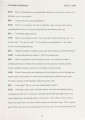
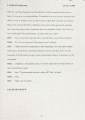
Show J. D lobbing sh lls ov r it and you get thes air tree bursts. hell com d hit t explode high over the ground and it just blows shrapnel all ov r. Wh n a c u 1 rounds came in we'd dive under the halftrack and wait for it, and these G rman just standing there laughing. They didn't worry at all. They said You think that s bad. You should see when you start shooting at us." I guess with our equipment and everything, we did a better job than they did at shooting. BEC: Interesting from that perspective. So as you traveled around and moved, did you come in contact much with the native people who lived there in towns and neighborhoods and such? HAR: Oh, yeah. We had a lot of them. But we didn't, when we were actually in fighting, from Bastogne on all up through there, we didn't do a heck of a lot of being with the people because you'd come up to a town and if somebody took a shot at you or something, well, we'd just-depending_ on our instructions. Of course, we had George S. Patton out there telling us what to do and if you didn't do what he said, somebody's in trouble. And there were times when we were fifty, sixty miles ahead of our infantry support when we'd go out on advanced guard, there'd be a battery of artillery and a battery of tanks and some infantry and whatnot and we'd just go out. And all we were doing was get on a road and take off. And you'd have somebody, a jeep or tank there ahead of you, going along to kind of look and see and tell us what things looked like, and we'd just go until somebody started shooting at us. And then we'd get these people, or we'd radio back for support and, of course, a lot of times we wouldn't go in too hard, but a lot of times if you just get a few little shots around, we'd just get out on one side of the town and button up everything, close all the doors and windows of our vehicles and take 22 |
| Reference URL |
https://collections.lib.utah.edu/ark:/87278/s64j2dcx/1021238 |