| Title |
J. Harold Johnson, Salt Lake City, Utah: an interview by Becky B. Lloyd, June 27, 2003: Saving the legacy tape no. 633 |
| Alternative Title |
J. Harold Johnson, Saving the legacy: an oral history of Utah's World War II veterans, ACCN 2070, American West Center, University of Utah |
| Creator |
Johnson, J. Harold (John Harold), 1921-2012 |
| Contributor |
Lloyd, Becky B.; University of Utah. American West Center |
| Publisher |
Digitized by J. Willard Marriott Library, University of Utah |
| Date |
2003-06-27 |
| Date Digital |
2015-09-16 |
| Access Rights |
I acknowledge and agree that all information I obtain as a result of accessing any oral history provided by the University of Utah's Marriott Library shall be used only for historical or scholarly or academic research purposes, and not for commercial purposes. I understand that any other use of the materials is not authorized by the University of Utah and may exceed the scope of permission granted to the University of Utah by the interviewer or interviewee. I may request permission for other uses, in writing to Special Collections at the Marriott Library, which the University of Utah may choose grant, in its sole discretion. I agree to defend, indemnify and hold the University of Utah and its Marriott Library harmless for and against any actions or claims that relate to my improper use of materials provided by the University of Utah. |
| Spatial Coverage |
France; Belgium; Austria; Salt Lake City, Salt Lake County, Utah, United States |
| Subject |
Johnson, J. Harold (John Harold), 1921-2012--Interviews; World War, 1939-1945--Personal narratives, American; Veterans--Utah--Biography; World War, 1939-1945--Military operations, American; World War, 1939-1945--Campaigns--Europe, Northern--Personal narratives, American; World War, 1939-1945--Concentration camps--Austria |
| Description |
Transcript (31 pages) of an interview by Becky B. Lloyd with J. Harold Johnson on June 27, 2003. This is from tape number 633 in the "Saving the Legacy Oral History Project |
| Collection Number and Name |
Accn2070, Saving the Legacy oral history project, 2001-2010 |
| Abstract |
Harold Johnson (b. 1921) talks about his youth in Salt Lake City, including graduation from West High School, participation in ROTC, the effects of the Depression on his family, and working at the Denver and Rio Grande Depot. He describes being drafted into the army in 1942, his military training, traveling to England on HMS Samaria, and across the channel on the USS Nicholas Herkimer. He first saw combat near Cherbourg, France, later traveling across France and Belgium, over the Rhine River, and through three concentration camps in Austria. He served briefly in the army of occupation before returning home in 1946. He went back to work for the railroad and continued there until his retirement. 31 pages. |
| Type |
Text |
| Genre |
oral histories (literary works) |
| Format |
application/pdf |
| Extent |
31 pages |
| Language |
eng |
| Rights |
 |
| Scanning Technician |
Mazi Rakhsha |
| Conversion Specifications |
Original scanned with Kirtas 2400 and saved as 400 ppi uncompressed TIFF. PDF generated by Adobe Acrobat Pro X for CONTENTdm display |
| ARK |
ark:/87278/s64j2dcx |
| Topic |
Personal narratives--American; Veterans; World War (1939-1945); Concentration camps |
| Setname |
uum_slohp |
| ID |
1021248 |
| Reference URL |
https://collections.lib.utah.edu/ark:/87278/s64j2dcx |
| Title |
Page 16 |
| Format |
application/pdf |
| Setname |
uum_slohp |
| ID |
1021231 |
| OCR Text |
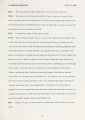
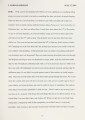
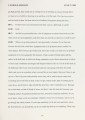
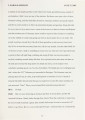
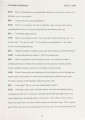
Show J. OL J 0 7 a numb r of our people got hurt. I don't know how many got kill d b au our battalion, I didn't ever see any of the statistics. But there were quit a th Germans coming and they had them dressed in American uniforms and sp ngli h and they'd come in and try to blow up ammunition dumps and gasoline things lik that. So every time we'd go into a town-most of the towns over there in France and Belgium and that northern part of Germany, there would be maybe a little fountain or something out in the middle of it and roads going out from it, about maybe five or six roads. The people would go out and they'd do all of their agriculture work out away from town· they'd live in town but out away from town, all the way around, were the other fields. So we'd have to have a tank or something in every town we went into. Set it up, had to have a guard on there all night long, watching and seeing if there was any movement or anybody sneaking around, things like that. So everybody had to take turns out there on the tank and you hear the dogs and if you heard any noise, you'd suspect it was somebody sneaking up on you. So, lots of problems. We finally got over to Belgium and that's where the 101 st Airborne got surrounded in Bastogne. The Germans were just picking them off one at a time, kept wanting them to surrender. If you've heard of General McAullif, the last time they gave a request for a cease-fire and a surrender, he just answered, "Nuts!" Have you ever heard that somewhere along the line? BEC: Uh-huh. HAR: But we were all closing in, trying to get there to rescue them, and the 4th Armored Division, I think, broke through first, kind of from the south and we came from the west. Fourth Armored, I guess, they actually had troops in town to rescue the 101 st before we got there. But we went on through Bastogne. And from then on, it seemed like 15 |
| Reference URL |
https://collections.lib.utah.edu/ark:/87278/s64j2dcx/1021231 |