| Title |
J. Harold Johnson, Salt Lake City, Utah: an interview by Becky B. Lloyd, June 27, 2003: Saving the legacy tape no. 633 |
| Alternative Title |
J. Harold Johnson, Saving the legacy: an oral history of Utah's World War II veterans, ACCN 2070, American West Center, University of Utah |
| Creator |
Johnson, J. Harold (John Harold), 1921-2012 |
| Contributor |
Lloyd, Becky B.; University of Utah. American West Center |
| Publisher |
Digitized by J. Willard Marriott Library, University of Utah |
| Date |
2003-06-27 |
| Date Digital |
2015-09-16 |
| Access Rights |
I acknowledge and agree that all information I obtain as a result of accessing any oral history provided by the University of Utah's Marriott Library shall be used only for historical or scholarly or academic research purposes, and not for commercial purposes. I understand that any other use of the materials is not authorized by the University of Utah and may exceed the scope of permission granted to the University of Utah by the interviewer or interviewee. I may request permission for other uses, in writing to Special Collections at the Marriott Library, which the University of Utah may choose grant, in its sole discretion. I agree to defend, indemnify and hold the University of Utah and its Marriott Library harmless for and against any actions or claims that relate to my improper use of materials provided by the University of Utah. |
| Spatial Coverage |
France; Belgium; Austria; Salt Lake City, Salt Lake County, Utah, United States |
| Subject |
Johnson, J. Harold (John Harold), 1921-2012--Interviews; World War, 1939-1945--Personal narratives, American; Veterans--Utah--Biography; World War, 1939-1945--Military operations, American; World War, 1939-1945--Campaigns--Europe, Northern--Personal narratives, American; World War, 1939-1945--Concentration camps--Austria |
| Description |
Transcript (31 pages) of an interview by Becky B. Lloyd with J. Harold Johnson on June 27, 2003. This is from tape number 633 in the "Saving the Legacy Oral History Project |
| Collection Number and Name |
Accn2070, Saving the Legacy oral history project, 2001-2010 |
| Abstract |
Harold Johnson (b. 1921) talks about his youth in Salt Lake City, including graduation from West High School, participation in ROTC, the effects of the Depression on his family, and working at the Denver and Rio Grande Depot. He describes being drafted into the army in 1942, his military training, traveling to England on HMS Samaria, and across the channel on the USS Nicholas Herkimer. He first saw combat near Cherbourg, France, later traveling across France and Belgium, over the Rhine River, and through three concentration camps in Austria. He served briefly in the army of occupation before returning home in 1946. He went back to work for the railroad and continued there until his retirement. 31 pages. |
| Type |
Text |
| Genre |
oral histories (literary works) |
| Format |
application/pdf |
| Extent |
31 pages |
| Language |
eng |
| Rights |
 |
| Scanning Technician |
Mazi Rakhsha |
| Conversion Specifications |
Original scanned with Kirtas 2400 and saved as 400 ppi uncompressed TIFF. PDF generated by Adobe Acrobat Pro X for CONTENTdm display |
| ARK |
ark:/87278/s64j2dcx |
| Topic |
Personal narratives--American; Veterans; World War (1939-1945); Concentration camps |
| Setname |
uum_slohp |
| ID |
1021248 |
| Reference URL |
https://collections.lib.utah.edu/ark:/87278/s64j2dcx |
| Title |
Page 9 |
| Format |
application/pdf |
| Setname |
uum_slohp |
| ID |
1021224 |
| OCR Text |
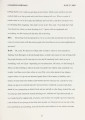
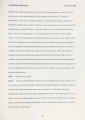
Show J. 0 7 0 EC: o you w r drafted about September of 42? HAR: I think so. BEC: Did you go to Fort Douglas first? HAR: I went to Fort Douglas. We had to meet down at the post office building th re behind the old post office on State Street and they bussed us up to Fort Douglas. I was there for about a week and then they shipped me off to Camp Polk, Louisiana. BEC: Camp Polk? HAR: It's Fort Polk now, but it was Camp Polk then. BEC: That was for basic training? HAR: Yeah. BEC: What do you remember about basic training? What stands out in your mind? HAR: Almost everything (laughs). We set up a division, we were assigned to the 11th Armored Division. When I first got there, there was only three or four thousand guys in the division. That was counting armored artillery, tank divisions, almost every aspect of a combat unit, a division. Then they brought others in after that, after I went in, they brought them in from different parts of the country. Then we started on our regular routine of road marches and exercises and going out into the field on problems and learning how to fire artillery pieces. We had, I don't know if you're familiar with an armored division, or armored artillery, but they have what they call an M-7, which is just like a Sherman tank, with the top cut off, and a 105 Howitzer mounted on that tank. They had six guns to a battery and three batteries to a battalion. I was in battalion headquarters. I did some office work and finally I got assigned to the fire direction center. When a battery went out by themselves, they would handle their own firing, but when we'd go 8 |
| Reference URL |
https://collections.lib.utah.edu/ark:/87278/s64j2dcx/1021224 |