| Title |
Sophia Howard, Salt Lake City, Utah: an interview by Becky B. Lloyd, May 2, 2002: Saving the legacy tape no. 452 |
| Alternative Title |
Sophia Howard, Saving the legacy: an oral history of Utah's World War II veterans, ACCN 2070, American West Center, University of Utah |
| Creator |
Howard, Sophia, 1924-2008 |
| Contributor |
Lloyd, Becky B.; University of Utah. American West Center |
| Publisher |
Digitized by J. Willard Marriott Library, University of Utah |
| Date |
2002-05-02 |
| Date Digital |
2015-09-16 |
| Access Rights |
I acknowledge and agree that all information I obtain as a result of accessing any oral history provided by the University of Utah's Marriott Library shall be used only for historical or scholarly or academic research purposes, and not for commercial purposes. I understand that any other use of the materials is not authorized by the University of Utah and may exceed the scope of permission granted to the University of Utah by the interviewer or interviewee. I may request permission for other uses, in writing to Special Collections at the Marriott Library, which the University of Utah may choose grant, in its sole discretion. I agree to defend, indemnify and hold the University of Utah and its Marriott Library harmless for and against any actions or claims that relate to my improper use of materials provided by the University of Utah. |
| Spatial Coverage |
Netherlands |
| Subject |
Howard, Sophia, 1924-2008--Interviews; World War, 1939-1945--Personal narratives, Dutch American; World War, 1939-1945--Netherlands; World War, 1939-1945--Women--Biography |
| Description |
Transcript (46 pages) of an interview by Becky B. Lloyd with Sophia Howard on May 2, 2002. This is from tape number 452 in the "Saving the Legacy Oral History Project |
| Collection Number and Name |
Accn2070, Saving the Legacy oral history project, 2001-2010 |
| Abstract |
Howard (b. 1924) talks about her birth and childhood in Utrecht, Holland. She recalls hearing about the German bombing of Rotterdam and the surrender, which took place five days later. During the war she worked for a company that cleaned the homes of German officers. Topics covered include food shortages, German roundups of men and resistance workers, the black market, curfew, the liberation of Holland and postwar events, and converting to the LDS Church in the 1950s. 46 pages. |
| Type |
Text |
| Genre |
oral histories (literary works) |
| Format |
application/pdf |
| Extent |
46 pages |
| Language |
eng |
| Rights |
 |
| Scanning Technician |
Mazi Rakhsha |
| Conversion Specifications |
Original scanned with Kirtas 2400 and saved as 400 ppi uncompressed TIFF. PDF generated by Adobe Acrobat Pro X for CONTENTdm display |
| ARK |
ark:/87278/s6sb64zk |
| Topic |
Personal narratives--Dutch American; World War (1939-1945); Women in war |
| Setname |
uum_slohp |
| ID |
1020782 |
| Reference URL |
https://collections.lib.utah.edu/ark:/87278/s6sb64zk |
| Title |
Page 29 |
| Format |
application/pdf |
| Setname |
uum_slohp |
| ID |
1020763 |
| OCR Text |
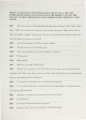
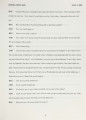
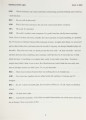
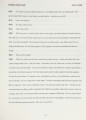
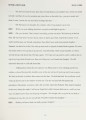
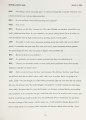
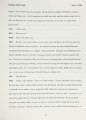
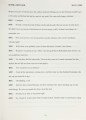
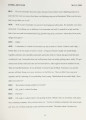
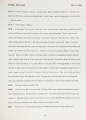
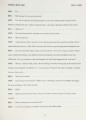
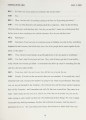
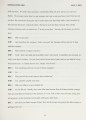
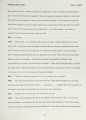
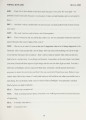
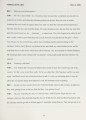
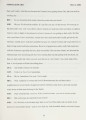
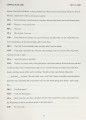
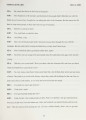
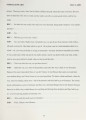
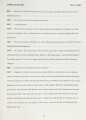
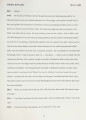
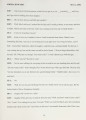
Show I D OP: ah. . I don t think w did that mu h b c u it a ld. probably went to bed arly b cause w wer glad. t 1 a t have-had bl d BEC: And that s when a double bed was nice because you had another body in th r t you warm. SOP: Oh, yeah. And we used to have a lot of fun together. t BEC: Then I wanted to ask you about the curfew too. Do you remember when that came into place? Because that wasn't right at first, was it? SOP: Oh, no, no it wasn't. It was on the end. It happened when a lot of things happened to the Germans. Like I said, people did a lot of things: blow up trains and anything you can do to get even with the Germans they would do. That's when it kind of started. They told you that you had to be in a certain time. Everything was blackout. I remember, at the start when it was black, you always heard all those squeeze-light things and that was the little light you had. You had a little, like a flashlight, and you squeezed them (they contained a small squeeze-motivated generator to make the electricity) and that's the way you kind of found your way. Before it was curfew time, like in the winter, it's early dark and you still could be out when you couldn't see a dam thing. So you all had a little, well, it's kind of like a flashlight. You squeezed it and that kind of gives you light a little bit. JEA: There was a sound to it? SOP: Well, you heard always those. Everybody was walking around and you heard that kind of squeezing. JEA: I wonder what that is. SOP: I remember that. 28 |
| Reference URL |
https://collections.lib.utah.edu/ark:/87278/s6sb64zk/1020763 |