| Title |
Sophia Howard, Salt Lake City, Utah: an interview by Becky B. Lloyd, May 2, 2002: Saving the legacy tape no. 452 |
| Alternative Title |
Sophia Howard, Saving the legacy: an oral history of Utah's World War II veterans, ACCN 2070, American West Center, University of Utah |
| Creator |
Howard, Sophia, 1924-2008 |
| Contributor |
Lloyd, Becky B.; University of Utah. American West Center |
| Publisher |
Digitized by J. Willard Marriott Library, University of Utah |
| Date |
2002-05-02 |
| Date Digital |
2015-09-16 |
| Access Rights |
I acknowledge and agree that all information I obtain as a result of accessing any oral history provided by the University of Utah's Marriott Library shall be used only for historical or scholarly or academic research purposes, and not for commercial purposes. I understand that any other use of the materials is not authorized by the University of Utah and may exceed the scope of permission granted to the University of Utah by the interviewer or interviewee. I may request permission for other uses, in writing to Special Collections at the Marriott Library, which the University of Utah may choose grant, in its sole discretion. I agree to defend, indemnify and hold the University of Utah and its Marriott Library harmless for and against any actions or claims that relate to my improper use of materials provided by the University of Utah. |
| Spatial Coverage |
Netherlands |
| Subject |
Howard, Sophia, 1924-2008--Interviews; World War, 1939-1945--Personal narratives, Dutch American; World War, 1939-1945--Netherlands; World War, 1939-1945--Women--Biography |
| Description |
Transcript (46 pages) of an interview by Becky B. Lloyd with Sophia Howard on May 2, 2002. This is from tape number 452 in the "Saving the Legacy Oral History Project |
| Collection Number and Name |
Accn2070, Saving the Legacy oral history project, 2001-2010 |
| Abstract |
Howard (b. 1924) talks about her birth and childhood in Utrecht, Holland. She recalls hearing about the German bombing of Rotterdam and the surrender, which took place five days later. During the war she worked for a company that cleaned the homes of German officers. Topics covered include food shortages, German roundups of men and resistance workers, the black market, curfew, the liberation of Holland and postwar events, and converting to the LDS Church in the 1950s. 46 pages. |
| Type |
Text |
| Genre |
oral histories (literary works) |
| Format |
application/pdf |
| Extent |
46 pages |
| Language |
eng |
| Rights |
 |
| Scanning Technician |
Mazi Rakhsha |
| Conversion Specifications |
Original scanned with Kirtas 2400 and saved as 400 ppi uncompressed TIFF. PDF generated by Adobe Acrobat Pro X for CONTENTdm display |
| ARK |
ark:/87278/s6sb64zk |
| Topic |
Personal narratives--Dutch American; World War (1939-1945); Women in war |
| Setname |
uum_slohp |
| ID |
1020782 |
| Reference URL |
https://collections.lib.utah.edu/ark:/87278/s6sb64zk |
| Title |
Page 21 |
| Format |
application/pdf |
| Setname |
uum_slohp |
| ID |
1020755 |
| OCR Text |
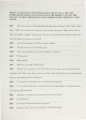
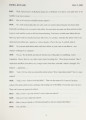
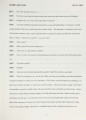
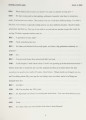
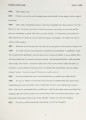
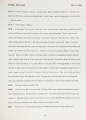
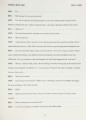
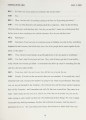
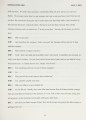
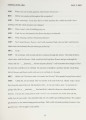
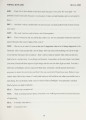
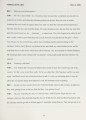
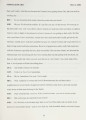
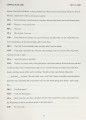
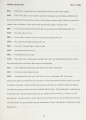
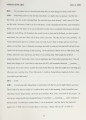
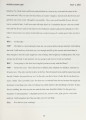
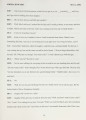
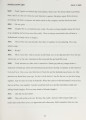
Show I OP: Wh n y u k m th t qu ti n I d n n r- B C: Did h tay mploy d throughout th occupation? SOP: Well som times. Y ah th y did for a whil and th n for a whil th y did t h anything. But the whole situation was changed. BEC: SOP: BEC: SOP: There wasn t a lot of building going on. Yeah. So my dad started in the flower business for himself. Flour meaning a miller? Or growing blooms? No, I mean blooms; flowers. And I still remember Hank, the one that I said from my other sister, her husband, that just about got picked up? BEC: Yeah. SOP: He would go with my dad and they would go through the streets. They had the three-wheel carts, with the flowers. Hank would just hold up those flowers and go to through the streets and say" _[unclear]_ blooma [repeats phrase]". I still remember that (laughs). That's the way they sold flowers in Holland. My dad kind of peddled it and they had the whole thing full of flowers and Hank would walk next to it and kind of-(laughs) BEC: Holler out? Was there much of a market for flowers? Were people buying flowers then? SOP: A little bit, not too much. This was mostly at the end of the war, I think. Yeah, it must hav~ been the end of the war. My dad had a little-it was not really a store. It was kind of a garage-like, like a _[unclear] kind and that's where his shop was, where he had the flowers. I'm sure for a long time he didn't work. I can't remember too much about all that, really, how it was, really. I do remember that, oh, we couldn't get nothing anymore. We couldn't get potatoes so we started eating potato peelings. Dad would eat potato peelings because it was good for you. We thought it was terrible. 20 |
| Reference URL |
https://collections.lib.utah.edu/ark:/87278/s6sb64zk/1020755 |