| Title |
Lillian and Peter Heenan, Salt Lake City, Utah: an interview by Joel Calderon, November 16, 2001: Saving the legacy tape no. 312 |
| Alternative Title |
Lillian and Peter Heenan, Saving the legacy: an oral history of Utah's World War II veterans, ACCN 2070, American West Center, University of Utah |
| Creator |
Heenan, Lillian, 1917-2011; Heenan, Peter J., 1919-2008 |
| Contributor |
Lloyd, Becky B.; University of Utah. American West Center |
| Publisher |
Digitized by J. Willard Marriott Library, University of Utah |
| Date |
2011-11-16 |
| Date Digital |
2015-09-16 |
| Access Rights |
I acknowledge and agree that all information I obtain as a result of accessing any oral history provided by the University of Utah's Marriott Library shall be used only for historical or scholarly or academic research purposes, and not for commercial purposes. I understand that any other use of the materials is not authorized by the University of Utah and may exceed the scope of permission granted to the University of Utah by the interviewer or interviewee. I may request permission for other uses, in writing to Special Collections at the Marriott Library, which the University of Utah may choose grant, in its sole discretion. I agree to defend, indemnify and hold the University of Utah and its Marriott Library harmless for and against any actions or claims that relate to my improper use of materials provided by the University of Utah. |
| Spatial Coverage |
Fort Leavenworth, Kansas; Italy |
| Subject |
Heenan, Lillian, 1917-2011--Interviews; Heenan, Peter J., 1919-2008--Interviews; World War, 1939-1945--Personal narratives, American; Veterans--Utah--Biography; World War, 1939-1945--Women--United States--Biography; United States--Army Nurse Corps; World War, 1939-1945--Campaigns--Europe, Southern--Personal narratives, American |
| Description |
Transcript (28 pages) of an interview by Joel Calderon with Lillian and Peter Heenan on November 16, 2001. This is from tape number 312 in the "Saving the Legacy Oral History Project |
| Collection Number and Name |
Accn2070, Saving the Legacy oral history project, 2001-2010 |
| Abstract |
Lillian Crenshaw grew up in Independence, Missouri, and received her nurse's training at the University of Kansas. She was sworn into the army at Fort Leavenworth in November 1942, and worked as an operating nurse until her unit was shipped out to North Africa where hospital units were being formed to support the European invasion. Her unit followed the troops ashsore in Salerno, Italy. She spent her entire service time in Italy. 28 pages. |
| Type |
Text |
| Genre |
oral histories (literary works) |
| Format |
application/pdf |
| Language |
eng |
| Rights |
 |
| Scanning Technician |
Mazi Rakhsha |
| Conversion Specifications |
Original scanned with Kirtas 2400 and saved as 400 ppi uncompressed TIFF. PDF generated by Adobe Acrobat Pro X for CONTENTdm display |
| ARK |
ark:/87278/s65h9fhr |
| Topic |
Personal narratives--American; Veterans; World War (1939-1945); Women in war; United States. Army Nurse Corps |
| Setname |
uum_slohp |
| ID |
1020594 |
| Reference URL |
https://collections.lib.utah.edu/ark:/87278/s65h9fhr |
| Title |
Page 11 |
| Format |
application/pdf |
| Setname |
uum_slohp |
| ID |
1020574 |
| OCR Text |
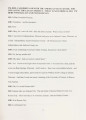
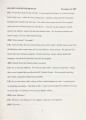
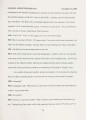
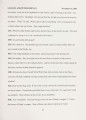
Show LILL ON AND PETER EE from the Field Hospital. If they lived through getting ut o th came to us. And we had them until they were able to tr v 1 furth were no helicopters then, so it was all land and sea. d c ur th r JOE: Well, you know, another interesting fact- I'm kind of a history buff- but th y did use helicopters at that time, but it was only in Burma. LIL: Yeah, it was in the Pacific, but we didn't have any over in Europe. And we didn t have any antibiotics, except sulfur, and then while we were- I think it was when we were at Anzio -that we finally got a little bit of penicillin. And that could only be used on long-bone injuries. Of course, we got lots of those leg injuries. That's mainly the femurs, to keep them from getting infections. Most of the injuries were dirty wounds, so you just had to clean it the best you could, and we know now that sulfur didn't do a lot of good on those things, but they got plenty of it. They had plenty of that! Then from Cassino, they pulled us back. Now we did- they alternated between the units, you'd work so many days or so on, and then they'd start loading up the others - and let you get your patients out. And so you got a break then, particularly in the operating room. Now, the ward nurses didn't because they had patients to get through that stage so they could travel. JOE: How many were you in that particular unit? Nurses and doctors? LIL: I don't know. I don't really know. Oh, a lot more than M* A *S*H has, yeah! There were four of us in the tent, and one of the nurses was killed in Africa that was in our tent. So from then on, we only had three unless somebody just came through and was 9 |
| Reference URL |
https://collections.lib.utah.edu/ark:/87278/s65h9fhr/1020574 |