| Title |
Robert B. Forsgren, Bountiful, Utah: an interview by Becky B. Lloyd, January 14, 2003: Saving the legacy tape no. 560 |
| Alternative Title |
Robert B. Forsgren, Saving the legacy: an oral history of Utah's World War II veterans, ACCN 2070, American West Center, University of Utah |
| Creator |
Forsgren, Robert B., 1922- |
| Contributor |
Lloyd, Becky B.; University of Utah. American West Center |
| Publisher |
Digitized by J. Willard Marriott Library, University of Utah |
| Date |
2003-01-14 |
| Date Digital |
2015-09-16 |
| Access Rights |
I acknowledge and agree that all information I obtain as a result of accessing any oral history provided by the University of Utah's Marriott Library shall be used only for historical or scholarly or academic research purposes, and not for commercial purposes. I understand that any other use of the materials is not authorized by the University of Utah and may exceed the scope of permission granted to the University of Utah by the interviewer or interviewee. I may request permission for other uses, in writing to Special Collections at the Marriott Library, which the University of Utah may choose grant, in its sole discretion. I agree to defend, indemnify and hold the University of Utah and its Marriott Library harmless for and against any actions or claims that relate to my improper use of materials provided by the University of Utah. |
| Spatial Coverage |
Europe; Salt Lake City, Salt Lake County, Utah, United States |
| Subject |
Forsgren, Robert B., 1922- --Interviews; World War, 1939-1945--Personal narratives, American; Veterans--Utah--Biography; World War, 1939-1945--Military operations, American; World War, 1939-1945--Campaigns--Europe, Northern--Personal narratives, American |
| Keywords |
Adjutant General's office; General George Patton |
| Description |
Transcript (21 pages) of an interview by Becky B. Lloyd with Robert B. Forsgren on January 14, 2003. This is from tape number 560 in the "Saving the Legacy Oral History Project |
| Collection Number and Name |
Accn2070, Saving the Legacy oral history project, 2001-2010 |
| Abstract |
Forsgren (b. 1922) recalls his Salt Lake City boyhood and describes being drafted into the army in 1942. He was assigned to Third Army headquarters at Fort Sam Houston, Texas, and served there and at Camp Kilmer, New Jersey, before heading overseas in January 1943. Forsgren reminisces about serving in the Adjutant General's office under General George Patton. 21 pages. |
| Type |
Text |
| Genre |
oral histories (literary works) |
| Format |
application/pdf |
| Extent |
21 pages |
| Language |
eng |
| Rights |
 |
| Scanning Technician |
Mazi Rakhsha |
| Conversion Specifications |
Original scanned with Kirtas 2400 and saved as 400 ppi uncompressed TIFF. PDF generated by Adobe Acrobat Pro X for CONTENTdm display |
| ARK |
ark:/87278/s647694z |
| Topic |
Personal narratives--American; Veterans; World War (1939-1945) |
| Setname |
uum_slohp |
| ID |
1020409 |
| Reference URL |
https://collections.lib.utah.edu/ark:/87278/s647694z |
| Title |
Page 12 |
| Format |
application/pdf |
| Setname |
uum_slohp |
| ID |
1020398 |
| OCR Text |
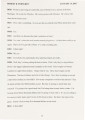
Show ROBERT B. FOR GREN JANUARY 14, 2003 in b cause we were probably a hundred miles away from Bastogne. And George said ' We' ll get up there ' I think he said, "in two or three days." They said, "You can t do it. He said, "We' ll do it." So he saved that Belgian town ofBastogne. The guys loved him, but they were scared of him. But the Germans were even more scared of him. I remember a major town we got in, because they just couldn't keep their gas supplies up with their tank force. We got into Metz, which was a big city. I think there was a river in front of it. We didn't dare go in there, because we didn't have enough fuel and supplies to go in there. But when the Germans heard we were coming, their troops all withdrew. They weren't going to put up a battle. Here we sat waiting for the supplies to get there and the Germans were seeing what happened, that we weren't coming over there. So they went back and subsequently many lives were lost. You know, it's just logistics. It's hard to keep up. But, George, they were so afraid of him that all they had to hear was he was coming; they wanted to get out of his way. I remember we were in Frankfurt, Germany, there, in a military installation and Marlene Dietrich was there. I had a chance to kiss her, but I didn't want to. BEC: Really? BOB: Yeah. Well there was just a group or three or four of us and I thought she was a pig. She was living with some colonel or something and I never got excited about her. But we saw a lot of the ... we saw Dinah Shore. She was very nice. I talked to her. She said, "If I knew you were from Salt Lake City, I would have sang you that 'Salt Lake Sugar"' or whatever it was, that song, I don't know if you remember it or not. She said, "I would've sung that for you." Then we had Bob Hope and Bing Crosby. We had a lot of nice entertainers. They'd just entertain us out in the field. They'd put up a little phony 11 |
| Reference URL |
https://collections.lib.utah.edu/ark:/87278/s647694z/1020398 |