| Title |
Robert B. Forsgren, Bountiful, Utah: an interview by Becky B. Lloyd, January 14, 2003: Saving the legacy tape no. 560 |
| Alternative Title |
Robert B. Forsgren, Saving the legacy: an oral history of Utah's World War II veterans, ACCN 2070, American West Center, University of Utah |
| Creator |
Forsgren, Robert B., 1922- |
| Contributor |
Lloyd, Becky B.; University of Utah. American West Center |
| Publisher |
Digitized by J. Willard Marriott Library, University of Utah |
| Date |
2003-01-14 |
| Date Digital |
2015-09-16 |
| Access Rights |
I acknowledge and agree that all information I obtain as a result of accessing any oral history provided by the University of Utah's Marriott Library shall be used only for historical or scholarly or academic research purposes, and not for commercial purposes. I understand that any other use of the materials is not authorized by the University of Utah and may exceed the scope of permission granted to the University of Utah by the interviewer or interviewee. I may request permission for other uses, in writing to Special Collections at the Marriott Library, which the University of Utah may choose grant, in its sole discretion. I agree to defend, indemnify and hold the University of Utah and its Marriott Library harmless for and against any actions or claims that relate to my improper use of materials provided by the University of Utah. |
| Spatial Coverage |
Europe; Salt Lake City, Salt Lake County, Utah, United States |
| Subject |
Forsgren, Robert B., 1922- --Interviews; World War, 1939-1945--Personal narratives, American; Veterans--Utah--Biography; World War, 1939-1945--Military operations, American; World War, 1939-1945--Campaigns--Europe, Northern--Personal narratives, American |
| Keywords |
Adjutant General's office; General George Patton |
| Description |
Transcript (21 pages) of an interview by Becky B. Lloyd with Robert B. Forsgren on January 14, 2003. This is from tape number 560 in the "Saving the Legacy Oral History Project |
| Collection Number and Name |
Accn2070, Saving the Legacy oral history project, 2001-2010 |
| Abstract |
Forsgren (b. 1922) recalls his Salt Lake City boyhood and describes being drafted into the army in 1942. He was assigned to Third Army headquarters at Fort Sam Houston, Texas, and served there and at Camp Kilmer, New Jersey, before heading overseas in January 1943. Forsgren reminisces about serving in the Adjutant General's office under General George Patton. 21 pages. |
| Type |
Text |
| Genre |
oral histories (literary works) |
| Format |
application/pdf |
| Extent |
21 pages |
| Language |
eng |
| Rights |
 |
| Scanning Technician |
Mazi Rakhsha |
| Conversion Specifications |
Original scanned with Kirtas 2400 and saved as 400 ppi uncompressed TIFF. PDF generated by Adobe Acrobat Pro X for CONTENTdm display |
| ARK |
ark:/87278/s647694z |
| Topic |
Personal narratives--American; Veterans; World War (1939-1945) |
| Setname |
uum_slohp |
| ID |
1020409 |
| Reference URL |
https://collections.lib.utah.edu/ark:/87278/s647694z |
| Title |
Page 9 |
| Format |
application/pdf |
| Setname |
uum_slohp |
| ID |
1020395 |
| OCR Text |
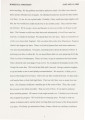
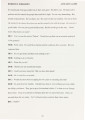
Show ROB RT B. FOR GREN JAN ARY 14,2003 sold hi car so we didn't even have a car. And you couldn't get a car. Our bishop said 'As soon as you get home, I'm going to get you a car". He lied to me. He didn't give me anything. So, without a car, what do you do? BEC: Yeah, right. BOB: And there was none available, unless you wanted to pay about $500 under the table to get one. I didn't have that kind of money. I was getting fifty bucks a month. I think my highest wage was about 125 bucks a month as a staff sergeant. BEC: Were you the first of your brothers to come home? BOB: I was. BEC: That was kind of early to get home. BOB: Keith was the first to go into the service. He was in the Navy. He was at Treasure Island, there. He was good at typing and shorthand and all that stuff. And then I think Ferron was the next to go. He was just a few miles from San Antonio, so we'd get together, maybe, every other week and spend the weekends together there. He washed out as a pilot. They tried to train him as a navigator, but he kept getting airsick, so he ended up doing office work, like I did. Jim was a brakeman on the railroads, so he kept getting deferments. Finally he went in, and he was sent over to Germany, and we spent maybe six or seven months together, before I came home. BEC: At the end? BOB: Yeah. But he was a great softball pitcher. We had a great team. We had guys that had played in the majors on our team. We played fast pitch softball. We won the championship. They gave us a three-day pass to-you've probably heard of itWiesbaden, Germany. That's where all the unwed mothers would go there to have their 8 |
| Reference URL |
https://collections.lib.utah.edu/ark:/87278/s647694z/1020395 |