| Title |
Robert B. Forsgren, Bountiful, Utah: an interview by Becky B. Lloyd, January 14, 2003: Saving the legacy tape no. 560 |
| Alternative Title |
Robert B. Forsgren, Saving the legacy: an oral history of Utah's World War II veterans, ACCN 2070, American West Center, University of Utah |
| Creator |
Forsgren, Robert B., 1922- |
| Contributor |
Lloyd, Becky B.; University of Utah. American West Center |
| Publisher |
Digitized by J. Willard Marriott Library, University of Utah |
| Date |
2003-01-14 |
| Date Digital |
2015-09-16 |
| Access Rights |
I acknowledge and agree that all information I obtain as a result of accessing any oral history provided by the University of Utah's Marriott Library shall be used only for historical or scholarly or academic research purposes, and not for commercial purposes. I understand that any other use of the materials is not authorized by the University of Utah and may exceed the scope of permission granted to the University of Utah by the interviewer or interviewee. I may request permission for other uses, in writing to Special Collections at the Marriott Library, which the University of Utah may choose grant, in its sole discretion. I agree to defend, indemnify and hold the University of Utah and its Marriott Library harmless for and against any actions or claims that relate to my improper use of materials provided by the University of Utah. |
| Spatial Coverage |
Europe; Salt Lake City, Salt Lake County, Utah, United States |
| Subject |
Forsgren, Robert B., 1922- --Interviews; World War, 1939-1945--Personal narratives, American; Veterans--Utah--Biography; World War, 1939-1945--Military operations, American; World War, 1939-1945--Campaigns--Europe, Northern--Personal narratives, American |
| Keywords |
Adjutant General's office; General George Patton |
| Description |
Transcript (21 pages) of an interview by Becky B. Lloyd with Robert B. Forsgren on January 14, 2003. This is from tape number 560 in the "Saving the Legacy Oral History Project |
| Collection Number and Name |
Accn2070, Saving the Legacy oral history project, 2001-2010 |
| Abstract |
Forsgren (b. 1922) recalls his Salt Lake City boyhood and describes being drafted into the army in 1942. He was assigned to Third Army headquarters at Fort Sam Houston, Texas, and served there and at Camp Kilmer, New Jersey, before heading overseas in January 1943. Forsgren reminisces about serving in the Adjutant General's office under General George Patton. 21 pages. |
| Type |
Text |
| Genre |
oral histories (literary works) |
| Format |
application/pdf |
| Extent |
21 pages |
| Language |
eng |
| Rights |
 |
| Scanning Technician |
Mazi Rakhsha |
| Conversion Specifications |
Original scanned with Kirtas 2400 and saved as 400 ppi uncompressed TIFF. PDF generated by Adobe Acrobat Pro X for CONTENTdm display |
| ARK |
ark:/87278/s647694z |
| Topic |
Personal narratives--American; Veterans; World War (1939-1945) |
| Setname |
uum_slohp |
| ID |
1020409 |
| Reference URL |
https://collections.lib.utah.edu/ark:/87278/s647694z |
| Title |
Page 4 |
| Format |
application/pdf |
| Setname |
uum_slohp |
| ID |
1020390 |
| OCR Text |
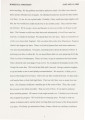
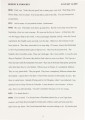
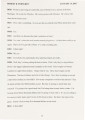
Show ROB RT B. FOR GREN J RY 14 200 and v rything. His big problem was that he talked too much. H didn t care wh n h spoke and he offended a lot of people. He offended Eisenhower and all the oth r lead rs over there. To me he was a great leader. Probably, if they could have kept supplies with him the war would have ended maybe four to six months earlier. They could not keep up with him. We'd occupy a town, and because we were out of fuel, we'd have to pull back. The Germans would come back there and subsequently, a lot of lives were lost. Anyway, we landed in Scotland. We stayed there for a few days. Then we went down to a little town, Knutsford, England. This was about thirty miles from Manchester, England, which is the largest city there. There, we lived in Quonset huts with straw mattresses, very poor accommodations. Of course, everybody knows about the famous GI food. It just keeps you alive, is about all. So, we stayed there while we were preparing forD-day. Then we went to Southampton. There, of course, we got to experience the buzz bombs. That's about the only real danger I was ever in. So we landed in Normandy in July ('44). I forget the exact date. We lived in the field until it snowed. George wanted to toughen us up and make us not to need plushy accommodations. We stayed in-I think you've heard of the hedgerows in France. That's the way they'd mark their land. So they built a wall maybe three or four (feet high) there. That was why there were so many lives lost there. The Germans would put a machine gun in the comer of that. Then, they could have access to the whole area there. That cost a lot of lives. It was hard to eradicate those machine gunners. Of course, it was tough on tanks, too. It limited you to the road. That stopped the progress. We lived in the two-man pup tents. We had to wash our clothes in helmets and be careful where we hung them out, because of the flying aircraft over there. We finally got stationed in Nancy, France, which was a military installation 3 |
| Reference URL |
https://collections.lib.utah.edu/ark:/87278/s647694z/1020390 |