| Title |
Mary Camilla Howe Sims, Midvale, Utah: an interview by Becky B. Lloyd, March 22, 2004: Saving the legacy tape no. 650 |
| Alternative Title |
Mary Camilla Howe Sims, Saving the legacy: an oral history of Utah's World War II veterans, ACCN 2070, American West Center, University of Utah |
| Creator |
Sims, Mary Camilla Howe, 1921-2010 |
| Contributor |
Lloyd, Becky B.; University of Utah. American West Center |
| Publisher |
Digitized by J. Willard Marriott Library, University of Utah |
| Date |
2004-03-22 |
| Date Digital |
2015-09-16 |
| Access Rights |
I acknowledge and agree that all information I obtain as a result of accessing any oral history provided by the University of Utah's Marriott Library shall be used only for historical or scholarly or academic research purposes, and not for commercial purposes. I understand that any other use of the materials is not authorized by the University of Utah and may exceed the scope of permission granted to the University of Utah by the interviewer or interviewee. I may request permission for other uses, in writing to Special Collections at the Marriott Library, which the University of Utah may choose grant, in its sole discretion. I agree to defend, indemnify and hold the University of Utah and its Marriott Library harmless for and against any actions or claims that relate to my improper use of materials provided by the University of Utah. |
| Spatial Coverage |
New Guinea; Philippines; Wisconsin, United States |
| Subject |
Sims, Mary Camilla Howe, 1921-2010--Interviews; World War, 1939-1945--Personal narratives, American; Veterans--Utah--Biography; World War, 1939-1945--Women--United States--Biography; United States--Army Nurse Corps; World War, 1939-1945--Medical care |
| Keywords |
Nurses; Hospitals |
| Description |
Transcript (26 pages) of an interview by Becky B. Lloyd with Mary Camilla Howe Sims on March 22, 2004. This is from tape number 650 in the "Saving the Legacy Oral History Project |
| Collection Number and Name |
Accn2070, Saving the Legacy oral history project, 2001-2010 |
| Abstract |
Sims (b. 1921) was born in Darlington, Wisconsin, and received her nursing education at St. Mary's Hospital in Madison, Wisconsin. She joined the Army Nurse Corps in October 1943 and boarded the SS Lurline for New Guinea. She served at the 54th General Hospital for the duration of the war with the exception of a few months spent in the Philippines. She describes life on the island, her duties and activities, her post-war marriage, and talks about her children. 26 pages. |
| Type |
Text |
| Genre |
oral histories (literary works) |
| Format |
application/pdf |
| Extent |
26 pages |
| Language |
eng |
| Rights |
 |
| Scanning Technician |
Mazi Rakhsha |
| Conversion Specifications |
Original scanned with Kirtas 2400 and saved as 400 ppi uncompressed TIFF. PDF generated by Adobe Acrobat Pro X for CONTENTdm display |
| ARK |
ark:/87278/s6p28xd0 |
| Topic |
Personal narratives--American; Veterans; World War (1939-1945); Women in war; United States. Army Nurse Corps |
| Setname |
uum_slohp |
| ID |
1020046 |
| Reference URL |
https://collections.lib.utah.edu/ark:/87278/s6p28xd0 |
| Title |
Page 9 |
| Format |
application/pdf |
| Setname |
uum_slohp |
| ID |
1020027 |
| OCR Text |
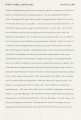
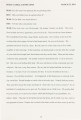
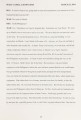
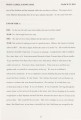
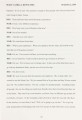
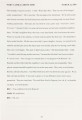
Show M RY MILL HOWE IM R H 22 2004 our tim our high st c nsus was at the end and our hospital wa clo ing. It had b n packed and put together to go to Japan for the rest of the war. The nurses came h m because we had enough marks [points]. We were given marks for our time of service. Ours differed from the officers and from the enlisted men. So we were practically separated at that point. Because the transportation was so slow in getting back, many of the Gis had to wait for a long time for transportation back. They were put in a rehabilitation area across the road from our hospital, which was a tent city. As the ships that brought supplies to the islands were returning, they picked up many G Is and took them home as a group because, naturally, the planes were still in use. The Americans had no big deal in the Philippines, the battle for the Philippines. The Philippines had been a war area and there was much devastation in the city. We were allowed to go to mass with the other people in their cathedrals. They were very beautiful. I remember we attended a symphony in Manila, which was a real treat. I mean, just to see a movie was something new and different. A new, current movie was something new and different for us. What else can I tell you about it? Our complement was people from all areas, mostly the Midwest. We had some girls from as far away as Canada and some much older than we were. I think the age limit for people to enter nursing was thirty-nine years of age. We had pets after a fashion. We had cats sometimes. We had a kitty or a puppy. We had very little to do with the natives in the islands, but when we reached Manila we could trade with the people. The people didn't speak English. We spoke to them in what was called Tagalog language. It was a mixture of English and their language. I remember trading two dresses that I'd had as a civilian for a pair of earrings. They were darling earrings, but when I had them appraised, they were just glass earrings. So, during that 8 |
| Reference URL |
https://collections.lib.utah.edu/ark:/87278/s6p28xd0/1020027 |