| Title |
Robert A. Schluter, Salt Lake City, Utah: an interview by Becky B. Lloyd, November 4, 2002: Saving the legacy tape no. 548 and 549 |
| Alternative Title |
Robert A. Schluter, Saving the legacy: an oral history of Utah's World War II veterans, ACCN 2070, American West Center, University of Utah |
| Creator |
Schluter, Robert A., 1924- |
| Contributor |
Lloyd, Becky B.; University of Utah. American West Center |
| Publisher |
Digitized by J. Willard Marriott Library, University of Utah |
| Date |
2002-11-04 |
| Date Digital |
2015-09-16 |
| Access Rights |
I acknowledge and agree that all information I obtain as a result of accessing any oral history provided by the University of Utah's Marriott Library shall be used only for historical or scholarly or academic research purposes, and not for commercial purposes. I understand that any other use of the materials is not authorized by the University of Utah and may exceed the scope of permission granted to the University of Utah by the interviewer or interviewee. I may request permission for other uses, in writing to Special Collections at the Marriott Library, which the University of Utah may choose grant, in its sole discretion. I agree to defend, indemnify and hold the University of Utah and its Marriott Library harmless for and against any actions or claims that relate to my improper use of materials provided by the University of Utah. |
| Spatial Coverage |
Los Alamos, Los Alamos County, New Mexico, United States; Salt Lake City, Salt Lake County, Utah, United States |
| Subject |
Schluter, Robert A., 1924- --Interviews; World War, 1939-1945--Personal narratives, American; Veterans--Utah--Biography; Atomic bomb--Design and construction--History |
| Keywords |
Atom bomb |
| Description |
Transcript (55 pages) of an interview by Becky B. Lloyd with Robert A. Schluter on November 4, 2002. This is from tape numbers 548 and 549 in the "Saving the Legacy Oral History Project |
| Collection Number and Name |
Accn2070, Saving the Legacy oral history project, 2001-2010 |
| Abstract |
Robert Schluter (b. 1924) recalls his childhood and education in Salt Lake City, Utah, prior to enlising in the U.S. Army in 1942. After basic training he was recruited for special service at Los Alamos, New Mexico, where he was involved in electronic-related work on the atom bomb. He served until February 1946. He also relates his post-war experiences in research and academia at various institutions, including MIT and the Argonne National Laboratory. 55 pages. |
| Type |
Text |
| Genre |
oral histories (literary works) |
| Format |
application/pdf |
| Extent |
55 pages |
| Language |
eng |
| Rights |
 |
| Scanning Technician |
Mazi Rakhsha |
| Conversion Specifications |
Original scanned with Kirtas 2400 and saved as 400 ppi uncompressed TIFF. PDF generated by Adobe Acrobat Pro X for CONTENTdm display |
| ARK |
ark:/87278/s62c0x8p |
| Topic |
Personal narratives--American; Veterans; World War (1939-1945); Atomic bomb--Design and construction |
| Setname |
uum_slohp |
| ID |
1017535 |
| Reference URL |
https://collections.lib.utah.edu/ark:/87278/s62c0x8p |
| Title |
Page 28 |
| Format |
application/pdf |
| Setname |
uum_slohp |
| ID |
1017506 |
| OCR Text |
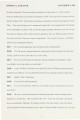
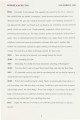
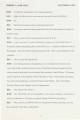
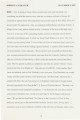
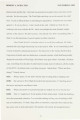
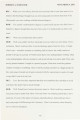
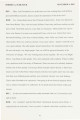
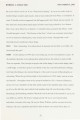
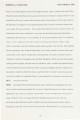
Show ROB RT HL T R B R 4, 2002 nucl i lik hydrogen and hydrogen isotopes· that is the en rgy sourc fthe un, essentially, o that's the next step. Before the Trinity test, Oppenheimer had app int d Teller to a committee to go into that, investigate it and see what could be done. Howe r Teller was not an advisor. The government would not have put H-bombs before delivery of "regular" fission bombs. Teller came back from Washington where he was testifying when I was a graduate student. He said, "The Air Force is going to destroy Oppenheimer." That was Teller's words about it. Now Teller, his picture's on the front page of Life magazine with the story that he stood up to Oppenheimer and got us the Hbomb. Well, that's a lot of nonsense. That's unfortunate journalism; they will leap to find tension. They were stimulated by Curtis LeMay. I talked to Oppenheimer once. He was at the Princeton Institute of Advanced studies near Princeton afterward and he was sort of devastated because all this was going on. He died a few years after that. In early August 1945, I remember listening to the radio, short-wave radio, trying to find out what was about to happen. There were all kind of rumors flying around of what might happen, how they would use the bomb. A physicist name Leo Szilard-a brilliant guy, very inventive-he felt it should be demonstrated first. He wrote a letter about two weeks before Hiroshima. He was not at Los Alamos. I think he was in Chicago. Chicago is where Fermi got the first fission reaction going. That was another whole story, which I didn't have anything to do with. But Szilard circulated a letter; Teller would not sign it, although he sent it to Teller. Some people signed it. This was supposed to go to Truman with reasons why it should be demonstrated. Now, what happened, it did get to Truman and as I understand it, Truman immediately appointed a committee. Truman was able to get advice from very competent people, I thought. This committee, which included Fermi 27 |
| Reference URL |
https://collections.lib.utah.edu/ark:/87278/s62c0x8p/1017506 |